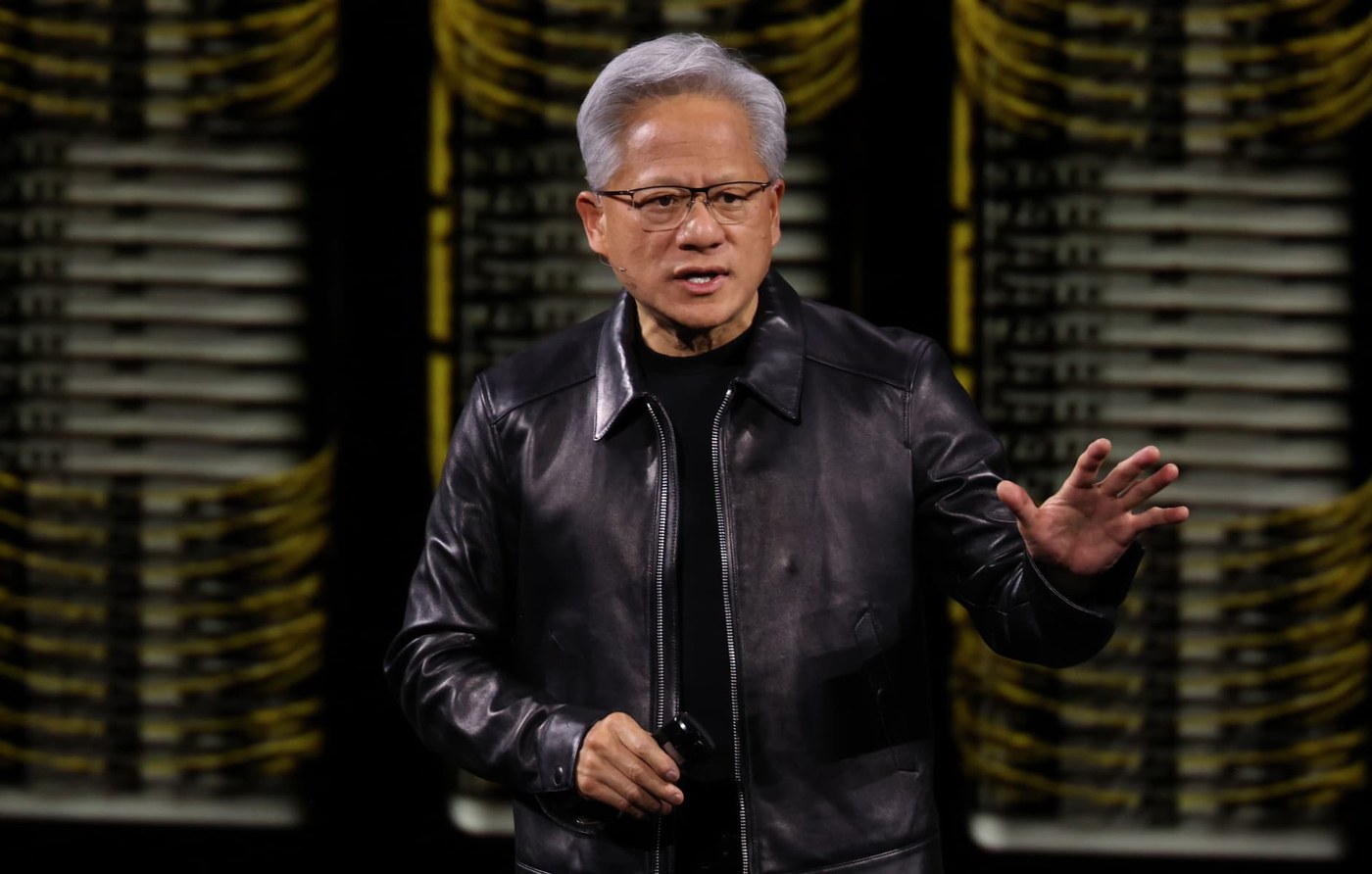
An Nvidia spokesperson on Thursday pushed back on a New York Times report that detailed American intelligence agencies surveilling a person close to Nvidia CEO Jensen Huang because they thought she could be a Chinese intelligence asset.
According to the Times report, which cited people briefed on intelligence surveillance, Alice Huang, who is linked to the Singapore-based cloud Megaspeed, developed a close relationship with Nvidia's Jensen Huang.
Intelligence agencies worried that she was a spy, helping the Chinese government gain information from Nvidia and Jensen Huang, and fretted that Nvidia's CEO had access to President Donald Trump.
The Nvidia spokesperson pushed back on the story in a statement to CNBC, saying that Singapore-based Megaspeed is another one of the company's regional cloud customers, and that Jensen Huang's interactions with its officials are not unusual, because he speaks with thousands of customers every year.
The spokesperson added that customers don't get access to Nvidia trade secrets or relevant national security information.
The report also alleged that Megaspeed was previously suspected of helping companies evade U.S. export controls on Nvidia's AI chips, which aren't allowed to be shipped to China.
Nvidia said that Megaspeed had already been investigated for evading export controls.
"The diversion allegations against this regional cloud were thoroughly investigated and debunked last year," the spokesperson said in a statement.
Nvidia implied that the U.S. government had not briefed Nvidia on Alice Huang.
"We're confident that if the U.S. government believes that any person is a threat to American industry, it would let us know," the spokesperson said.
Nvidia has had to walk a tightrope in Washington as its AI chips have become a powerful tool for all AI developers and a bargaining chip in economic competition with China.
Politicians and analysts say that Nvidia's AI chips could be used to create Chinese military AI models, or commercial AI models that could compete and eventually surpass American technology.
As AI has become more important to the government, Nvidia's Huang has befriended Trump and has given pro-American speeches about building U.S. AI infrastructure.
Huang has appeared with Trump at state dinners, AI summits, and international trips, all while pushing for certain Nvidia chips to get a green light to be shipped to China.
Earlier this year the U.S. government cleared Nvidia's H200 chip to be shipped to China, but Chinese regulators prevented their imports. H200s are Nvidia's Hopper generation chip, not the current faster Blackwell generation currently used by American AI developers.
The Nvidia spokesperson said the Chinese government is not looking for Nvidia products from regional clouds like Megaspeed.
"Instead, the PRC government blocked U.S. AI chips, protecting its own industry and resulting in the largest write-offs in U.S. tech history," the Nvidia spokesperson said. Last year, Nvidia wrote off about $4.5 billion in Chinese-tuned AI chips.