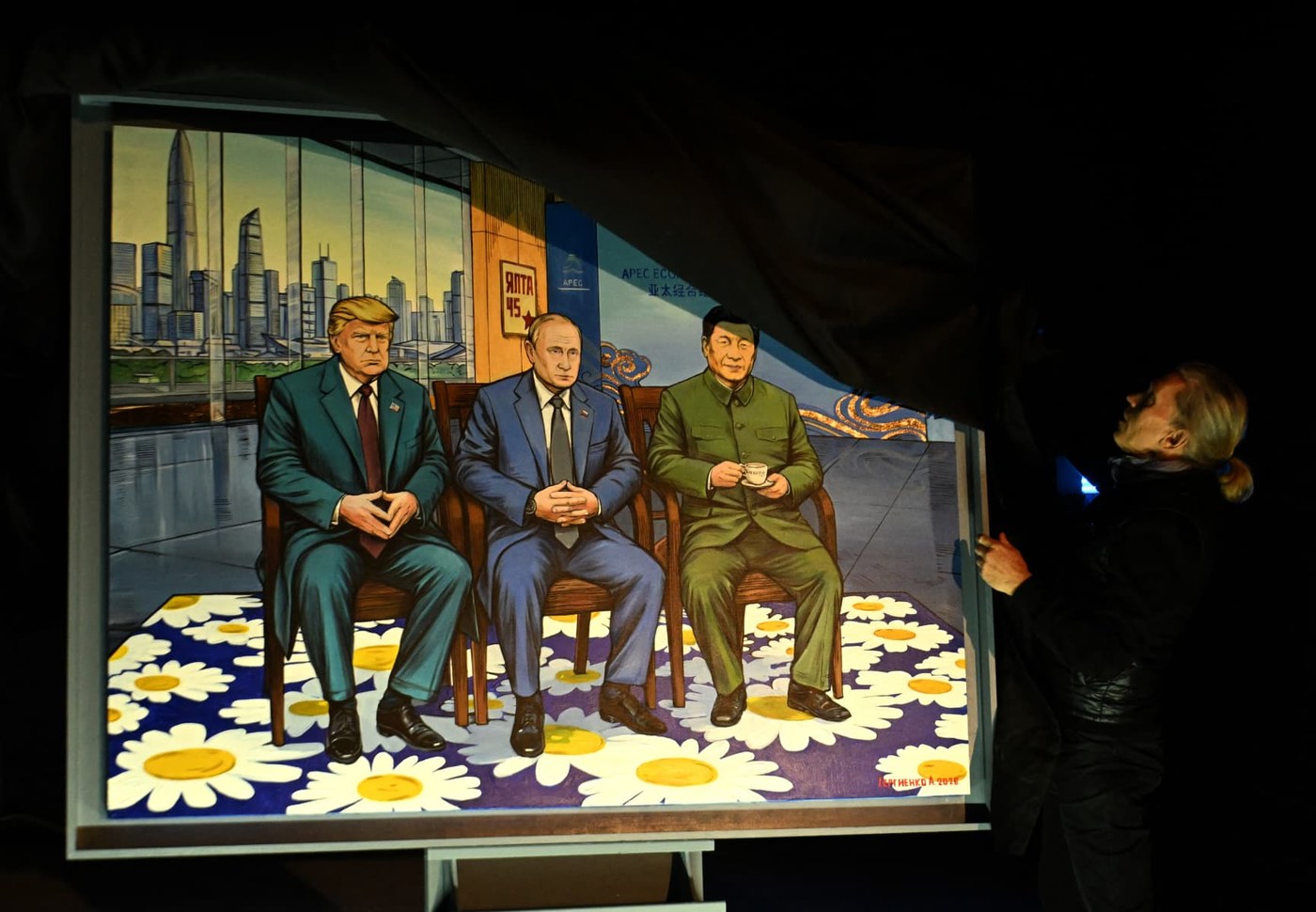
China confirmed Monday that President Xi Jinping will meet with Russian President Vladimir Putin and U.S. President Donald Trump in Shenzhen on Thursday, setting up the first-ever gathering of the three leaders.
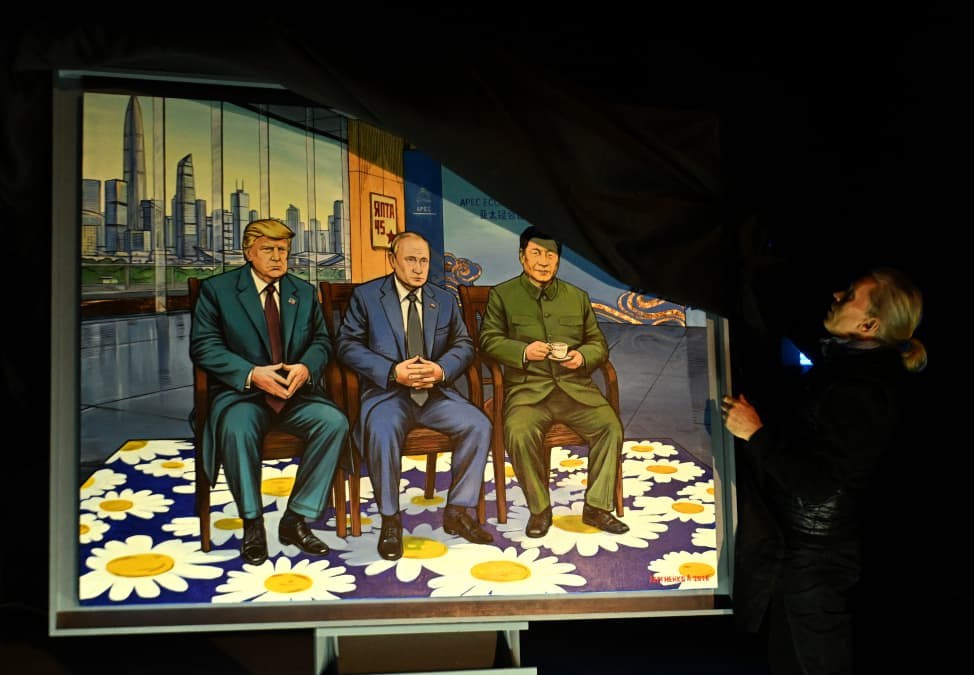
That confirmation from a spokesperson at China's Foreign Ministry follows announcements from Moscow and the White House. The Wall Street Journal had reported last month that Putin had proposed a three-way sit-down in an attempt to negotiate an end to the four-year war in Ukraine.
While the summit among the three nations, on the sidelines of the APEC meeting in Shenzhen, is unprecedented, the leaders have held bilateral meetings over the years. Xi has met with Trump three times since October last year and more than 40 times with Putin since becoming president in 2013. Trump and Putin have met in person on several occasions, including a visit to Alaska by the Russian leader in August 2025.
"For Xi, just the ability to bring Putin and Trump to the table, a first among equals scenario, will deliver much of the political benefit even before the discussions begin," said Peter Alexander, Shanghai-based managing director at Z-Ben Advisors.
Trump has departed Washington, D.C. for a four-day trip to Asia that also includes a stop in the Philippines.
Uncertain agenda
The main hurdle to the first-of-its-kind summit now appears to be "a disagreement over the agenda," said Neo Wang, chief China strategist at Evercore ISI.
The White House signaled the U.S. intention to prioritize talks over nuclear non-proliferation and the Middle East war, while downplaying the prospects of engaging in talks over Ukraine — a topic high on Moscow's agenda.
"He [Trump] will discuss the reduction of nuclear weapons in the world, whose proliferation President Trump believes is very dangerous," Olivia Wales, a White House spokeswoman, told reporters on a briefing call. The president will raise the U.S.-Israeli war against Iran in the meeting but is not expected to bring up Russia's war in Ukraine, the official said.
China has no interest in engaging in nuclear disarmament talks until it achieves parity with the U.S. in about 10 years, said David Roche, strategist at Quantum Strategy.
Putin's position on the war appears unwavering, with the Russian president telling U.S. envoys Jared Kushner and Steve Witkoff in a meeting in Moscow last week that Europe should "figure out" whether "they want peace or war." The meeting came a day after an earlier round of talks aimed at ending the war in Ukraine wrapped up in Abu Dhabi.
Russian presidential aide Yuri Ushakov said last week the talks in Shenzhen would continue the diplomatic efforts aimed at reaching a negotiated settlement to the Ukraine war, according to state-controlled local media Russia Today.
The summit will likely yield little concrete result, but presents an "almost 100% photo op" that lifts China's status and power at the top table, said Roche, while Trump's political standing slides. Nvidia and the chip-smuggling issues involving a suspected Chinese spy will stay off the agenda, as Trump steers clear of thorny issues where he is unlikely to claim success.
China and Russia could turn more aggressive with their military ambitions over the next two years if they perceive Trump as politically weakened, Brookings Institution senior fellow Robert Kagan told CNBC earlier this month, following the dramatic defeat of Trump's Republican Party in the midterm election.
China did not specify what will be discussed at the three leaders' meeting in Monday's statement.
"Xi may be inclined to do Putin a favor by showing up, given close strategic ties," said Wang. But a joint statement on Ukraine territory, security arrangements or sanctions against Russia appears unlikely, he said, as it would leave Beijing "more exposed to political scrutiny and accountability."
A U.S.-China trade truce set to expire in January is likely to be on the table, with analysts largely expecting an extension despite signs of growing friction in the bilateral relationship.
Aside from an immediate extension, leaders may also look to assess "whether a more durable framework for a rebalancing of U.S.–China trade relations can be established," said Carlos Casanova, senior economist for Asia at UBP.
U.S. trade deficit with China remains substantial, with Beijing's exports to Washington recording double-digit growth for most of this year, from last year's low base. Narrowing that deficit will be central to Washington's call for a more balanced trade, Casanova said.