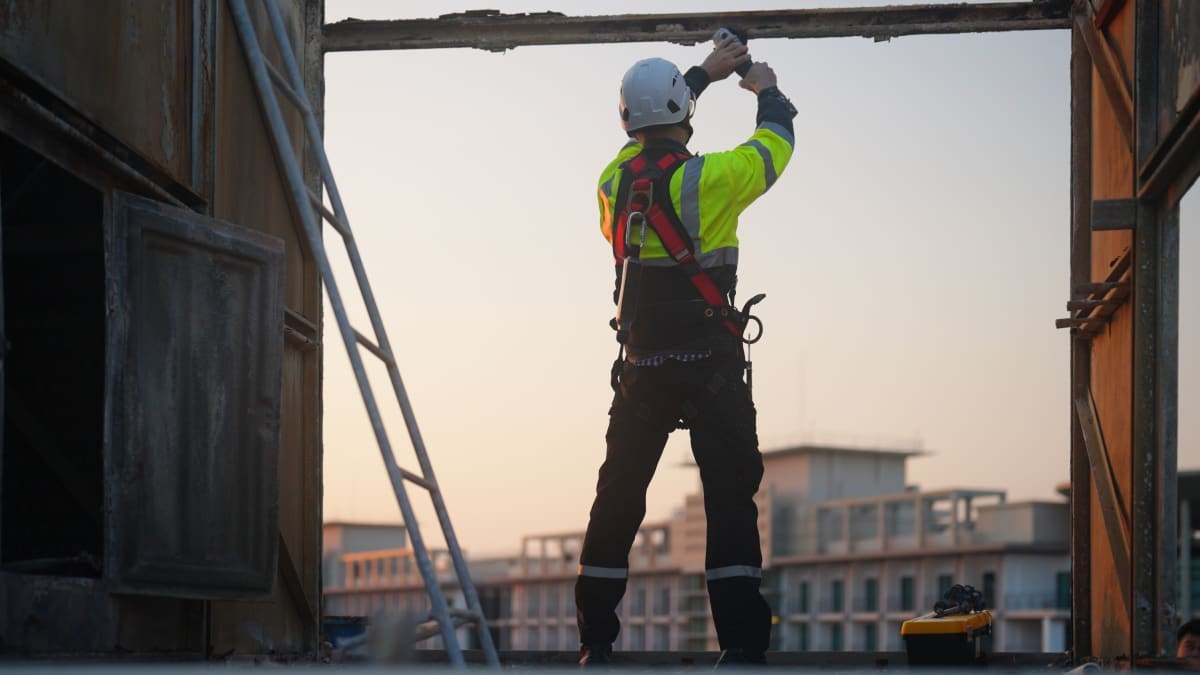
When Shelley Copsey was appointed by the Ontario Teachers' Pension Plan, one of the world's biggest infrastructure investors, her job was to find ways to use technology to solve problems across its portfolio.
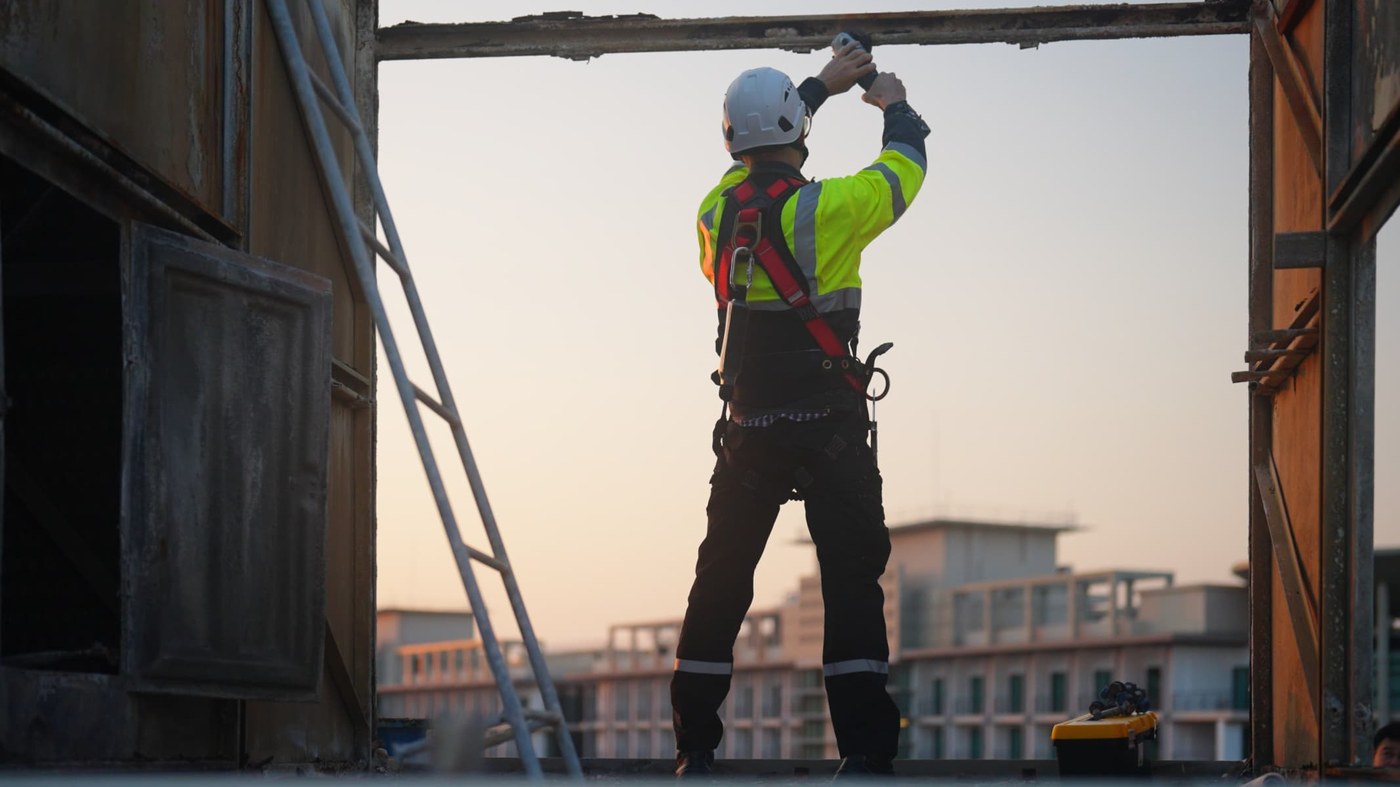
She quickly learned that there were persistent problems facing front-line workers.
Four years later, Copsey is CEO of FYLD, a London-headquartered software company that uses artificial intelligence to support workers in construction, utilities and infrastructure.
It comes as AI plays an increasingly important role in some of the most physically demanding jobs, from maintaining roads and railways to working on construction sites.
The aim is to reduce both paperwork — and accidents.
According to Copsey, when fieldwork goes wrong, attention usually turns to budgets or cash flow.
"We always go to the back office and we're like: oh, if we could help them forecast the job better, maybe this wouldn't be a problem," she told CNBC. "I think that what nobody ever did was just sit and say: well, what goes on in those field workers' lives and how do we make the life of the front line easier?"
Planning with AI
FYLD uses AI to predict which permits a project will need, helping workers avoid delays. Previously, workers often arrived at a site without all of the information they needed, Copsey said. The system can also help crews plan around the weather, for example, rescheduling heavy lifting from a day when strong winds are forecast.
Workers record short videos describing their day's tasks and safety concerns. AI analyzes the information to help workers and managers anticipate potential problems.
An additional benefit is a reduction in paperwork, according to Copsey. Field workers can spend around 20% to 25% of their time on site on administrative work, she said, whereas now, photos, video and job information can be used to generate draft reports, reducing a task that previously took around half an hour to two or three minutes.
What nobody ever did was just sit and say: well, what goes on in those field workers' lives and how do we make the life of the front line easier?Shelley CopseyFYLD
Infrastructure services provider Amey announced in March that it would roll FYLD out to 2,500 field workers as it looks to improve safety and give supervisors real-time visibility of work on the ground. Copsey said FYLD case studies have reported reductions in incidents and injuries of as much as 48%.
AI remote inspections
AI is also being used to reduce the need for physical infrastructure inspections.
Nathan Marsh, London-based senior vice president for Europe, the Middle East and Africa at U.S. software company Bentley Systems, told CNBC that the company's road maintenance platform, Blyncsy, analyzes images captured by drivers to spot problems, including damaged guardrails, overgrown vegetation and debris.
"Applying AI to existing imagery provides complete asset coverage in a fraction of the time a conventional survey would take," Marsh said.
Steven Elsham, U.K.-based CEO of Dutch maintenance software company Ultimo, told CNBC its AI tools can flag safety incidents that might otherwise go unreported.
The system scans work orders and shift logs for signs of incidents, then drafts a report for a person to review. Elsham gave the example of a warehouse door with damage that suggested it had been struck by a forklift.
"People should still report things themselves," he said. "This is there for what gets missed."
Safety evidence limits
Waleed Umer, an assistant professor at Northumbria University, England, told CNBC that many studies so far have focused on what models can detect, rather than whether they prevent harm.
Construction sites change constantly, making it difficult for cameras to capture every hazard, he said. He also warned that false alarms can lead workers to ignore warnings, while overreliance on AI can create a false sense of security.
Treat AI as an extra pair of eyes, not a replacement for supervision ... And be clear about what it can't see.Waleed UmerNorthumbria University
Billy Hare, a professor of construction management at Glasgow Caledonian University, Scotland, told CNBC that research projects and pilot studies have primarily focused on productivity gains, often assuming that less exposure to hazards means lower risks.
Bentley Systems, for example, said one rail project it supported cut physical site visits by 50% and manual surveys by 70% using a digital twin, a virtual model of a physical asset.
It's reasonable to assume that less time spent in hazardous environments could reduce risks, Hare said, but establishing whether technology actually prevents accidents needs further investigation.
According to the U.K.'s Health and Safety Executive (HSE), the number of construction workers killed in work-related incidents in Great Britain fell to 25 in 2025/26, down from 35 the previous year and below the five-year average of 37.
"The U.K. has seen the lowest construction fatality figure ever recorded this year, but this may be due to economic slowdown," Hare said, which makes it harder to tell whether technology has made a measurable difference.
Human oversight may not be enough on its own, Northumbria University's Umer said, especially if AI produces more information than supervisors can realistically review. In that case, recommendations could be approved without proper scrutiny.
"Treat AI as an extra pair of eyes, not a replacement for supervision," Umer said. "And be clear about what it can't see."
For Ultimo's Elsham, the bigger question is whether AI makes difficult jobs more manageable rather than squeezing more work out of the people doing them. That starts with how performance is measured, he said: companies need to decide what any time saved is for, and which parts of the job AI should support.
"Safety teams are already covering more hazards with the same headcount," he said. "If the only plan for the freed-up hours is more tickets per head, workers will see straight through it, and they'd be right."
Companies should instead measure what matters on the floor, he argued, including safety, first-time fixes and unplanned breakdowns, rather than just output.
"A well-run business benefits everyone in it, and the people doing the hardest jobs should feel it first," Elsham said.