In this article (4)
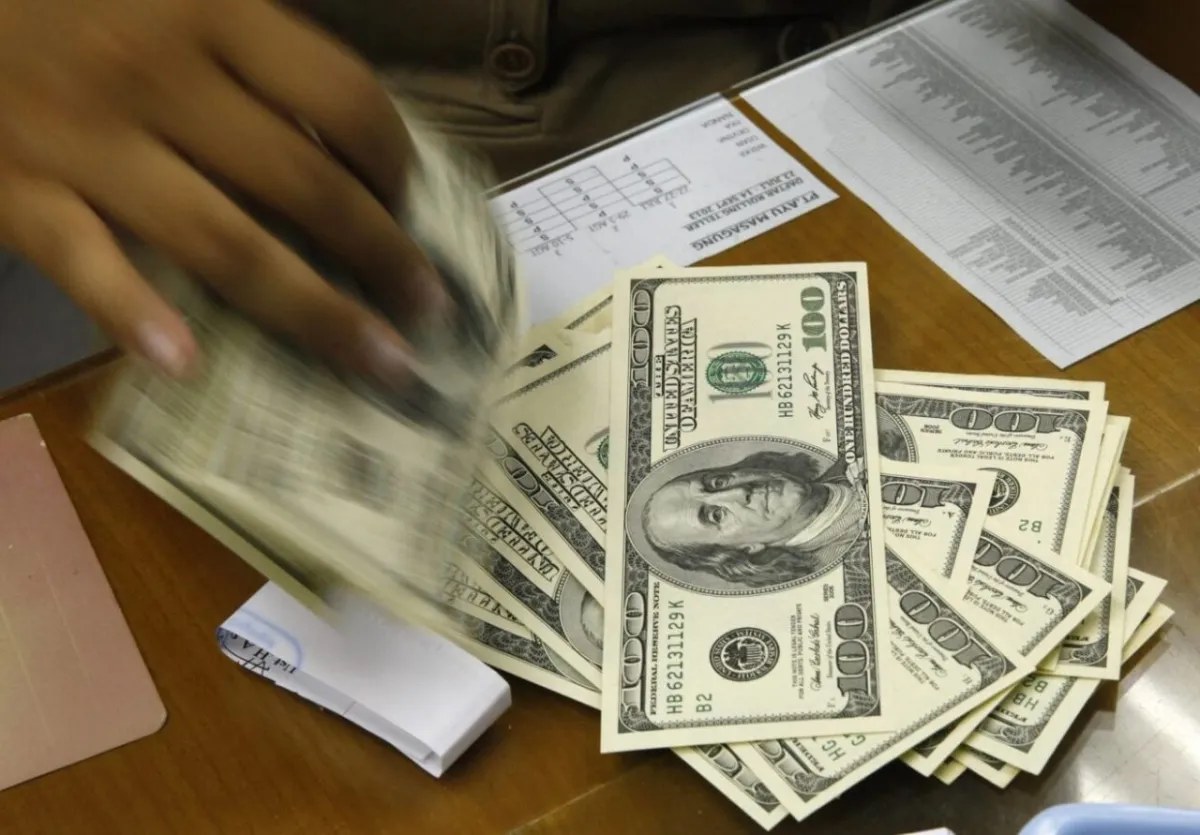
The US dollar fell 0.25 per cent to 101.77 on Friday. The drop puts the greenback on course for a 0.45 per cent weekly decline as debt strains across the tech sector rattled global markets.
A selloff across artificial intelligence infrastructure providers drained momentum from the American currency. That handed gains to the Japanese yen, the euro and the Swiss franc.
Traders redirected capital away from dollar assets. Heavy losses across tech hardware and data centre operators raised doubts about near-term returns on computing infrastructure. The pullback broke four consecutive weeks of dollar gains against the yen. On Friday, the Japanese currency traded up 0.28 per cent for the week at 157.89 per dollar.
Tech debt stress spills into currency trades
Credit stress across the artificial intelligence supply chain triggered the shift in foreign exchange sentiment. Data centre operators face mounting financing expenses. Bond investors now question whether operating cash flows can service the borrowing loads accumulated during the recent hardware expansion.
Cloud provider CoreWeave became the focal point of market anxiety this week. The company carries about $50 billion in debt. Yields on its April-issued notes climbed to roughly 15 per cent, while credit default swaps jumped to about 1,000 basis points. That pricing signals a 63 per cent probability of default over five years.
Pressure on high-yield debt shook equity valuations across hardware suppliers. Options traders responded by buying downside protection at record volumes. The fallout altered currency dynamics. Instead of serving as a traditional haven during equity declines, the dollar softened as investors priced in reduced US economic momentum and lower bond issuance.
Central banks chart divergent regional paths
In Tokyo, monetary policy signals provided direct support for the yen. Bank of Japan Governor Kazuo Ueda confirmed on Friday that authorities will keep raising benchmark interest rates as economic and financial conditions develop.
That stance contrasts with expectations in Washington. Traders assign an 87 per cent probability to the Federal Reserve holding interest rates steady at its late October meeting. Softer US yields earlier in the week removed support from the greenback, even after firm inflation data.
Elsewhere in the Asia-Pacific region, the Australian dollar climbed 0.55 per cent on Friday to $0.6959. Despite the daily rebound, the currency remained down 0.3 per cent over the week. A weak domestic employment report dampened expectations of further rate increases by the Reserve Bank of Australia.
European currencies attract defensive capital flows
European currencies captured much of the capital rotating out of dollar assets. The euro rose 0.14 per cent to $1.1235 on Friday. The move built on a 0.56 per cent surge on Thursday, securing a 0.39 per cent weekly advance.
Switzerland’s currency drew the strongest defensive buying among major peers. The Swiss franc tracked toward a 0.61 per cent weekly climb against the dollar. Investors expect Swiss policymakers will keep benchmark interest rates at zero rather than pushing borrowing costs into negative territory.
Equity investors also adjusted their exposure. Funds rotated out of high-valuation technology names and into consumer products and healthcare shares to protect portfolio returns.
Corporate capital plans face valuation hurdle
Tech spending drove the market correction after months of heavy debt financing for data centre construction and processor purchases. Tech giants Alphabet and Meta Platforms expanded their balance sheets to secure computing capacity. Specialized cloud operators relied on private debt and bond markets.
Market volatility has already disrupted corporate fundraising schedules. Smart ring maker Oura postponed its planned US initial public offering. Private artificial intelligence developers such as Anthropic face heightened scrutiny over their revenue multiples ahead of potential public listings.
Currency traders are looking ahead to the Federal Reserve rate decision later this month. Upcoming third-quarter corporate earnings will reveal whether enterprise software revenue can support those debt commitments.