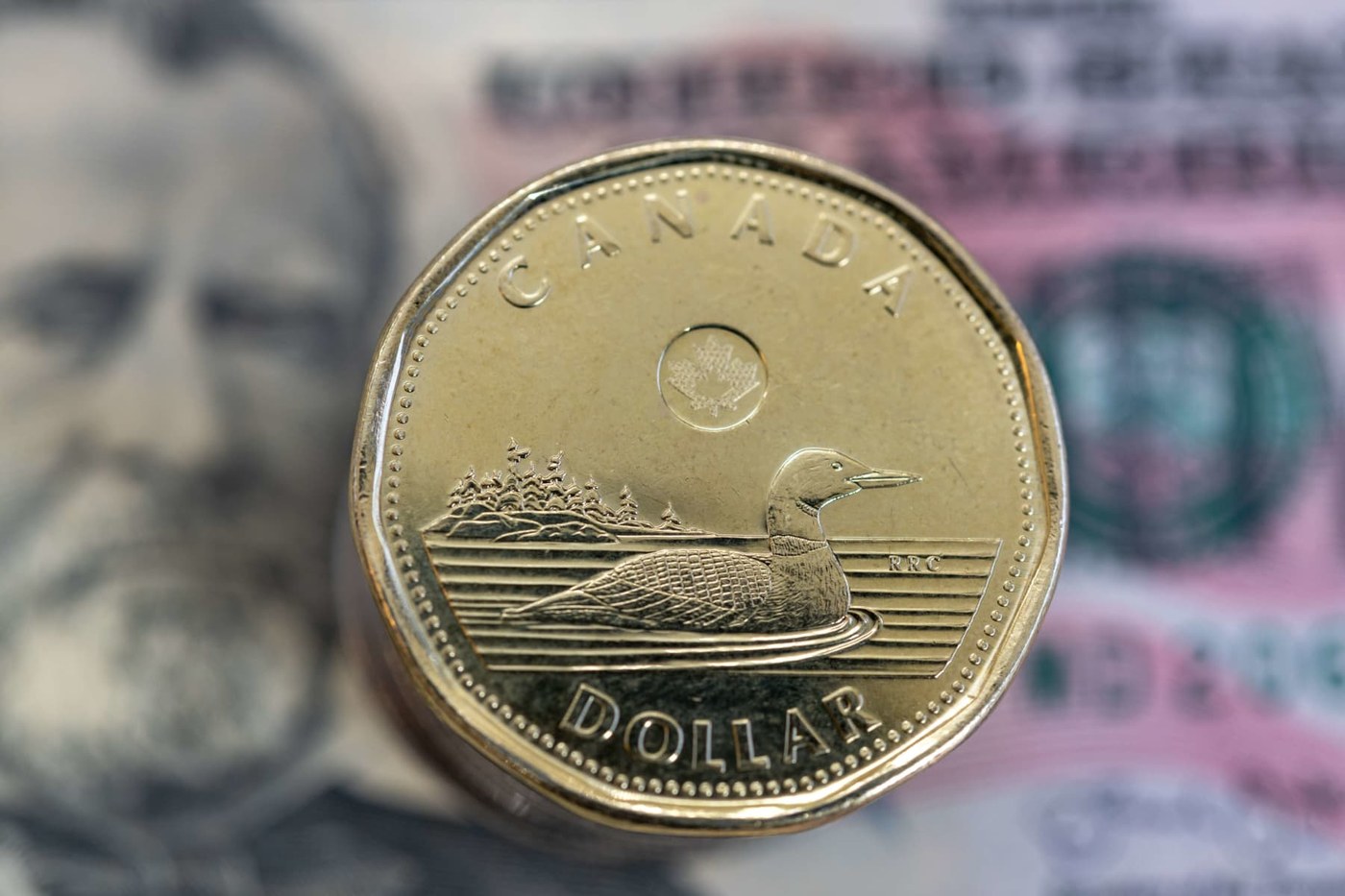
The Canadian dollar fell on Monday morning after trade talks between Ottawa and Washington fell apart, leaving both sides facing higher prices on a wide array of imported goods and threatening Canada's economic growth.
The U.S. on Saturday slapped 50% tariffs on around $20 billion worth of imports from Canada, its second-biggest trading partner after Mexico. The affected goods span dairy, wine, wood products, furniture, cement, ceramics and a slew of other areas.
Canadian Prime Minister Mark Carney said he would retaliate "dollar for dollar" with tariffs starting Sept. 8, targeting sectors such as steel, dairy, agricultural equipment, paper and electronics. Details will be released "in the coming days," Carney added.
The Canadian dollar was 0.55% lower against the U.S. dollar at 7:30 a.m. ET. The loonie also dipped against the euro, British pound and Japanese yen.
"As a smaller, more open economy, Canada has more to lose from this, but Prime Minister Mark Carney seems to have opened the door to more fiscal stimulus to support affected business," FX strategists at bank ING wrote in a Monday note.
Bradley Saunders, North America economist at Capital Economics, told CNBC that Canada faced a bigger impact to its economy from the duties than the U.S. did.
"The high levy rate means the most exposed industries could be crippled," Saunders said by email, highlighting that there is no longer an exemption for goods that comply with production rules set out in the United States-Mexico-Canada Agreement (USMCA) — a trilateral deal that is currently under renegotiation — as there has been in previous rounds of tariffs since U.S. President Donald Trump's "Liberation Day" in April 2025.
Though the targeted goods only comprise around 0.6% of Canada's gross domestic product, "a collapse in exports would still be enough to push already-weak GDP growth back towards zero," he said.
"This would especially be the case if weaker US demand for finished items such as furniture and electrical equipment had knock-on effects on upstream primary industries, which are already struggling under the strain of Section 232 tariffs."
The situation could escalate further if Trump retaliates to Canada's countermeasures, Saunders added, estimating that extending the 50% tariffs to 20% of Canada's U.S. goods exports, from 5% previously, could knock around 2% from Canadian GDP and push it into recession territory.
'We got attacked'
Negotiators had been scrambling to strike a deal all week, with officials suggesting one was close. But rhetoric turned sour by the weekend, with each side blaming the other for failing to reach an agreement and of unfair trade practices.
The U.S. and Canada export tens of billions in agricultural products to one another each year, while their auto industries are deeply entwined. The U.S.'s $48.3 billion trade deficit with Canada is in large part due to its significant imports of Canadian natural gas, electricity and crude oil.
Like the European Union during its own protracted trade negotiations with the Trump administration, Ottawa argues that its trade relationship with the U.S. shifts into deficit once services are included.
"Canada wants the benefits of being a State, without being one!!!," Trump said in a post on Truth Social on Sunday. "They have also charged our great farmers, for many years, massive amounts of Tariffs. No more!!!"
Carney said on Saturday that the U.S. had "asked too much and offered too little."
"We were not prepared to compromise Canada's sovereignty or undermine our key industries," he said.
Tariff details in major sectors including autos, steel and aluminum were a sticking point, along with Canadian protections over use of the French language and the ability for the country to strike separate trade deals, Carney indicated in his remarks.
When asked by a reporter why it felt like Canada was entering into a trade war, Carney replied: "Because we got attacked. You're at war when you get attacked. We got attacked."
Despite the potential economic hit, Carney's stance was welcomed by many in Canada, where recent polling suggests a majority of the public support a hard line in U.S. negotiations, but a growing number are fearful of their job security. Ongoing U.S. tariffs of 50% could cause around 90,000 job losses, according to Canadian economist Trevor Tombe.
Carney was elected in March 2025 in large part on a pledge to stand up to the White House. It came as reports of Canadians removing U.S. alcohol from store shelves highlighted the sour relations between the North American neighbors.
Pierre Poilievre, leader of the opposition Conservatives, said on social media that Canada "cannot accept one-sided tariffs that will deindustrialize our country."