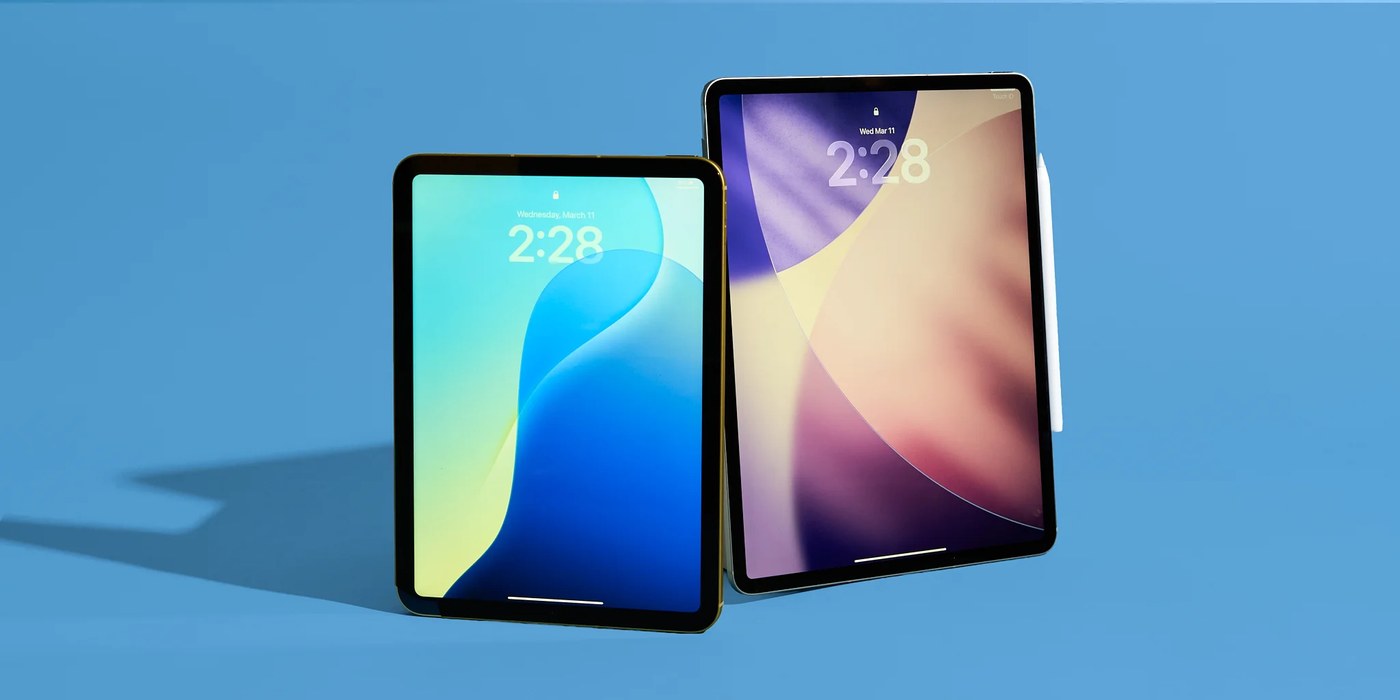
We’ve recommended Apple’s iPad as the best tablet for years, and there’s still no real competition. The Apple iPad (11th generation) has enough processing power to run any app or play the latest iPad games, and its high-resolution screen is bright enough to use outside. You can also use it with a stylus such as the Apple Pencil or add a keyboard case to turn it into a laptop. It’s the best all-around tablet for most people.
However, if you use your iPad every day for work, we recommend Apple’s latest, the Apple iPad Air (11-inch, M4). Its processor is faster than that of the entry-level iPad, and it’s better at multitasking, plus it’s compatible with higher-end, more full-featured Apple accessories like the Apple Pencil Pro and the Apple Magic Keyboard.
iPads have gotten more expensive this year, which might complicate your decision. (These price increases are due to the ongoing AI component shortage, which has dramatically raised the cost of memory and storage Apple uses in their products.) The entry-level iPad and iPad mini are $100 more expensive, the iPad Air is $150 more, and iPad Pro models are $200 more as of June 2026. We stand by our picks, but it’s worth waiting for a sale if you can find one.
Everything we recommend
Top pick
The cheapest iPad that Apple sells offers a large screen, fast performance, and a USB-C port, more than enough for most people — plus, it comes in plenty of colors.
Upgrade pick
If you’re willing to pay for laptop power in a tablet but don’t want to break the bank, the iPad Air offers a great compromise.
Top pick
The Apple iPad (11th generation) is the best tablet for tapping around on social media, watching movies or TV shows on the couch, playing games, or keeping up with your to-do list throughout the day. It has the same big screen, bright color options, and USB-C charging as the previous generation but runs on a faster processor.
Adding optional accessories can make the iPad even more useful. A keyboard case, such as Apple’s Magic Keyboard Folio, makes it easier to type for longer, and the Apple Pencil allows you to more precisely scribble your thoughts.
Upgrade pick
If you’re stuck deciding between the base iPad model and the iPad Pro, the Apple iPad Air (11-inch, M4) is a great in-between option. It’s almost identical to the basic iPad when it comes to display quality and size, but it offers faster performance and more memory — providing a smoother experience for more demanding tasks. It’s also compatible with Apple’s most useful accessories, the Magic Keyboard and the Apple Pencil Pro, allowing you to use it similarly to a laptop or as a digital notebook. We tested the larger, 13-inch iPad Air, but if you don’t need a large screen, the 11-inch model is a great choice.
The research
Why you should trust us
Brenda Stolyar is a senior staff writer at Wirecutter who has been covering tablets, smartphones, and wearables for almost a decade for a variety of outlets, including Wired, PC Mag, Digital Trends, and Mashable. Within that time, she’s tested tablets of all types, ranging from budget to flagship models, including iPads.
Wirecutter senior staff writer Dave Gershgorn specializes in covering laptops, monitors, and tablets designed for professionals, and he’s been building and repairing his own computers for nearly 20 years.
- We stress-tested each iPad’s capabilities by using it as my daily driver instead of a laptop. We relied on them for web browsing, writing in Google Docs, editing videos, web browsing, answering emails, and taking video calls. We also used them as an entertainment device for streaming TV shows and light gaming.
- We compared the latest iPads to the previous-generation versions, evaluating improvements in hardware, software, and performance.
- Like all Wirecutter journalists, we review and test products with complete editorial independence. We’re never made aware of any business implications of our editorial recommendations. Read more about our editorial standards.
How we tested
We’ve tested every iPad that Apple has ever released by using them for a few days to see how they feel when performing everyday tasks such as running apps side by side, streaming video, or playing games. We also measure the tablets’ performance using the Geekbench 6 benchmarking app, which gives us a good idea of how each new iPad stacks up against past iPads (and other, more expensive models such as the iPad Air or iPad Pro). Multiple Wirecutter staffers have also used each of our recommended iPads long-term to verify whether they perform well over time.
The best tablet: Apple iPad (11th generation)
Top pick
The Apple iPad (11th generation) is an 11-inch tablet with a bright, high-resolution screen and Apple’s fast A16 processor, which can keep up with demanding mobile games or video exports for social media.
The new version doesn’t represent a significant upgrade over the 10th-generation iPad — both models have large displays with minimal bezels, and both charge via USB-C — but the design and performance will feel much improved if you’re currently using an older iPad with a Home button.
It has a bright, crisp, responsive 11-inch display. The 11th-gen iPad has a large, 10.9-inch touchscreen display. In our tests, it was responsive to our taps and looked great. We watched movies, played games from the App Store, drew with the Apple Pencil, and scrolled social media, and the screen produced natural and accurate colors. The iPad’s display reached 441 nits of brightness, so it’s bright enough to battle the light in many outdoor environments, except for bright direct sun. The 11th-gen iPad also supports True Tone, which changes the color temperature of the display based on the time of day, making it a bit easier on your eyes.
It offers solid battery life and charges over USB-C. The latest iPad has a USB-C port, rather than the Lightning port found on older iPhones, AirPods, and 4th- to 9th-generation iPads. USB-C is now the standard for charging and high-speed data transfer between devices, so you can use the same cable to charge this iPad and modern accessories, such as most wireless headphones or power banks. In our testing, the iPad’s battery lasted for about 10 hours of continuous use, or three to four days of intermittent use.
Its A16 processor is fast enough for playing mobile games and editing social media videos. The big change to this iPad is the upgrade to Apple’s A16 processor, which the company previously used in the iPhone 14 Pro and iPhone 15. We played a bunch of demanding games, from Call of Duty: Mobile to League of Legends: Wild Rift, and we were able to play all of the App Store mobile games we tested without any serious issue, other than some occasional hiccups. The 11th-gen iPad’s A16 processor is also powerful enough to edit and export small video projects in apps such as Adobe Premiere Rush: The iPad took 1 minute 24 seconds to export a five-minute test video in 1080p, while the M3 iPad Air performed the same task in 50 seconds. Considering the much higher price of the iPad Air, we think that’s an acceptable difference, especially for a longer, five-minute video.
It comes with some of the same productivity features as more expensive iPads, thanks to iPadOS 26. With iPadOS 26, the 11th-gen iPad comes with support for Stage Manager and Windowing, as well as iPadOS and macOS features that let you run multiple apps in different layered windows, like you would on a traditional laptop. However, unlike with the iPad Air and iPad Pro, with this one you can’t extend the display when it’s hooked up to an external monitor; you can only mirror it. But you can still use the multitasking features to create a traditional macOS-looking desktop on the iPad itself. It’s useful for productivity, making it easier to not only get work done but to also navigate the iPad when using multiple apps and windows.
Its FaceTime camera is great for video calls. Like the 10th-generation iPad, the latest iPad includes a 12-megapixel front-facing camera in the landscape position, which puts the selfie lens in the top center when you’re using the iPad with a keyboard or on a stand. Apple’s Center Stage feature, which keeps you centered and in focus during video calls, also works pretty well, as long as you don’t move around too much. The rear camera supports 4K video and slow-motion video capture up to 1080p at 240 frames per second.
It has a Touch ID sensor for you to unlock the device. As on the iPad Air, the entry-level iPad’s Touch ID sensor is located on the power button, so you just need to rest your finger on the button for a moment to unlock it. During our tests, at first this felt way slower and far less convenient than Face ID on iPhones and the iPad Pro, but after a day or two it became second nature. We recommend adding fingerprints for both of your index fingers, so that you can turn on the tablet quickly whether it’s in landscape or portrait orientation.
It comes with 128 GB of storage. Apple has increased the base amount of storage in the iPad from 64 GB to 128 GB, which is a welcome increase.
Flaws but not dealbreakers
It doesn’t support the Apple Pencil Pro or the 2nd-generation Pencil. The 11th-gen iPad supports only the 1st-generation Apple Pencil and the USB-C Pencil, neither of which offers magnetic charging. The USB-C Pencil can connect to the iPad magnetically, but it doesn’t charge while connected; it also lacks a pressure-sensitivity feature to determine how dark or wide your mark should be based on how hard you press, which is a critical feature for doing any type of illustration on an iPad. This is a bigger problem for artists, but it probably isn’t a dealbreaker for most people.
A slight gap separates the display and the glass. The 11th-generation iPad’s display and front glass are separate layers, rather than one single piece. This leads to a slight physical separation between your finger presses or your stylus input and the results on the display, an effect referred to as parallax. Apple has improved the effect in comparison with its appearance on 9th-gen and earlier iPads, but it is still visible. In contrast, the more expensive iPad Air and iPad Pro feature more expensive, laminated displays, in which the display and the front glass are one, single piece.
Upgrade pick: Apple iPad Air (11-inch, M4)
Upgrade pick
The Apple iPad Air (11-inch, M4) is a great middle-ground option for those who want a tablet that’s more capable than the entry-level iPad but don’t need the power of the iPad Pro. The iPad Air has a bright LCD screen that runs on Apple’s M4 chip (the same one featured in previous-generation MacBooks), along with more RAM than its predecessors. It’s also compatible with plenty of accessories, including Apple’s Magic Keyboard and Apple Pencil Pro. And it comes in two sizes: 11 inches and 13 inches. We tested the larger size, which is typically $200 more. But if you don’t need a screen that big, the 11-inch iPad Air is the better option.
The iPad Air has an updated M4 processor and more RAM. The latest iPad Air runs on Apple’s custom M4 chip, which is the same processor found in last year’s MacBook Air. It’s not a major difference from the M3 found in its predecessor, but it does offer a bump in performance (you’ll likely notice a difference only if you’re upgrading from a much older iPad). Apple also increased the RAM from 8 GB to 12 GB, allowing it to run iPadOS 26, Apple Intelligence features, and multitasking more smoothly. It also comes equipped with Apple’s own C1X modem, for faster cellular data performance, and an N1 chip that provides support for Bluetooth 6, Wi-Fi 7, and Thread.
We found that it handled basic tasks without any hiccups; on a typical day, we used apps like Slack, Google Docs, Google Meet, Gmail, Spotify, and Telegram simultaneously without any lag or stuttering. It also tackled slightly more demanding tasks, like editing videos in CapCut, smoothly — applying effects, filters, or overlays within seconds. And export times were quick. The M4 iPad Air exported a 5-minute 4K video in 1 minute 25 seconds, while it took the iPad (11th-generation) 3 minutes 35 seconds. The M4 iPad Air also handled graphics-intensive games, like Call of Duty: Mobile, with ease. However, even with a more powerful processor than the entry-level iPad, the iPad Air still has the same battery life of about 10 hours (on both sizes) with everyday use.
It has a nice, bright screen that’s available in two sizes. The 11-inch M4 iPad Air has a 2360-by-1640-pixel LCD screen, while the 13-inch model has a higher-resolution, 2732-by-2048-pixel LCD screen. We tested the latter, which also gets a bit brighter than its smaller counterpart. It’s about $200 more, but it’s the better option if you plan to use the iPad Air for tasks that require extra screen real estate — such as photo or video editing, sketching, and multitasking.
The accessory options and software deliver a MacOS-like experience. If you want the full desktop setup, you can attach the iPad Air to an external keyboard, mouse, and monitor. When you turn on Extended Display mode, you can use both the tablet and monitor as separate workspaces, with the ability to control the monitor and drag apps and files between the two using your mouse.
It also comes with multitasking features like Windowed Apps and Stage Manager (both of which are also available on the 11th-generation iPad). Using the Windowed Apps feature (which launched with iPadOS 26), you can resize, stack, and arrange multiple windows on the screen, similar to how you would on a standard Mac. Stage Manager similarly lets you manage your windows, plus it groups your open apps and provides access to them via a sidebar. We found that both of these features made it a lot less frustrating to navigate iPadOS and a lot easier to rely on an iPad as a laptop replacement for getting work done.
It’s compatible with the Apple Pencil Pro and Magic Keyboard. Unlike the base iPad, the iPad Air can attach to the Magic Keyboard and the Apple Pencil Pro, which are the best keyboard case and stylus Apple offers. The Magic Keyboard comes with a row of function keys and a USB-C port for charging; the Apple Pencil Pro has pressure and tilt sensitivity, built-in sensors that trigger shortcuts when you tap or squeeze it, and support for the Find My app in case you lose it. If you want a less expensive stylus, the iPad Air is also compatible with the Apple Pencil (USB-C). But it does lack pressure sensitivity, so it’s better for those using the stylus strictly for note-taking.
It comes with plenty of storage options. The entry-level M4 iPad Air comes with 128 GB, but you can upgrade to 256 GB, 512 GB, or 1 TB — for an extra fee.
The FaceTime camera is great for video calls. The M4 iPad Air comes equipped with a 12-megapixel front-facing camera. As with its predecessor, it sits at the center of the tablet when it’s in landscape orientation, which feels more natural during video calls. The image quality tends to look a bit grainy, depending on the lighting around you, but it’s more than ideal for Google Meet and FaceTime calls.
Flaws but not dealbreakers
It’s heavier and thicker than the iPad Pro. As its name suggests, the iPad Air is designed to be light and thin. But the current 11-inch iPad Air is 6.1 mm thick, while the latest 11-inch iPad Pro comes in at 5.3 mm. It’s also heavier, at 1.02 pounds, while the iPad Pro weighs under a pound. The iPad Air is still light and thin enough to carry around and fit into your backpack or tote bag, but attaching accessories (like Apple’s Magic Keyboard) makes it even heavier.
The display could use an upgrade, especially on the larger model. As with its predecessor, the iPad Air leverages the same display technology as the 11th-generation iPad, with the same brightness and 60 Hz refresh rate. Both sizes have a wider color gamut than the 11th-generation model, but we wish Apple would replace the LCD panel with the same mini LED as the iPad Pro, specifically on the 13-inch iPad Air. This would allow for better color accuracy, which is useful if you’re using the iPad Air with creative apps for editing photos or videos. The higher 120 Hz refresh rate would also create a better mobile gaming experience.
It doesn’t have Face ID. The iPad Air comes with Touch ID built into the top button. After adding your fingerprint, you can use it to unlock the tablet, log into apps, and authorize payments. But for a tablet at this price point, we would’ve liked to see the addition of a TrueDepth camera for Face ID (currently reserved for the iPad Pro), allowing you to unlock the tablet, fill in passwords, and approve payments with facial recognition instead. This is a minor gripe, but it’s a lot more convenient on a daily basis.
It’s expensive, especially with accessories. The M4 iPad Air starts at $750 for the 11-inch model and $950 for the 13-inch version. This adds up quickly when you’re tacking on the company’s accessories. In terms of cases, the Magic Keyboard starts at $269, while the Smart Folio Case starts at $79. Meanwhile, the Apple Pencil (USB-C) costs $79, and the Apple Pencil Pro costs $129.
What about the iPad mini?
The iPad mini (7th generation) is basically just a small iPad Air. The latest iPad mini is essentially the same as the previous 8.3-inch model, adding a faster processor, more RAM, additional storage and color options, and support for Apple’s AI features. It isn’t the best choice if you’re trying to get work done on a tablet — the screen is too small for that. But for kids or for people with smaller hands who primarily want to watch videos, play games, doodle with the Apple Pencil, or chat with friends, it can be more comfortable to use than the standard iPad. The single biggest strike against it is its price: The iPad mini starts at $600, $150 more than the 11th-gen iPad.
It looks like a small iPad Air. The iPad Mini shares many of the iPad Air’s features, including a flat-side design, an edge-to-edge display, and a magnetic connector that can charge the Apple Pencil 2 and Apple Pencil Pro. It has no Smart Connector to hook up a keyboard, but you probably wouldn’t like using a tiny keyboard with this iPad, anyway. You can pair the iPad mini with a Bluetooth keyboard if you really need physical keys.
Because the display and the glass have no air gap in between, the iPad mini’s screen looks better than the standard iPad’s. And using it feels as if you’re directly interacting with what’s on the screen, rather than with an image below it. The anti-reflective coating makes a small but noticeable difference, and the screen supports Apple’s ambient-light-based True Tone color shifting, which makes the screen a bit easier on the eyes in warm indoor lighting.
It isn’t as powerful as an iPad Air, but it is more impressive than an 11th-gen iPad. The 7th-generation iPad mini’s Apple A17 Pro Bionic processor is faster than the A16 processor in the 11th-gen iPad. We didn’t encounter any stutters or slowdowns in our testing, which involved browsing the web, streaming media, and playing games like Call of Duty: Mobile and Asphalt 9. The A17 Pro chip also handles the company’s Apple Intelligence features effortlessly, though the AI-assisted tools aren’t that impressive yet. And, as is the case with every iPad, the battery lasts for 10 hours or more.
Apple’s smallest iPad now has competition in the form of folding phones. The latest features are all welcome upgrades that bring the iPad mini in line with almost every other iPad, and the design change allows for more screen space in a slightly smaller overall package. The iPad mini’s weight is evenly distributed, and we found it comfortable to hold for extended reading sessions. In our opinion, though, there’s something about the design that’s just begging to be folded in half. Perhaps we have foldable phones on our minds. Google has the Pixel 10 Pro Fold, while the Samsung has the Z Fold 7 and Z Flip 7 as part of its Galaxy lineup. Motorola also offers a lineup of phablet-style and clamshell foldables, including the Razr Fold, Razr (2026), Razr+ (2026), and Razr Ultra (2026). One of our first thoughts on pulling this tablet out of the box was that we wished we could fold it up like a book, especially when we were holding the iPad mini in landscape orientation.
Flaws but not dealbreakers
It’s expensive for its size. If you do like the size, the 7th-gen iPad mini is a great choice. But price is a major factor here. Apple upgraded the base storage to 128 GB; that model starts at $600. An extra $100 buys you 256 GB, and it’s a huge, $300 premium to jump to 512 GB. Want 5G connectivity? That’s yet another $150 price bump. It’s hard to justify these costs unless the tablet’s size is a crucial factor for you — and if it is, well, you don’t really have any other options.
Should you upgrade from an older iPad?
If you don’t use your iPad for more than an hour or two a day, or if you’ve never been bothered by its performance, you probably don’t need the latest and greatest unless you want the ability to use an iPad as a second monitor for a Mac running macOS Catalina or later.
On the other hand, if you have an older iPad, and you use it frequently throughout the day — for example, as a tablet computer running lots of apps, as a way to stay in constant contact via email, text, audio, video, and social media, or as a media and gaming device — and it’s feeling out-of-date and sluggish, you may benefit from upgrading to the latest model. The 11th-generation iPad is noticeably faster than 2019’s 3rd-generation iPad Air or 2020’s 8th-generation iPad, especially for graphics-intensive apps.
If you’re contemplating upgrading, the fact that Apple continues to support older models with new software updates means you can likely sell your current iPad for a reasonable price (selling back to Apple directly is easy but generally gives you less money than you could receive elsewhere). Alternatively, you can pass it down to a child or other family member, and they’ll have a tablet that’s still good for basic use, as well as most kids apps and learning apps.
Do you need cellular capability?
All iPad models include Wi-Fi connectivity, but for $1500 to $200 more (depending on the model and storage configuration), you can add support for 5G, which means you can get an internet connection anywhere your cellular carrier offers service. And you don’t have to use the same carrier you have for your phone: The cellular versions of the iPad include an Apple SIM or a digital eSIM that you can activate on any carrier from the tablet itself.
If you frequently need internet access away from Wi-Fi, and you can’t (or don’t want to) tether to your phone, a Wi-Fi and cellular iPad is worth considering. You can’t add cellular capabilities to a Wi-Fi–only iPad later, so you have to make the decision when you buy the tablet.
Buying a refurbished iPad
A Certified Refurbished iPad purchased directly from Apple is every bit as reliable as a new one and is almost always cosmetically indistinguishable from new. It also comes with a full one-year Apple warranty, and it’s eligible for Apple’s optional AppleCare+ extended warranty. In other words, you’re getting something that’s basically new at a decent discount, especially if you’re buying increased storage. However, we wouldn’t recommend buying a 9th-generation iPad, which Apple still sells refurbished.
Not every model of iPad is available at all times through Apple’s refurb store. If you know the specific configuration you want to buy, we recommend setting up an alert on Refurb Tracker: Choose your country, choose iPad, and enter keywords (for example, “Pro AND 128GB”), and the site will notify you (via email or RSS) when matching models are available.
The competition
Apple no longer sells the iPad Air (M3), but it’s still a solid option considering that the M4-powered iPad Air is an iterative update. It has the same screen technology (in 11-inch and 13-inch versions), battery life, and storage options. It’s also compatible with Apple’s Magic Keyboard and Apple Pencil Pro. The M3 processor is older (it launched in 2023), but it’s still plenty powerful for a variety of tasks — from basic ones to video editing and mobile gaming. We do suggest waiting until it’s on sale at a third-party retailer.
The iPad Pro continues to be Apple’s best tablet but is too expensive for most people — especially now that Apple has raised the price by $200. The M5 models are Apple’s thinnest and lightest devices ever, measuring 5.3 millimeters thick and weighing just under a pound. The 11-inch and 13-inch models are equipped with brilliant, edge-to-edge OLED screens and a landscape FaceTime camera, and they run on Apple’s cutting-edge M5 processor. They also offer double the base storage, at 256 GB, as well as support for Apple’s Pencil Pro and Magic Keyboard. All of those features add up to a powerful tablet, but the M4 iPad Air performs just as well for half the price.
If you’re interested in Android tablets, we cover those extensively in our guide to Android tablets.
Roderick Scott contributed additional reporting for a previous version of this guide.
This article was edited by Signe Brewster, Arthur Gies and Caitlin McGarry.
Meet your guides
I am based in Seattle and responsible for Wirecutter’s computer monitor coverage, as well as all our guides to Apple laptops and desktops. I also review higher-powered laptops, such as business laptops and laptops for photo and video editing. Plus, I write our reviews for all-in-one computers, ergonomic keyboards, and home 3D printers. If it has a screen, sits on a desk, and isn’t a basic Windows ultrabook, I’m usually the person to try it out.
Further reading
Getting Work Done on an iPad
You can do a surprising amount of work on an iPad with the right gear. These are the best accessories for turning your iPad into a mobile work space.
The Best Tablet for Your Kid Is Your Old One
by Ellen Lee, Ryan Whitwam, and Andrew Cunningham
Whether it’s for watching Bluey or playing Minecraft, a great kid’s tablet should be durable, versatile, and easy for parents to manage.The Best Pro Tablets
If you’re looking to replace or supplement your laptop with a tablet, you have great options—but you also have some tough choices ahead of you.The Best iPad Pro Cases
If you’re spending $1,000 on an iPad Pro, it makes sense to protect that investment with a good case.