
Markets

Vertiv CEO makes critical comment as stock crashes

· Yahoo Finance

Vertiv CEO makes critical comment as stock crashes

Vertiv (VRT) had one of its roughest earnings days this week.

The AI infrastructure company's second-quarter earnings beat expectations, but its revenue fell short of Wall Street's expectations, and that was enough to sink the stock.

Then the company's CEO went on television and told investors to calm down.

"This is a temporary issue," Giordano Albertazzi said on CNBC's "Mad Money." "Nothing has changed in the long term of our trajectory."

That's a bold claim to make while the stock is down double digits.

But it matters whether he's right. Anyone holding VRT has a stake in the answer, and so does the broader group of AI data center stocks riding the same buildout.

What the Vertiv earnings report actually showed

Vertiv reported adjusted earnings of $1.52 a share, ahead of the $1.43 analysts expected, according to Yahoo Finance,

Revenue came in at $3.27 billion, short of the $3.38 billion Wall Street predicted.

So earnings beat expectations and sales still grew 24% from a year earlier. The problem was the miss on revenue, which came in roughly 3% below the target.

For a stock priced for perfection, 3% was enough to cause a drop.

Why a small revenue miss triggered a big Vertiv stock drop

Vertiv entered earnings trading at about 40 times its updated full-year profit guidance, Investing.com reported.

At that price, investors expect the company to hit every number cleanly.

When a highly valued stock misses even slightly, the selling tends to be sharp because there is little room built into the price for disappointment. That is what happened here.

The revenue shortfall came from timing, according to the company.

Vertiv said sales slipped because of temporary supply-chain congestion and multi-phased project execution as AI deployments grow larger and more complex.

In plain terms, some of the revenue Vertiv expected to book in the second quarter got pushed into the back half of the year as big projects rolled out in stages.

What Albertazzi told investors about demand

Albertazzi's core argument was that customer demand never wavered.

"We continue to be very, very optimistic about the future, and we have a very strong backlog supporting that," he told CNBC's Jim Cramer.

The industry is very strong. Our pipelines are very, very strong

He also pointed to the fix already in motion.

"What we've done with the rest of the year, taking our sales up, more than compensates this timing element in the second quarter," he said. "We believe in a very strong second half."

The company backed that claim by raising its full-year outlook, which is the opposite of what a business with a real demand problem usually does.

How Vertiv raised its guidance after the miss

Vertiv lifted its 2026 targets across the board, according to DCD.

Net sales: raised to $13.8 billion - $14.2 billion, up from $13.5 billion - $14 billion

Adjusted earnings: raised to $6.65 - $6.75 a share, up from $6.30 - $6.40

Third-quarter revenue: guided to $3.65 billion - $3.85 billion, roughly in line with estimates

The raised guidance is the strongest evidence for the CEO's case. If projects were being canceled, the full-year numbers would be coming down, not going up.

Operating margin also expanded, reaching 22.6% in the quarter, and the company ended the period with $5.6 billion in liquidity.

Where Vertiv fits in the AI infrastructure buildout

Vertiv sells the essential hardware behind the AI boom.

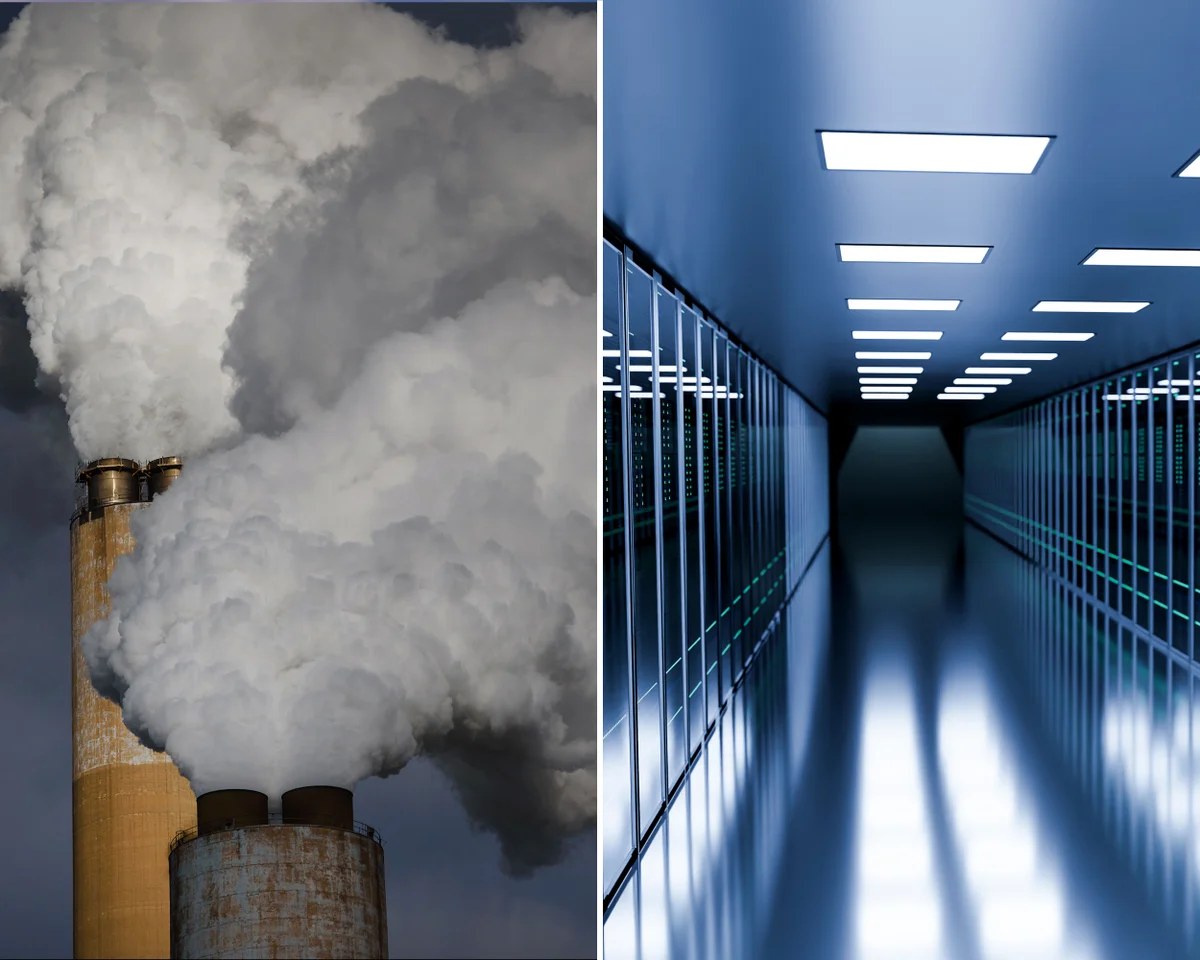
Its power and liquid cooling systems keep data centers from overheating as chips get denser and hotter, which makes the company a direct beneficiary of every new AI facility that gets built.

That role helped make VRT one of the market's biggest winners, with shares gaining about 42% in 2025 and another 27% in 2026 even after this week's drop, according to CNBC.

Vertiv recently opened a new manufacturing plant in Johor, Malaysia, to expand production of liquid cooling units and prefabricated power modules for data centers across Asia.

Vertiv also works closely with Nvidia to design power and cooling components for next-generation AI systems, which keeps it tied to the fastest-moving part of the market.

What Wall Street analysts are saying about VRT

Analysts trimmed their price targets but mostly kept their Buy ratings.

That suggests Wall Street sees the revenue miss as a timing problem rather than a sign that demand for Vertiv's products is weakening.

Evercore ISI cut its target to $375 from $425 while keeping an Outperform rating, TipRanks reported.

The firm said the debate coming out of the quarter is whether the revenue slip reflects timing or an early sign of deployment-complexity constraints, but concluded that "the offsets are compelling."

Several other firms followed with lower targets, including Citi at $358, Baird at $320, and Goldman Sachs at $301.

Even after the cuts, VRT still carries a "Strong Buy" consensus, with an average 12-month target of about $366 across 18 analysts.

If Vertiv hits its raised full-year targets and its third-quarter sales land inside the guided range, the timing explanation holds and this week's drop looks like an overreaction.

If revenue slips again next quarter, the concern shifts from timing to whether complex AI projects are simply harder to deliver on schedule, which would be a real problem for a premium-priced stock.

Whether Q3 revenue lands in the $3.65 billion to $3.85 billion range

Whether backlog keeps growing rather than flattening

Whether supply-chain delays ease or repeat

For now, the stock trades near $234, well below where it started the week, which gives buyers a lower entry point than they had a few days ago.

The risk is straightforward. If demand is as strong as management claims, the discount is a gift. If the timing story turns into a pattern, the discount is a warning.

The next earnings report will settle which one it is.