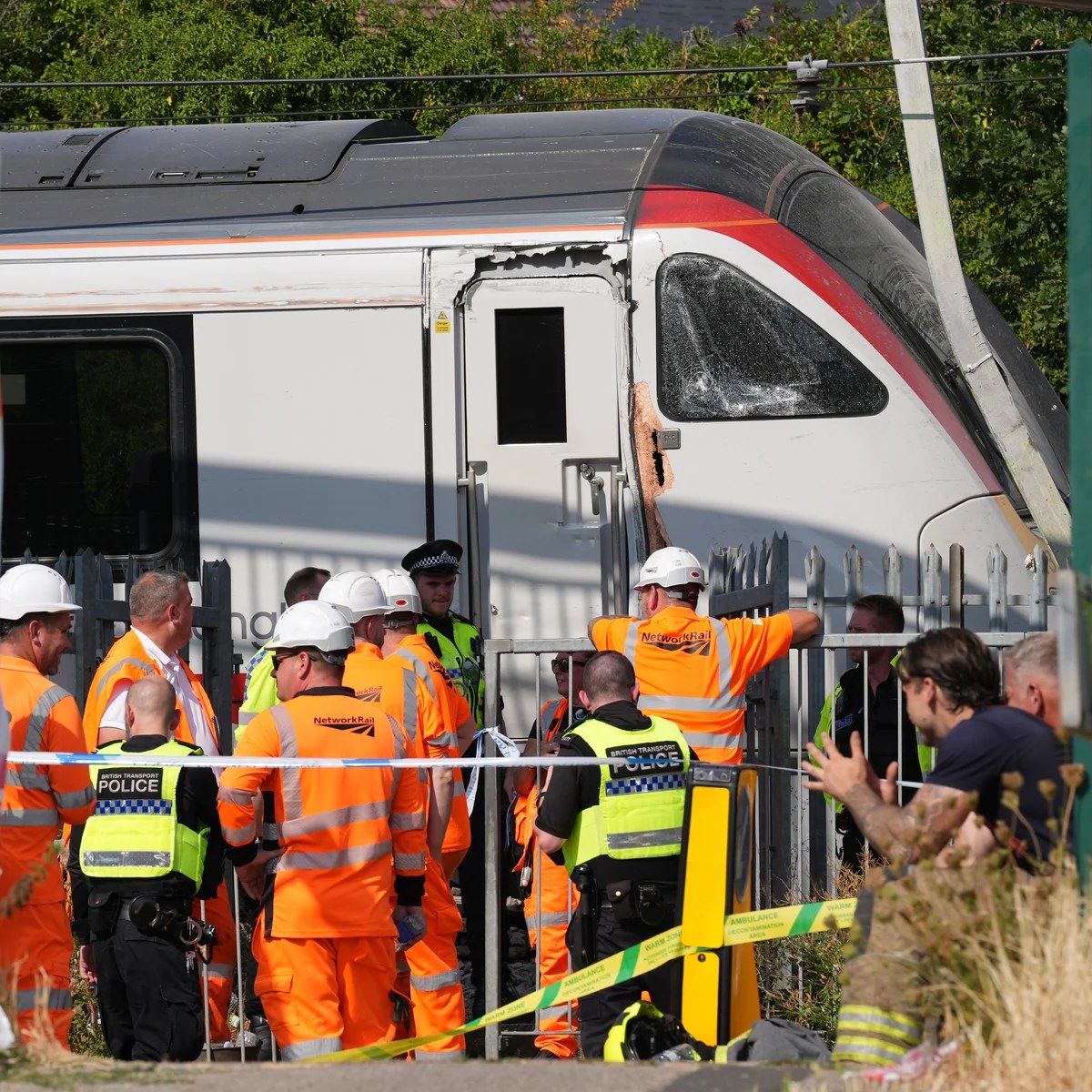
A train has derailed in Essex, less than 24 hours after two people were seriously injured in a similar incident in East Sussex.
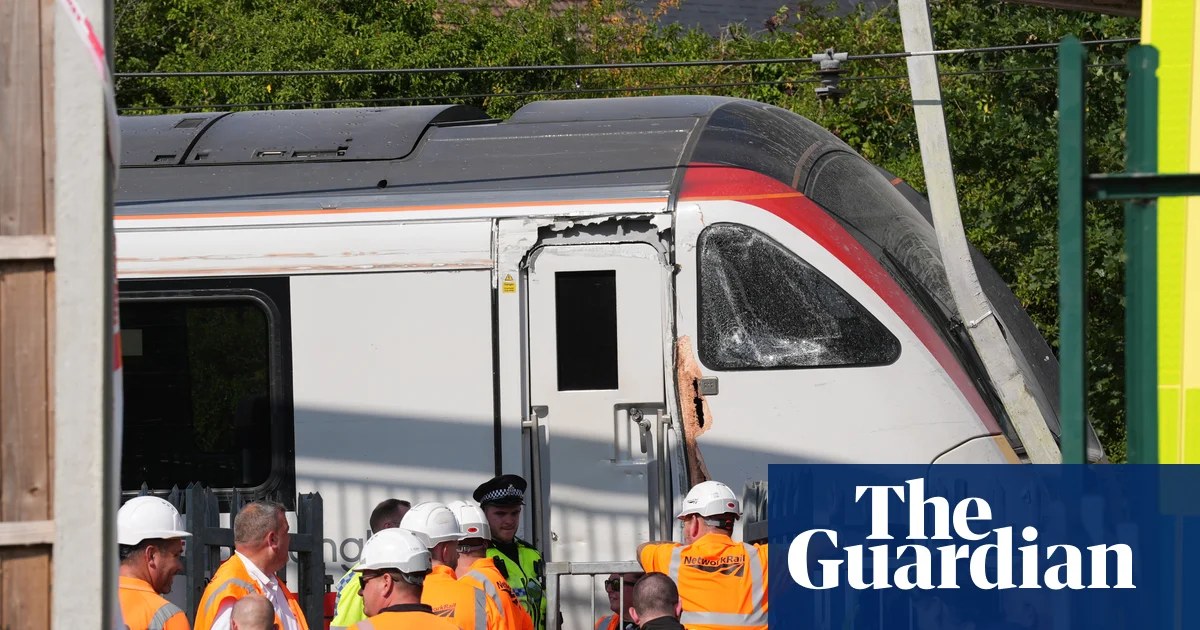
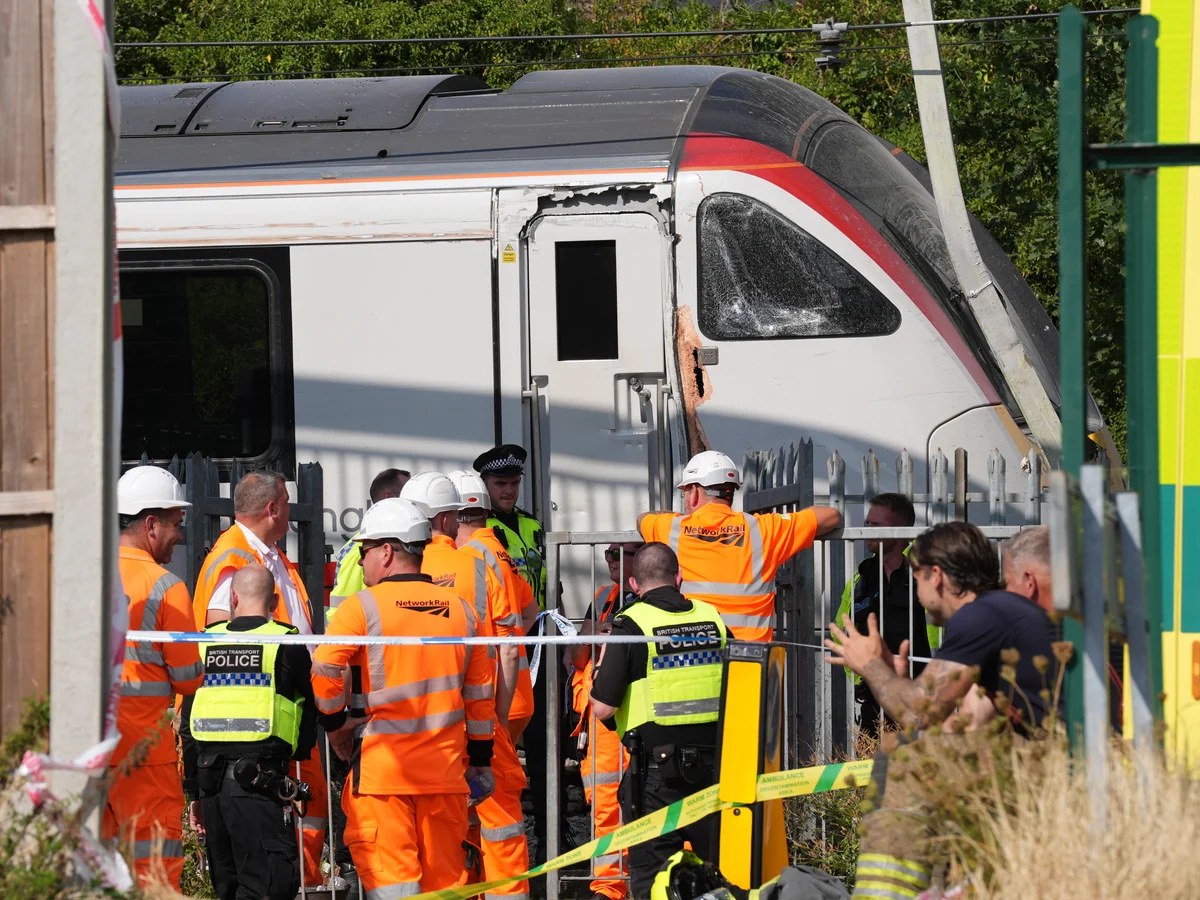
British Transport Police confirmed the rear carriages of the train derailed “in an upright position” at Wickford railway station, adding that there were “no reported injuries”.
A post on the National Rail website said there was a “problem currently under investigation between Wickford and Southend Victoria”, resulting in all lines being closed between these stations. This meant trains running between London Liverpool Street and Southend Victoria were unable to operate.
The statement said major disruption was “expected to continue until further notice”. A spokesperson added: “We are dealing with a derailment incident near Wickford station in Essex, and we are working quickly to understand the situation and to provide assistance where needed. We will provide further information in due course.”
The Rail Accident Investigation Branch (RAIB) said on X that it had deployed a team of inspectors to the site to begin gathering evidence.
A major incident was declared by BTP on Thursday afternoon when several Southern train carriages left the track near Lewes and ended up on their side, trapping passengers on board. About 150 people had been on the service from London Victoria to Eastbourne, which was evacuated.
Two people were taken to major trauma centres with “severe” injuries. BTP said on Friday the injuries were not deemed to be life-threatening.
Southern has urged customers planning to travel this weekend to check ahead, especially those attending Eastbourne Airshow, as the railway between Lewes and Haywards Heath remains closed while specialist teams continue emergency response, recovery and investigation work.
As a result, major disruption is expected across parts of the Southern network until further notice, and trains are expected to be extremely busy, with customers advised to allow at least one extra hour for their journey.
John Whitehurst, chief executive of Greater Thameslink Railway (GTR), which operates Southern Railway, praised four railway colleagues on board the train, including the driver, onboard supervisor, a spare driver and an off-duty member of staff, who initial reports suggested had “acted quickly to help make the railway safe and support passengers during the evacuation”.
“Their actions are a powerful example of colleagues putting passengers first in very difficult circumstances,” he said.
After the incident, Whitehurst insisted the railway was safe in hot weather. He told BBC Radio 4’s Today programme that derailments were “incredibly rare”, adding that what happened “was a very serious incident and I’m deeply saddened by it”. He said “a full investigation” was underway with the RAIB.
The former chairman of the Strategic Rail Authority, Richard Bowker, told BBC Radio 4’s Today Programme that the inquiry would look at the effects of heat on the damaged track, including whether the ground below the track had dried out.
The former chief executive of Etihad Rail said the incidence of rails buckling in high temperatures “has actually been steadily falling over the last sort of 20-30 years”.
He added: “One of the reasons being that we use slightly heavier rails, we use better fastenings and stuff like that. But physics is physics, and one of the challenges we’ve got as we see more extreme ranges of heat is dealing with that.”
James MacCleary, the Lewes MP, told Times Radio that concerns had been raised about tracks being “a bit bumpier in recent months” in the area due to the sustained heatwaves.
Xueyu Geng, Professor in Geotechnical Engineering at the University of Warwick, said that steel rail was known to expand significantly in extreme heat, with a 1C rise in temperature causing roughly 11mm of expansion per kilometre of track.
“Rail is installed with a ‘stress-free’ temperature in mind, and when ambient and solar-radiation temperatures exceed that threshold, the track can buckle laterally, what the industry calls a ‘sun kink’,” she said.
She added: “The infrastructure that Britain built first, and that has served us longest, is also the infrastructure most exposed to a climate it was never designed for.”
A Department for Transport spokesperson said: “We are aware of a derailment involving a Greater Anglia train near Wickford, Essex. The train is upright, there are no reported injuries and investigators have already been deployed to the site.
“Our railways remain amongst the safest in the world and while incidents like this are extremely rare, when they do occur, they are taken very seriously.”