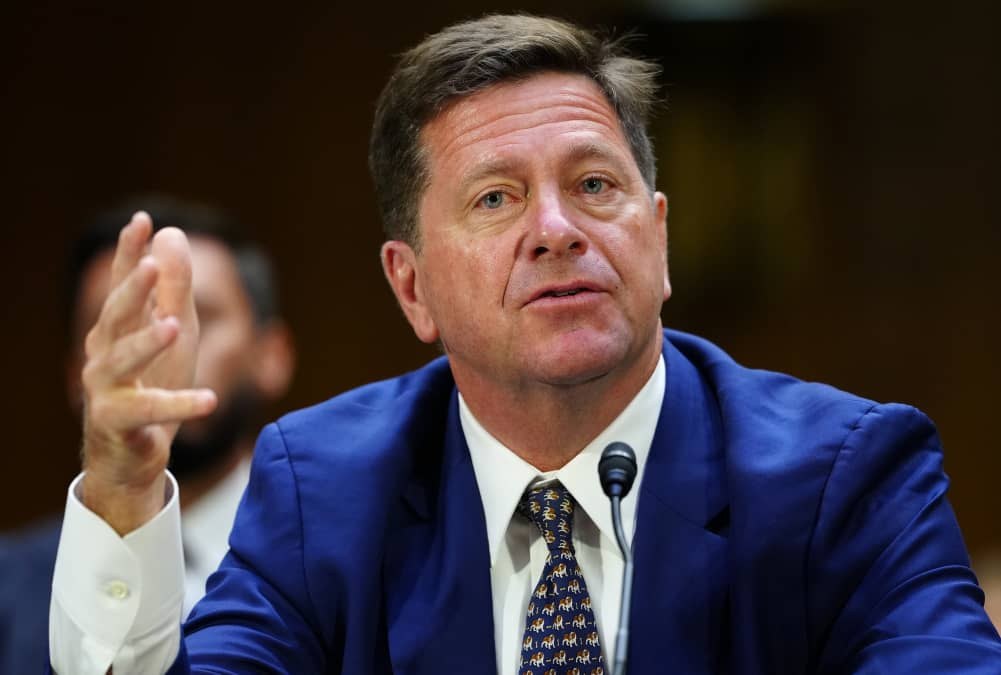
U.S. companies and the Trump administration both "need to be wary" of foreign espionage attempts as the race for artificial intelligence dominance continues, Director of National Intelligence Jay Clayton told CNBC on Friday.
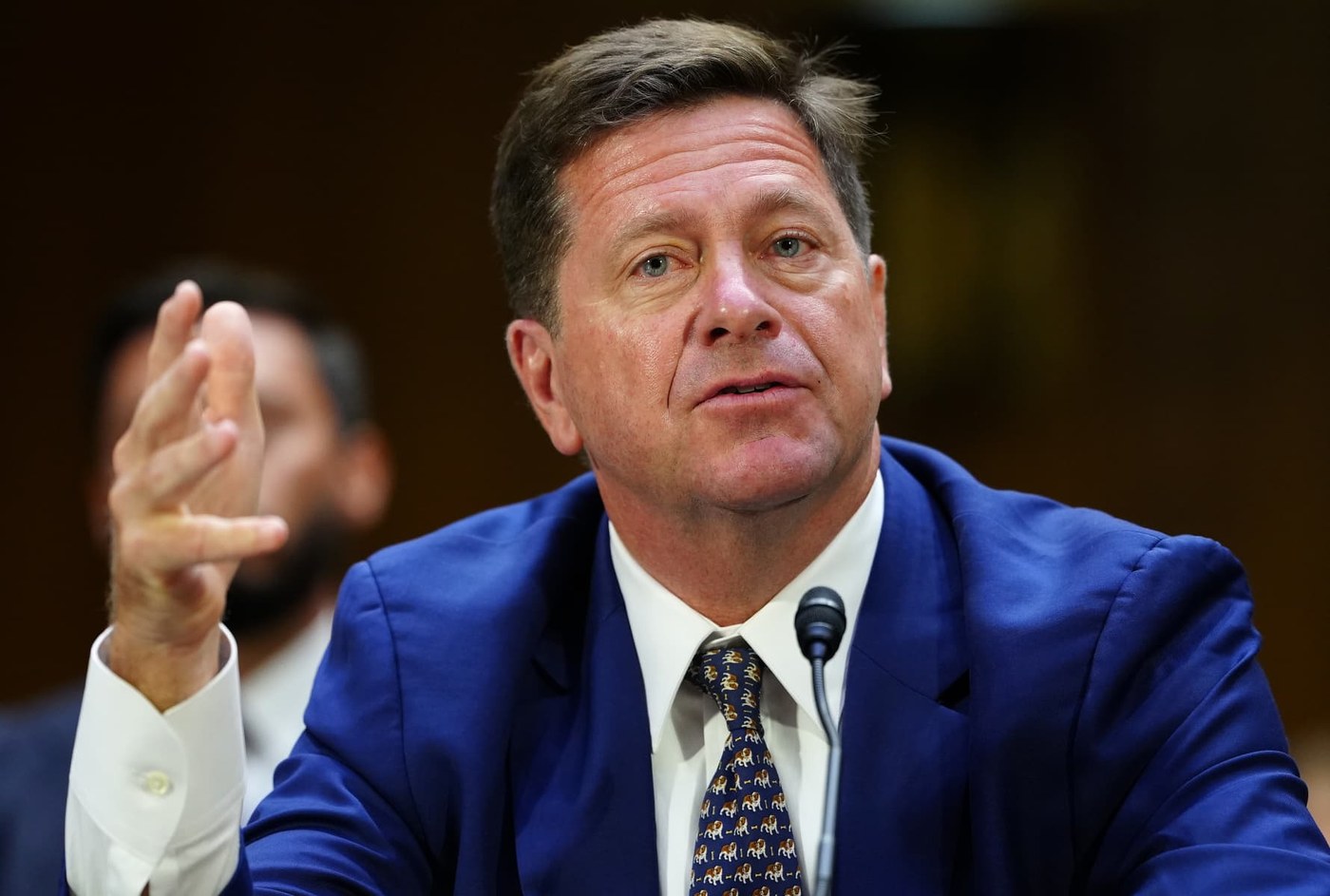
AI "amplifies" existing cybersecurity risks toward U.S. digital infrastructure, which is interconnected with critical systems related to everything from public goods to the national defense and global communications, Clayton said on "Squawk Box."
It's "why we're focused on hardening those systems" and using "our commitment to continue to lead to stay ahead of those nefarious actors," said Clayton, who leads a new White House AI task force.
Clayton was asked how concerned Americans should be with the threat of foreign spying in light of the recently revealed case charging Saudi national Abdulrahman Alfozan with allegedly installing a recording device in an OpenAI executive conference room. Alfozan has not been charged with espionage; the federal charge involves alleged interception of oral communications.
Alfozan, who was an OpenAI employee, had booked a one-way plane ticket to Saudi Arabia with his wife and another family member prior to his arrest, according to federal prosecutors.
"The short answer to your question is espionage, both commercial espionage, and I would say state-sponsored espionage, are realities," Clayton said.
"It's something that our private sector companies need to be wary of. We, as a government, need to be wary of," he said.
The OpenAI incident "shows the lengths that people will go to try and supplant our leadership in this, or at least stay close to us in this emerging technology," Clayton said.
An ex-CIA official, who asked not to be named because they were discussing information that is not public, told CNBC this week that the case is "probably the tip of the iceberg."
Clayton, who was appointed AI czar earlier this month, said that the task force's "very good" inaugural meeting at the White House on Thursday built on the accord signed by President Donald Trump and a number of AI leaders at the White House last month. Trump had described the agreement, which includes industry pledges to police AI risks itself, as "morally binding."
The task force also established three subcommittees that are focused on different AI-related issues. One is tasked with reporting and response, another with assessing critical infrastructure and working with the private sector, and a third with law enforcement and responsibility, Clayton said.
The DNI reiterated to CNBC that the Trump administration is intent on staying ahead in the AI race.
"We're not the only ones developing it. There are vectors in this technology that are coming from some of our known adversaries and competitors," he said. "The Chinese, the Russians, the Iranians, the North Koreans all have significant technical capability. We need to stay ahead of them."