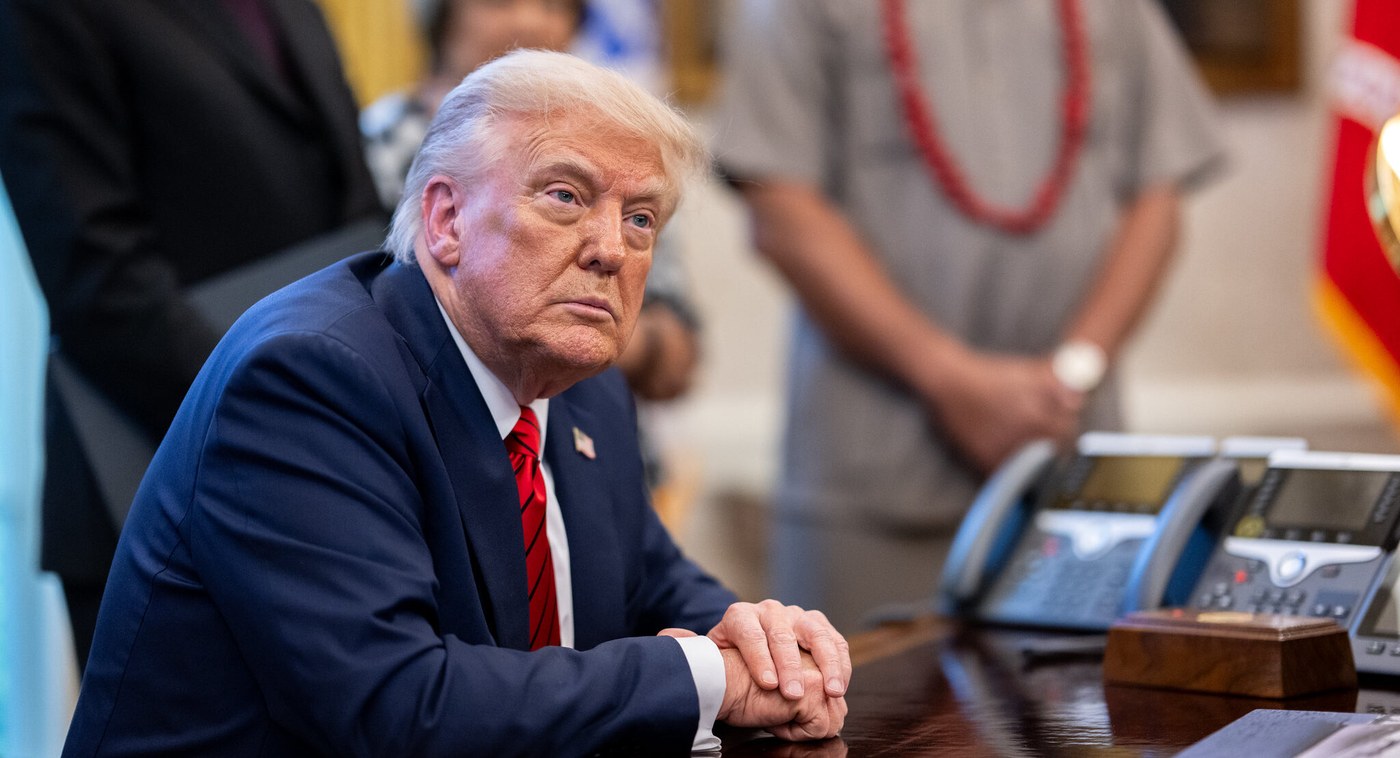
US president Donald Trump hasn't given up on his approach to use tariffs as a way of gaining the upper hand in the global markets despite the monumental decision by the US Supreme Court on Feb. 20 that his use of the International Emergency Economic Powers Act (IEEPA) of 1977 was unconstitutional.
Rather, the White House is now scrambling to revise its approach, launching new tariffs and relying on other authorities -- actions that threaten to cost US seafood importers and other countries' seafood exporters to the US significantly.
To keep up with all of the moves that matter most to the seafood industry, Undercurrent has brought back this blog. Keep checking here for new updates daily.
By Jason Huffman
Canadian seafood not on list to get hit with 50% US tariffs
A review of the harmonized tariff schedule codes listed by US president Donald Trump yesterday to get hit with 50% tariffs does not include lobster, snow crab or other seafood items, Undercurrent has determined.
The tariffs, which have been launched under Section 338 of the 1930 Trade Act, exclude seafood, energy products, potash and critical minerals but include goods previously protected from tariffs by the US-Mexico-Canada Agreement (USMCA) signed by Trump in 2020, the Associated Press reports. USMCA has not been renewed by the US, triggering a new set of negotiations that could run until 2036.
Read moreBy Cliff White
Trump threatens Canada with tariffs for wildfire smoke
US president Donald Trump threatened to tariff Canada to punish the country for wildfires that have degraded air quality across large swathes of North America.
“We are holding Canada responsible for the fact that they are not properly maintaining their Forests, and Brush therein, and the United States is being unnecessarily invaded by filthy, polluted, and unhealthy air, the quality of which is dangerous, and totally unacceptable!” Trump wrote in a social media post.
Read moreBy Cliff White
Proposed US sanctions package includes 100% tariffs on goods from countries trading with Russia
A bipartisan sanctions proposal advancing in the US Senate could have far-reaching consequences for the global seafood industry by giving the president broad authority to impose steep tariffs on countries that continue trading with Russia.
The legislation is designed to increase economic pressure on Moscow over its war in Ukraine, Reuters reported.
Read moreBy Jason Huffman
US tariff refunds begin to climb
The US sent out $49.1 billion in tariff refunds in June, a big jump over the nearly $22.0bn paid back in May, according to multiple news outlets’ reports on the latest monthly statement published by the US Department of Treasury.
A total of $81.0bn has been paid back since the start of the 2025-26 fiscal year on Oct. 1, 2025, nine months ago, the Guardian reported this week. But much of it has come in just the last two months.
Read moreBy Cliff White
India delays signing US trade deal, holding out for better terms
India is holding out for a tariff advantage against major competitors, including China.
Indian negotiators declined to accept a trade deal offered by US trade representative Jamieson Greer in June, as they sought greater tariff concessions and assurances against future US tariff increases, Reuters reported.
Read moreBy Cliff White
South Africa asks US for seafood duty exemption
South Africa has asked the US to exempt its seafood exports from a proposed 12.5% tariff.
South Africa is among the 60 nations targeted by the US Trade Representative (USTR) for 10% to 12.5% tariffs under Section 301 of the US Trade Act, with the USTR citing a lack of sufficient effort to combat forced labor.
Read moreBy Amanda Buckle
USTR head says Trump can use IEEPA on Spain
The Trump administration is signaling that while US president Donald Trump may not ultimately follow through on his threat to halt trade with Spain, he believes he has the legal authority to do so.
Speaking at the White House on Thursday (July 9), US Trade Representative (USTR) head Jamieson Greer said Trump could invoke the International Emergency Economic Powers Act (IEEPA) to prohibit trade with Spain, despite Spain being part of the European Union.
Read moreBy Amanda Buckle
Major octopus supply at risk as Trump threatens to ‘cut off all trade’ with Spain
US president Donald Trump has threatened to “cut off all trade” with Spain, a major source of the country’s octopus imports.
Trump made the comments while in Ankara, Turkey, on Wednesday (July 8) to attend the 2026 NATO Summit.
Read moreBy Jason Huffman
US restaurant lobby requests seafood exemption
Count the powerful National Restaurant Association among the US lobbying groups that don’t want to see Section 301 tariffs applied to seafood.
US restaurants generated $1.4 trillion in sales and accounted for one in every 10 jobs in the country last year, and the group that represents them has asked the US Trade Representative to make a special exemption for seafood when it moves forward with the new 10.5% and 12% tariffs it plans for goods from some 60 foreign economies.
Read moreBy Cliff White
Chile, others lobby US to drop forced labor tariff threat
Chile and other seafood-producing countries are stepping up their lobbying campaigns opposing new tariffs proposed by the administration of US president Donald Trump.
The US Trade Representative (USTR) is in the final administrative stages of imposing duties of 10-12.5% on 60 countries it accuses of inadequate forced labor prevention, as UCN has reported.
Read moreBy Cliff White
Brazil outlines response strategy to proposed 25% US duty
Marcio Elias Rosa, Brazil’s minister of development, industry, trade and services, is worried about the impact of a new proposed 25% US tariff on his country’s seafood exports.
US president Donald Trump on June 1 proposed a 25% duty on select Brazilian imports, including seafood. The tariffs, to be imposed under Section 301 of the Trade Act of 1974, are scheduled to come into effect on July 15.
Read moreBy Cliff White
US expands refund portal as importers seek recovery of invalidated IEEPA duties
US Customs and Border Protection (CBP) has announced the opening of the second phase of its tariff refund program, allowing importers to seek reimbursement for additional duties paid under the International Emergency Economic Powers Act (IEEPA) tariffs that were later struck down by the US Supreme Court.
The first phase of reimbursements began in April, as Undercurrent reported, and covered active entries as well as shipments liquidated within 80 days of final duty assessment.
Read moreBy Cliff White
EU stands firm on digital services tax despite Trump’s 100% duty threat
US president Donald Trump has threatened a 100% tariff on European countries with digital services taxes (DSTs) targeting large US technology companies.
The proposed 100% tariff, announced by Trump on Friday (June 26), would supersede existing trade arrangements and could threaten a trade deal between the US and the European Union that is in the final stages of approval.
Read moreBy Amanda Buckle
Sri Lanka moves to avoid proposed 12.5% Section 301 duty
Sri Lanka is planning new customs screening measures and labor policy changes as it seeks to avoid a proposed 12.5% US tariff on its exports amid a US investigation into forced labor practices, according to a report from Reuters.
The Office of the United States Trade Representative (USTR) announced its proposal earlier this month to target as many as 60 economies with tariffs of up to 12.5% on their goods, citing a lack of sufficient efforts to block imports made using forced labor, as reported by Undercurrent.
Read moreBy Cliff White
EU weighs tougher trade defenses against China
France is leading an effort to give the European Union new trade defense powers that would allow Brussels to impose tariffs on China, the Financial Times reports.
Germany, Poland, the Netherlands and Belgium have backed a French proposal for a new EU trade instrument that would allow the EU to impose trade defenses against China more quickly, according to diplomats cited by the newspaper.
Read moreBy Cliff White
US Section 301 tariffs almost certain to face legal challenge
Soon-to-be-implemented US Section 301 tariffs will almost certainly face a lawsuit challenging their legality.
But a legal challenge will likely face a steeper uphill battle than previous, successful suits that resulted in the revocation of previous tariffs imposed by US president Donald Trump.
Read moreBy Cliff White
EU advances US trade deal that OKs duty-free lobster imports
The European Parliament announced on Tuesday (June 16) it has approved legislation implementing the European Union’s trade agreement with the US.
The move likely staves off US tariff escalation while providing greater certainty for exporters.
Read moreBy Cliff White
Australia rejects US forced labor tariff claims as trade tensions escalate
Australia has strongly rejected US allegations that it is failing to adequately combat forced labor, which are likely to result in higher tariffs.
Australia is one of 60 nations set to face new US tariffs following a Section 301 investigation into allegations of failures to prohibit the trade in products created by forced labor. It faces a 12.5% tariff to be imposed in late July.
Read moreBy Cliff White
Frontloading begins ahead of new US tariffs in July
New US tariffs are fueling a rise in container rates as importers scramble to bring goods in before their enactment.
The US is set to impose two separate sets of Section 301 tariffs in July, as Undercurrent has reported.
Read moreBy Cliff White
US tariff refund dispute heads back to court as government seeks to limit claims
A legal faceoff between the administration of US president Donald Trump and companies that paid his tariffs will take place on Tuesday (June 9), the Associated Press reported.
The hearing before US Court of International Trade judge Richard Eaton is expected to decide who can access billions of dollars in refunds tied to International Emergency Economic Powers Act tariffs ruled unlawful in February by the US Supreme Court.
Read moreBy Cliff White
India advances US trade deal, despite new tariff threat
India continues to negotiate a trade deal with the US, despite facing the threat of a new 12.5% tariff to be implemented in July.
India has been negotiating a bilateral deal with the administration of US president Donald Trump for months, and reached a framework agreement in February, with the goal of finalizing it in March.
Read moreBy Cliff White
US Section 301 tariffs hinge on forced labor allegations
US president Donald Trump is banking on the bipartisan popularity of combating forced labor to get his latest tariffs to stick.
On Wednesday (June 3), the Trump administration announced proposed 10%-12.5% tariffs on 60 countries over their failure to ban goods made with forced labor, as UCN reported.
Read moreBy Cliff White
USTR opens comment period on possible tariff relief for select China imports
The Office of the US Trade Representative (USTR) has opened a public comment period on the US-China Board of Trade, a proposed “government-to-government” mechanism that was discussed during US president Donald Trump’s meeting with Chinese president Xi Jinping last month.
The US began seeking public comments on Wednesday (June 3) on the scope of the new board, which could lead to reduced tariff rates on each other’s goods, the USTR announced.
Read moreBy Cliff White
Trump administration proposes 25% tariff on Brazilian imports
The administration of US president Donald Trump on Monday (June 1) proposed a 25% on select Brazilian imports, including seafood.
The tariffs, to be imposed under Section 301 of the Trade Act of 1974, will come into effect on July 15 unless Brazil takes “responsive action” to address issues raised in the investigation, according to a news release from the office of the US Trade Representative (USTR).
Read moreBy Cliff White
US excludes Canada from USMCA negotiations
Canadian prime minister Mark Carney has sharpened Canada’s position ahead of a looming review of the US-Mexico-Canada (USMCA) trade agreement.
In a speech at the Economic Club of New York on Thursday (May 28), Carney called for a “new partnership” between Canada and the US that preserves strong economic ties while decreasing bilateral dependence, CNN reported.
Read moreBy Cliff White
US gov’t has processed $20.6bn in tariff refunds
US Customs and Border Protection has processed more than $20 billion in tariff refunds tied to duties imposed under the International Emergency Economic Powers Act (IEEPA), according to a new court filing in the US Court of International Trade.
The filing, submitted Tuesday (May 26) in the case brought by Euro-Notions Florida, Inc. against the United States and CBP, outlined the latest progress of the agency’s Consolidated Administration and Processing of Entries (CAPE) system.
Read moreBy Cliff White
EU aims trade weapons at China
France, Italy, Spain, the Netherlands and Lithuania are pushing the European Union to launch probes into allegations of China’s unfair trade practices.
The five countries submitted a formal paper to the European Commission on Friday (May 22) calling for the creation of a “more assertive and effective trade defense policy” to deal with Beijing, the Financial Times reported.
Read moreBy Cliff White
Mexico, EU sign trade deal to counter US pressure
Mexico and the European Union signed a free trade agreement on Saturday (May 23) as they seek to insulate themselves from damage from US tariffs.
The accord adds service, government procurement, digital trade, investment and farm produce to an existing agreement reached in 2000, according to Reuters.
Read moreBy Cliff White
Walmart to use tariff refunds to lower prices
Walmart plans to use the company’s expected tariff refund to lower store prices, chief financial officer John David Rainey said on Thursday (May 21).
“We think that the single best return that we can have on a dollar of capital right now is to investment in the customer, invest in price,” Rainey said.
Read moreBy Cliff White
Costco leads fight against consumer lawsuits demanding tariff repayments
US retailer Costco Wholesale is pushing to dismiss a proposed class-action lawsuit demanding it return tariff payments refunded by the federal government to its customers.
The Issaquah, Washington-headquartered club store chain called the lawsuit “speculative” and said the customer who filed the suit suffered no harm.
Read moreBy Amanda Buckle
EU races to finalize trade deal ahead of deadline
The European Union is moving closer to approving a trade agreement with the United States ahead of US president Donald Trump’s July 4 tariff deadline.
EU legislators are hoping to finalize reductions of import duties on a range of US goods, including some seafood items, while preserving a 15% tariff cap on most EU goods entering the US. Currently, most EU goods face a 10% US tariff, imposed under Trump’s implementation of Section 122 of the Trade Act to set a global baseline rate.
Read moreBy Amanda Buckle
$35bn in IEEPA refunds now moving through CBP system
A declaration filed with the United States Court of International Trade (CIT) on May 12 confirms that Customs and Border Protection has already accepted more than 15.1 million import entries for the removal of International Emergency Economic Powers Act (IEEPA) duties through its newly developed processing system, Consolidated Administration and Processing of Entries (CAPE).
Of those, more than 8.3m entries had already been liquidated or reliquidated without the tariffs as of May 11.
Read moreBy Cliff White
US Trade Representative says China beginning to adhere to trade deal
US trade representative Jamieson Greer said China has initiated $10 billion in agricultural purchases required under a bilateral trade deal struck in late 2025.
US president Donald Trump wrapped up a visit to China with a one-on-one meeting with Chinese president Xi Jinping on Friday (May 16).
Read moreBy Cliff White
US importers sandwiched between competing pressures from Trump, consumers
US importers are choosing between facing the wrath of customers or US president Donald Trump.
Refunds are now being paid for tariffs paid under International Emergency Economic Powers Act (IEEPA), ruled illegal by the US Supreme Court in February.
Read moreBy Cliff White
Trump appeals adverse tariff ruling ahead of China visit
The administration of US president Donald Trump has formally appealed the Court of International Trade’s ruling against his Section 122 tariffs to the US Court of Appeals for the Federal Circuit.
Trump has used Section 122 of the Trade Act to impose a global 10% tariff.
Read moreBy Cliff White
Logistics expert provides refund advice
The US government has begun processing refunds to companies that paid International Emergency Economic Powers Act (IEEPA) tariffs ruled illegal by the US Supreme Court in February.
The roughly 330,000 importers that collectively paid more than $166 billion in IEEPA tariffs are all eligible for refunds.
Read moreBy Cliff White
Trump’s Section 122 tariffs ruled illegal, remain in place upon appeal
US president Donald Trump’s Section 122 tariffs, which imposed a 10% duty on most imported goods, including seafood, have been ruled illegal by the US Court of International Trade (USCIT), UCN reported.
In a 2-1 vote made public on Thursday (May 7), the USCIT ruled the Section 122 tariff Trump imposed on Feb. 24 were not legally justifiable under Section 121 of the Trade Act of 1974.
Read moreBy Cliff White
Moody’s chief economist says tariffs harmed US economy
Mark Zandi, chief economist at Moody’s Analytics, said US president Donald Trump’s tariffs have “definitively” harmed the country’s economy.
A significant portion of US families are effectively living in a recession, he said in a note published Wednesday (May 6).
Read moreBy Cliff White
Brazil, US presidents to meet to discuss tariffs
Brazilian president Luiz Inacio Lula da Silva will meet with US president Donald Trump on Thursday (May 7) to discuss tariffs.
Trump slapped Brazil with a 50% tariff in retribution for putting former Brazilian president Jair Bolsonaro on trial for attempting a coup after his 2022 reelection loss.
Read moreBy Cliff White
Von der Leyen, Macron warn Trump over 25% auto tariff
European leaders warned US president Donald Trump on Tuesday (May 5) that his threat to place a 25% tariff on European autos could unleash a wider trade war.
European Commission president Ursula von der Leyen urged Trump to stick to the terms of his bilateral trade deal with the European Union, saying “a deal is a deal.”
Read moreBy Cliff White
Trump threatens to reignite EU trade war
US president Donald Trump said Friday (May 1) threatened the European Union with higher auto tariffs beginning next week in response to his belief that the bloc is not complying with a bilateral trade deal signed in July 2025.
The deal, which still must be approved by EU lawmakers before it is legalized, sets a 15% tariff ceiling on all EU goods sent to the US, including seafood. Currently, the EU faces a 10% tariff its US exports.
Read moreBy Cliff White
China eliminates import duties on 53 African nations
China has eliminated import tariffs on practically every African nation on Friday (May 1).
Practically, the move ends tariffs on 20 countries, as China had already eliminated tariffs on 33 of Africa’s least-developed nations in December 2024.
Read moreBy Cliff White
First IEEPA refunds to arrive May 11
US Customs and Border Protection (CBP) will issue its first refunds of invalidated International Emergency Economic Powers Act (IEEPA) tariffs on or around May 11.
The date was revealed in court documents released following a closed hearing on Wednesday (April 29) held by US Court of International Trade judge Richard Eaton, who has been overseeing the legal process setting up the refund system, The Hill reported.
Read moreBy Cliff White
US CBP rejects 15% of tariff refund requests
The US government has begun to process refunds for seafood importers and other business that paid tariffs illegally imposed by US president Donald Trump under the International Emergency Economic Powers Act (IEEPA), but around 15% of claims have been rejected.
US Customs and Border Protection (CBP) launched its Consolidated Administration and Processing of Entries (CAPE) tariff refund system on April 20, as reported by Undercurrent.
Read moreBy Cliff White
US Trade Representative begins Section 301 investigations, with new tariffs likely as a result
The Office of the US Trade Representative (USTR) is holding its first Section 301 investigatory hearing on Tuesday (April 28), looking into whether 60 economies collectively accounting for 99% of US imports have done enough to prohibit the trade in products created by forced labor.
Next week, the USTR will have hearings on whether 16 US trading partners, accounting for 70% of US imports, are overproducing goods and therefore driving down prices unfairly.
Read moreBy Cliff White
India, New Zealand sign ‘once-in-a-generation’ free-trade deal
India and New Zealand have signed a free-trade agreement that includes a reduction on tariffs covering seafood, as both countries navigate mounting global trade disruptions stemming from a US-initiated trade war.
The deal makes all Indian exports to New Zealand tariff-free and cuts or removes tariffs on 95% of New Zealand’s exports to India.
Read moreBy Amanda Buckle
Trump says he will ‘remember’ companies that don’t seek tariff refunds
US president Donald Trump said in an interview on Tuesday (April 22) — a day after US Customs and Border Protection opened a portal for tariff refunds — that he will “remember” those US companies that do not seek refunds for the illegally collected tariffs.
Refund filings are not open to the public, but CNBC reports that some large companies, including Apple and Amazon, have not filed refund requests, “potentially because they are worried about ‘offending’ Trump.”
Read moreBy Cliff White
Tariffs continue to dominate conversations at Seafood Expo Global
Between the current 10% Section 122 US tariff, the ongoing refund process for the International Emergency Economic Powers Act (IEEPA) tariffs canceled by a Supreme Court decision in February or imminent Section 301 investigations, US tariffs are still the center of many discussions at the 2026 Seafood Expo Global, taking place in Barcelona, Spain, this week.
“The process of getting refunds will dominate the commercial conversation for the next six months,” said Bob DeHaan, the executive vice president and general counsel of US seafood trade group National Fisheries Institute.
Read moreBy Amanda Buckle
US Customs officially launches tariff refund portal
US Customs and Border Protection (CBP) has moved forward with the first phase of a new automated processing system for refunds tied to the illegal tariffs imposed by president Donald Trump.
In a cargo systems message issued by the government agency on Monday (April 20), CBP confirmed that its consolidated Administration and Processing of Entries (CAPE) tool in the Automated Commercial Environment Secure Data Portal (ACE Portal) has been activated, meaning that importers and authorized customs brokers can now begin to file refund requests in relation to the duties unlawfully imposed under the International Emergency Economic Powers Act (IEEPA).
Read moreBy Cliff White
US treasury secretary says previous tariff levels will be reached by July
US president Donald Trump is pushing to restore tariff rates to previous levels by July 2026.
Trump hopes to get tariffs back up to the rates in place before the US Supreme Court struck down many of his levies in February, US treasury secretary Scott Bessent said on Tuesday (April 14), Bloomberg reported.
Read moreBy Cliff White
US court skeptical of Trump’s newest tariffs
The US Court of International Trade (CIT) heard arguments in a case challenging US president Donald Trump’s 10% global tariffs on Friday (April 10).
A three-judge CIT panel questioned the legality of Trump’s use of Section 122 of the Trade Act of 1974 to implement the tariffs on Feb. 20.
Read moreBy Cliff White
Trump threatens major US seafood source China with 50% tariff over Iran arms shipments
US president Donald Trump on Sunday (April 12) threatened to impose a 50% tariff on China, after a report suggested Beijing was preparing to deliver a shipment of air defense systems to Iran.
China was the US’ eighth-most valuable seafood source in 2025, sending it 313,423 metric tons worth $1.3 billion, but Chinese seafood cost more in tariffs last year than any other country’s: almost $391 million.
Read moreBy Cliff White
White House scrambles to find strategy for Iran-related tariffs
It remains unclear how the White House will pursue US president Donald Trump’s threat to place a 50% tariff on suppliers of weapons to Iran.
Trump announced the tariff on Wednesday (April 8), following the signing of a ceasefire between the US and Iran, saying it would be “effective immediately.”
Read moreBy Cliff White
Trump announces 50% tariff on countries selling arms to Iran
Hours after signing a two-week ceasefire agreement with Iran, US president Donald Trump announced on Wednesday (April 8) that countries that supply Iran with weapons will face 50% tariffs on their US exports.
Trump wrote on Truth Social the tariff would take immediate effect for all goods sold into the US by countries selling arms to Tehran.
Read moreBy Cliff White
Fuel prices overtake tariffs as biggest seafood cost factor
From Argentine red shrimp to Pacific tuna to Maine oysters, the primary driver of the rising cost of seafood in the global marketplace has shifted from US tariffs to higher fuel prices.
In the US, average diesel prices jumped 40% in the US since the start of the Iran conflict in late February 2026, with average prices surpassing $5 per gallon. Diesel prices have surged between 30% and 50% globally since Israel and the US attacked Iran in late February 2026, driven by supply disruptions in the Strait of Hormuz.
Read moreBy Jason Huffman
Last month of Trump’s IEEPA tariffs hit hard
US importers paid $218.1 million in tariffs on 231,313 metric tons of seafood worth $1.8 billion that was imported in February 2026, the last month in which president Donald Trump’s International Emergency Economic Powers Act (IEEPA) tariffs were in effect, reveals the latest update of seafood trade data by the National Oceanic and Atmospheric Administration (NOAA).
It wasn’t the worst month for tariffs since Trump declared his global trade war in April 2025. That was in January 2026 when US seafood importers paid $343.0m in tariffs. But it was painful regardless, and contributed to a continued decline in seafood imports.
Read moreBy Cliff White
Vietnam becomes key trade hub amid US, China tensions
Vietnam’s export economy is booming as the US shifts more of its trade away from China.
A Bloomberg analysis of shipment-level customs data shows a shift in manufacturing toward Vietnam that began six years ago has accelerated.
Read moreBy Jason Huffman
Tax Foundation delivers failing report card on Trump’s tariffs one year later
The Tax Foundation, a group that regularly opposes all new forms of taxes, has delivered its first-year report card on president Donald Trump’s global tariff campaign, and the grades are not good.
Standing at a podium in the White House Rose Garden, Trump announced on April 2, 2025 that he was instituting a universal 10% tariff for goods from most countries but would then institute higher “reciprocal” tariffs of different degrees months later. He called the date “Liberation Day,” and promised it would “make Americans wealthy” while bringing jobs and factories back to America.
Read moreBy Cliff White
China opens trade probes in response to US Section 301 investigations
China has opened two probes into US trade practices in response to US Section 301 investigations that could raise tariffs on Chinese goods.
China’s Commerce Ministry announced on Friday (March 27) it is looking into US policies restricting Chinese green energy goods from entering the US and limiting US exports of advanced technology to China.
Read moreBy Cliff White
EU lawmakers vote to advance US trade deal
European Union lawmakers advanced a US trade deal that would create a 15% tariff cap in exchange for lowering import duties on many goods.
In a 417-154 vote, with 71 abstentions, the European Parliament advanced legislation on Thursday (March 26) to fulfill the bloc’s side of its trade agreement with the US, Reuters reported.
Read moreBy Cliff White
US threatens EU with more tariffs if it doesn’t pass trade deal
The European Parliament will vote on Thursday (March 26) on the ratification of the EU-US trade deal, after a delay caused by US president Donald Trump’s threat to invade Greenland.
The deal, agreed to in broad terms in July, as Undercurrent reported, requires approval of the European Parliament and then all EU governments.
Read moreBy Cliff White
EU, Australia sign free trade deal
The European Union and Australia agreed to a free trade deal on Tuesday (March 24), eliminating duties on seafood and other goods.
The deal, which was negotiated over the past eight years, includes the ending of tariffs on 99% of trade between Australia and the EU, and a commitment to strengthening cooperation in maritime security, crisis management and artificial intelligence, CNBC reported.
Read moreBy Cliff White
Thailand to submit Section 301 response by April 15
Thailand must submit its response to a US investigation into an allegation of unfair trade practices by April 15, according to the nation’s commerce ministry.
The Section 301 trade investigation, launched by the US Trade Representative (USTR) against Thailand and 15 other countries earlier this month, puts Thailand at risk of receiving higher tariffs.
Read moreBy Cliff White
China, South Korea deepen ties, vow to maintain supply chain stability
Chinese and South Korean officials met in Beijing on Thursday (March 19) to shore up their trade relations.
Statements from the negotiation teams from each country reiterated their dedication to ensuring supply chain stability and deepening trade ties, Reuters reported.
Read moreBy Cliff White
World trade growth set to slow to 1.9% this year
The World Trade Organization (WTO) has prognosticated that global trade growth will decline to 1.9% in 2026, down from 4.6% last year.
And if energy prices and shipping costs continue to rise due to the war in the Middle East, growth could be further slowed to 1.4%, WTO said.
Read moreBy Cliff White
US kicks off trade negotiations with Mexico
US officials began negotiations on a trade pact with Mexico on Monday (March 16), with the odds of renewing the two countries’ current agreement unlikely, the Associated Press reported.
At stake for Mexico is more than $1.6 billion in annual trade, including $673 million in seafood exports, according to UCN’s trade portal.
Read moreBy Cliff White
Trump claims ‘absolute right’ to impose new tariffs
US president Donald Trump has claimed he has “the absolute right” to impose new tariffs.
Trump vowed more tariffs are on the way in a social media post on Sunday (March 15).
Read moreBy Cliff White
India delays signing trade deal after US commences Section 301 investigations
India will not sign a trade deal it agreed to on Feb. 2 after the US announced the launch of a Section 301 investigation into excess industrial capacity in 60 nations, including the South Asian giant.
The deal was supposed to be signed in early March, and would have locked in a commitment by India to cease importing Russian oil and to buy $500 billion worth of American products, in exchange for setting the tariff rate for Indian goods headed to the US at 18%, down from 50%.
Read moreBy Cliff White
US launches Section 301 investigations into seafood-producing countries
The US announced on Wednesday (March 11) that it had initiated investigations into alleged unfair trade practices in 16 countries, including several major seafood-producing nations.
Major seafood producers under investigation include China, India, Indonesia, Norway, Vietnam, the European Union, Mexico, Thailand, Japan, and South Korea. The other countries being investigated are Taiwan, Switzerland, Malaysia, Cambodia, Bangladesh and Singapore.
Read moreBy Cliff White
Democrats push bill to nullify latest round of US tariffs
A push to end US president Donald Trump’s ability to issue tariffs under Section 122 of the Trade Act of 1974 has been initiated by a group of Democrats in the US Senate.
Trump has invoked the law’s clause to impose 10% global tariffs, and the White House has promised to raise them to 15%, the maximum it said is allowed by the law.
Read moreBy Cliff White
China’s exports surged in first two months of 2026, but not to US
China’s exports jumped by more than 20% in January and February, putting the country on track to beat its record-breaking annual trade surplus from 2025, BBC reported.
Exports remain the key driver of China’s economy due to lackluster domestic spending and a slump in the country’s real estate market.
Read moreBy Cliff White
US judge denies CBP request for more time to deliver tariff refunds
Costco, which is one of thousands of companies that have sued the government demanding repayment of tariffs paid under the International Emergency Economic Powers Act (IEEPA), signaled during a quarterly earnings call last week that it could cut prices should the company receive a refund.
The refunds were mandated by a Feb. 20 US Supreme Court ruling invalidating IEEPA tariffs imposed by US president Donald Trump.
Read moreBy Jason Huffman
US importers win another tariff-related court decision with potentially big meaning
The US Court of International Trade on Wednesday (March 4) followed up the earlier Supreme Court ruling by finding that many companies that sued the US over president Donald Trump’s illegal tariffs are entitled to refunds.
The decision applies only to tariff payments, or “entries,” that have not yet been liquidated by US Customs and Border Protection (CBP) or those for which the liquidation has not been made final as they are still within the 90-day protest period during which CBP can voluntarily reliquidate them, explained attorney Jessica Rifkin, customs and trade practice head for Olsson Frank & Weeda.
Read moreBy Jason Huffman
Bessent: 15% global tariff likely coming this week
President Donald Trump’s is likely to raise his global 10% tariff rate to 15% this week, treasury secretary Scott Bessent said Wednesday (March 4) in an interview on CNBC’s “Squawkbox.”
Bessent also predicted that US tariff rates would, by August, effectively return to where they stood before the Supreme Court recently struck down the duties Trump unilaterally imposed on most of the world’s countries last year.
“It’s my strong belief that the tariff rates will be back to their old rate within five months,” Bessent said.
Read moreBy Jason Huffman
US halt of trade with Spain would block $330.6m worth of seafood, threaten EU trade deal, too
President Donald Trump’s threat to end trade with Spain for declining the US’ request to use jointly-run bases for strikes on Iran could cost US seafood importers as much as $330.6 million in annual business.
That’s how much the US spent on some 31,946 metric tons of seafood imported from Spain in 2025, Undercurrent has determined based on a review of the seafood trade database maintained by the National Oceanic and Atmospheric Administration (NOAA).
Read moreBy Cliff White
Biggest losers from latest US tariffs include UK, Australia
The biggest losers from the latest shift in US tariff policy are countries that previously had the lowest rates, including close allies like Britain, Australia and Chile.
Those countries have seen their advantage over other exporting nations erased as a universal 10% tariff took the place of individualized tariff rates set by US president Donald Trump.
Read moreBy Cliff White
With US trade deals in jeopardy, Lutnick visits India to shore up support
US commerce secretary Howard Lutnick made an unscheduled trip to the Indian capital of New Delhi on Thursday (Feb. 26) to meet with that country’s commerce and industry minister, Piyush Goyal.
Discussions centered on deepening the India-US trade and economic partnership, according to social media posts by Goyal and US ambassador to India Sergio Gor.
Read moreBy Amanda Buckle
US treasury secretary vows to issue tariff refunds if ordered, questions whether companies will pay back consumers
US treasury secretary Scott Bessent told NBC News this week that the US Donald Trump administration will defer to lower court decisions on whether to issue tariff refunds following a recent US Supreme Court ruling that curtailed the president’s use of certain tariff authorities.
The stance leaves uncertainty around at least $134 billion in tariff revenue, of which more than $2.1bn came from seafood imports between the first nine months of Trump’s new tariffs being in effect, between April and December.
Read moreBy Jason Huffman
Big shrimp supplier India to resume US trade talks, trade minister advises
Despite president Donald Trump’s repeated threats to countries about backing out of earlier-announced trade deals following the Feb. 20 ruling by the US Supreme Court, uncertainty is growing.
Indian trade minister Piyush Goyal said Tuesday (Feb. 24) that his country and the US soon will resume talks on their proposed trade deal, Reuters reports. He was speaking at an event hosted by the local financial daily Business Standard in New Delhi.
Read moreBy Jason Huffman
US Customs was to stop collecting illegal tariffs Tuesday
US seafood importers should no longer be seeing the tariffs ruled illegal last week by the Supreme Court.
A memo sent Sunday (Feb. 22) instructed the US Customs and Border Patrol (CBP) field offices to stop collecting the tariffs issued under the International Emergency Powers Act (IEEPA) starting at starting at 12 a.m. on Tuesday (Feb. 24).
Read moreBy Cliff White
Global 10% tariff rate to take effect Feb. 28
Following the Supreme Court’s nullification of all tariffs imposed by Donald Trump under the International Emergency Economic Powers Act (IEEPA), the president took to Truth Social this week to declare his intention to raise global tariffs from 10% — an initial level he had announced under Section 122 of the Trade Act of 1974 — to the legal maximum of 15%.
That new rate will take effect on Saturday (Feb. 28), according to Vinicius Adam, the managing partner of VAdam Law, which has filed numerous lawsuits on behalf of seafood companies seeking to recover funds paid under the illegal IEEPA tariffs.
Read moreBy Cliff White
No Supreme Court tariff decision coming Friday, Reuters reports
The US Supreme Court has not issued ruling in a case that will decide the legality of many of the tariffs imposed by US president Donald Trump.
The court will not issue a ruling on Friday (Jan. 9), as was expected, according to Reuters.
Read moreBy Cliff White
Companies brace for refund fight ahead of expected Supreme Court ruling
On Jan. 2, US Customs and Border Protection unveiled a shift away from paper checks to electronic distribution of tariff refunds, effective Feb. 6.
The move comes just ahead of a Supreme Court ruling that is expected to strike down many of the tariffs imposed in 2025 by US president Donald Trump under the International Emergency Economic Powers Act (IEEPA), requiring refunds for at least $133 billion in duties paid by 301,000 importers across 34 million shipments of goods.
Read moreBy Cliff White
US Supreme Court expected to issue ruling on tariffs Friday
The US Supreme Court is expected to issue its decision on Friday (Jan. 9) as to whether tariffs imposed by US president Donald Trump’s are legal.
The court made the indication on its website on Tuesday (Jan. 6), though it did not declare outright it would do so, according to Reuters.
Read moreBy Cliff White
US threatens India with higher duties over Russian oil purchases
US president Donald Trump has threatened India with even higher tariffs if it doesn’t reduce its purchases of Russian oil.
Indian exports already face a 50% US tariff after Trump imposed an additional 25% tax linked to purchases of Russian crude in August, as Undercurrent News reported.
Read moreBy Cliff White
Indian exporters fear Jan. 15 US order end-date
Indian seafood exporters are worried about a Jan. 15 end-date for orders placed before the US imposed a crushing 50% tariff to punish the country for its energy purchases from Russia.
There have been practically zero buyer inquiries following US president Donald Trump’s doubling of India’s tariff rate in August, according to Seafood Exporters Association of India (SEAI) vice president Alex K Ninan.
Read moreBy Cliff White
Trump wants to send $2K tariff rebate checks to many Americans
US National Economic Council director Kevin Hassett said Sunday (Dec. 21) said it’s getting more likely that the US government will send $2,000 rebate checks to many Americans.
US president Donald Trump has repeatedly floated the idea, with the checks funded by tariff revenue, which recently surpassed more than $200 billion, including more than $1bn paid by US seafood importers.
Read moreBy Cliff White
US consumer confidence drops
US consumer confidence shrank in December, according to the Conference Board Consumer Confidence Index (CCI), a key U.S. economic indicator.
Americans are growing anxious about high prices and the impact of US president Donald Trump’s sweeping tariffs, CCI reported.
Read moreBy Cliff White
EU postpones Mercosur deal signing, struggles to shift trade from US, China
The European Union missed its self-imposed Saturday (Dec. 20) deadline to finalize a trade deal with Mercosur, the bloc of South American nations, Bloomberg reports.
The deal has been in the works for a quarter of a century, but is facing renewed opposition from France and Italy as it reaches its final stages.
Read moreBy Cliff White
US, Canada to negotiate free trade deal in January
Canada and the US have set a mid-January date for the launch of formal discussions to review their free trade agreement.
The United States-Mexico-Canada trade pact (USMCA) is up for review in 2026, and US president Donald Trump has indicated he wants to renegotiate it on more favorable terms for his country. He suggested he might do separate deals with Canada and Mexico instead of a trilateral agreement.
Read moreBy Cliff White
US effective duty rate hits 16.8%, highest since 1935
The average US effective tariff rate hit 16.8% in mid-November, its highest number since 1935, according to the Yale Budget Lab.
However, higher US tariffs have not been the economic calamity many predicted. Growth of the US and several other major economies remains stable, and major exporting nations have had solid trading years, as reported by Undercurrent News.
Read moreBy Cliff White
US hits $200 billion in duty collection in 2025
The US government has collected more $200 billion in tariffs as a result of duties imposed this year by US president Donald Trump, according to Customs and Border Protection.
The vast majority of that total came from tariffs controversially implemented under the International Emergency Economic Powers Act (IEEPA). That action faces an impending decision from the US Supreme Court as to whether it was illegal, which could force the government to issue refunds with interest, as Undercurrent News has reported.
Read moreBy Cliff White
India’s US exports rise despite 50% tariff
India’s total goods exports for November rose 19% on year to $38.13 billion, a surprise given the country was hit with a 50% tariff by the US in August.
India’s exports to the US rose 22.6% in November to $6.98bn, up from $6.31bn in October.
Read moreBy Cliff White
Vietnam shrugs off US duties, records record trade surplus
Vietnam’s trade surplus with the US, its top export market, rose to $121.6 billion in the first 11 months of the year, up from $104.5bn in all of 2024.
The newly released government data shows Vietnam’s exports have not yet been significantly affected by a 20% US tariff imposed in August.
Read moreBy Cliff White
US-Indonesia trade deal in danger of collapsing
The trade deal that set the baseline tariff for Indonesian goods entering the US at 19% is in jeopardy.
The deal, announced July 19 by US president Donald Trump, included terms the Indonesian government is now backtracking on, according to US officials interviewed by the Financial Times.
Read moreBy Cliff White
French president Macron threatens to tariff China
French president Emmanuel Macron threatened Beijing with tariffs during a recent state visit to China.
With China’s trade deficit with the European Union ballooning 60% since 2019, Macron called on China to do more to address its “unsustainable” policies on global trade, geopolitics and the environment.
Read moreBy Cliff White
India’s seafood exports rise despite US tariffs, driven by sales to EU
Indian seafood exports rose 11.6% between April and October as India shifted to serving the European Union, Russia, and the United Kingdom.
The statistics, newly released by India’s Ministry of Commerce and Industry, are evidence that Indian shrimp exporters have adapted to previously unthinkable 50% US baseline tariffs.
Read moreBy Cliff White
Chicken of the Sea warns it may raise prices for canned tuna
US tariffs are forcing US tuna giant Chicken of the Sea to consider increasing prices.
Owned by Thai Union, Chicken of the Sea operates a US factory in Lyons, Georgia, but the company has scaled down production to four days per week due to rising costs for imported tuna, olive oli and steel cans, The New York Times reported.
Read moreBy Cliff White
Trump considering withdrawal from USMCA trade deal
US president Donald Trump is considering withdrawing from the United States-Mexico-Canada Agreement (USMCA) next year.
The deal, an update to the 1993 North American Free Trade Agreement, was forged by Trump in 2020 and has a 2036 expiration date. It allows seafood to be traded across the three countries without tariffs.
Read moreBy Cliff White
US treasury secretary vows tariffs will continue
US treasury secretary Scott Bessent on Wednesday (Dec. 3) said the Trump administration will continue with its tariff agenda, even if the US Supreme Court strikes down its ability to implement them under the International Emergency Economic Powers Act (IEEPA).
As other Trump administration officials have done previously, Bessent pledged the US would pursue other avenues of enacting tariffs if the court rules its actions under IEEPA are illegal.
Read moreBy Cliff White
US GDP growth better than expected at 2%
The Organization for Economic Cooperation and Development (OECD) raised its forecast for US growth this year, despite the impact of tariffs imposed by US president Donald Trump.
US gross domestic product (GDP) growth is predicted to finish 2025 at 2%, up from the 1.6% the OECD had forecast in June.
Read moreBy Cliff White
US confirms 15% rate for South Korea retroactive to Nov. 1
US commerce secretary Howard Lutnick on Monday (Dec. 1) confirmed South Korea’s lower 15% tariff rate is retroactive to Nov. 1.
In July, South Korea signed a trade deal with the US that locked its tariff rate in at 15%. Part of what it promised in exchange was $350 billion in direct investments in the US.
Read moreBy Cliff White
Taiwan pushes US to drop tariff from 20% to 15%
Taiwan is aiming for tariffs on its exports to the United States to be cut to 15% from 20%, Reuters reported.
Yang Jen-ni, Taiwan’s top trade negotiator, made the comment during a question-and-answer session before Taiwan’s parliament.
Read moreBy Cliff White
Japan’s economy contracts, exports drop
Japan’s economy contracted at a 1.8% annual pace in July-September, government data released Monday (Nov. 25) shows.
The country’s exports fell 4.5% in annual terms in the three-month period, as US tariffs began to bite.
Read moreBy Cliff White
Tariffs to remain centerpiece of US economy policy regardless of Supreme Court ruling
Tariffs will remain a centerpiece of US president Donald Trump’s economic policy even if the US Supreme Court rules against him in a pivotal court case.
Oral arguments in a case challenging Trump’s ability to implement tariffs under the International Emergency Economic Powers Act (IEEPA) were heard on Nov. 5, and it did not appear to go well for Trump, Undercurrent News reported.
Read moreBy Amanda Buckle
Indian shrimp exports continue to grow amid US trade war
By Cliff White
Angry Crab Shack exhibits restaurant operators’ tariff dilemma
US restaurant chain Angry Crab Shack began franchising in 2017 and now has 27 restaurants. It has set an ambitious goal of eventually expanding to 100 locations.
But the Mesa, Arizona-based Cajun-themed seafood chain is struggling mightily with tariffs imposed by US president Donald Trump, which have forced its executive team to make difficult decisions on cost, sourcing and menu strategy, Forbes reported.
Read moreBy Cliff White
US widens opening for duty exemptions for foodstuffs
US president Donald Trump recently eliminated tariffs on a wide swath of food imports, including coffee, bananas and spices. Despite administration officials vowing the door to further exemptions is not widening, representatives of a number of specialty industries remain hopeful they can win a tariff reduction or elimination.
After Trump’s Republican Party took a drubbing in the off-year election earlier this month, the White House has initiated an effort to combat high food prices. A White House official, granted anonymity to discuss internal strategy, told Politico the administration’s new tariff cuts are entirely consistent with the president’s long-term trade agenda, which is concentrated on rebuilding US manufacturing.
Read moreBy Cliff White
US imports drop 5.1% in August as tariffs hit home
US imports dropped 5.1% in August to $340.4 billion, after tariffs on exports from roughly 90 countries went into effect on Aug. 7, US Commerce Department data revealed Wednesday (Nov. 19).
The data was delayed by more than a month because of the 42-day government shutdown that ended last week.
Read moreBy Cliff White
Brazil hopeful for US trade deal soon
Brazilian foreign minister Mauro Vieira said he expects to reach a preliminary trade deal with the US soon.
After meeting with US secretary of state Marco Rubio, Vieira said on Thursday (Nov. 12) a agreement to lower the current 50% US tariff rate on Brazilian goods is in the works and could arrive by the end of November. A more substantial trade deal will be announced within the next two to three months.
Read moreBy Cliff White
EU warns US against imposition of additional tariffs
European officials are warning US president Donald Trump not to implement any new tariffs on the European Union.
The EU and US reached a deal in August, setting an across-the-board 15% duty on EU goods entering the US, with additional higher tariffs on a few specific items, including steel and aluminum, and lower tariffs for a very small number of excepted goods.
Read moreBy Cliff White
US drops tariff on Switzerland to 15%
Switzerland, which had been reeling from a 39% US tariff rate since August, won a major diplomatic concession on Friday (Nov. 14), with the administration of US president Donald Trump dropping its rate to 15%.
The lower tariff comes following a trip by a group of high-level Swiss business executives to visit Trump in the White House last week, and negotiations between US and Swiss government officials on Thursday (Nov. 13), Bloomberg reported.
Read moreBy Cliff White
India trade delegation visits Moscow in diversification bid
A sizeable delegation of Indian exporters is in the midst of a four-day visit to Russia, in a move described as a response to US tariffs.
India is working to diversify its exports after US president Donald Trump hit it with a 50% tariff in August, blaming the high rate in part on India’s imports of Russian oil and gas.
Read moreBy Cliff White
US ethnic grocery stores hit hard by tariffs
Ethnic grocery stores are taking an outsized hit from tariffs implemented by US president Donald Trump.
Stores serving immigrant, refugee and diaspora communities across the US are facing higher prices for specialty food items, including seafood, that can’t be easily sourced from places with lower tariffs.
Read moreBy Cliff White
Trump claims US will owe $3 trillion if forced to repay tariffs
US president Donald Trump warned on Tuesday (Nov. 11) that the Treasury Department will be forced to repay $3 trillion if the Supreme Court rules against him in a case that challenges his authority to implement tariffs under the International Emergency Economic Powers Act (IEEPA).
The oral arguments in the case were presented last week, and it did not appear to go well for Trump, Undercurrent News reported.
Read moreBy Cliff White
US container entrances fell 7.5% in October
US tariffs continued to impact imports, with inbound container traffic falling 7.5% year-on-year in October.
US seaports handled a total of 2.3 million 20-foot equivalent units (TEUs) in the month, down 0.1% from September 2025 and below the 2.4 million to 2.6 million TEU range that typically signals peak trade activity, according to data from supply chain technology provider Descartes.
Read moreUS shrimpers hope Trump’s tariff powers aren’t curtailed
The US domestic shrimp industry is hoping the president’s ability to implement tariffs on foreign product aren’t curtailed.
Read moreBy Cliff White
Trade attorney: Seafood industry should file protests to ensure reimbursement if tariffs ruled illegal
The US Supreme Court on Wednesday (Nov. 5) heard heated oral arguments in a case that will decide the legality of US president Donald Trump’s tariff agenda.
The case, Learning Resources, Inc. v. Trump, is the first of at least seven legal challenges to Trump’s tariffs to reach the top US judicial body.
Read moreBy Cliff White
Oral arguments ongoing at US Supreme Court
The US Supreme Court is hearing arguments in Learning Resources, Inc. v. Trump, the first case to reach the top US judicial body to challenge tariffs imposed by US president Donald Trump earlier this year.
The case involves tariffs imposed in February on Canada, China and Mexico and in April on most other US trading partners. Trump justified these by declaring separate national emergencies under the International Emergency Economic Powers Act (IEEPA).
Read moreBy Cliff White
US Supreme Court to set to hear tariff case on Nov. 5
The US Supreme Court will hear arguments in a case that will decide the future of US president Donald Trump’s tariff agenda.
Experts are not sure how the court will rule as to whether Trump has the ability to implement tariffs under the International Emergency Economic Powers Act (IEEPA), as he has claimed.
Read moreBy Cliff White
US still hasn’t imposed promised 10% tariff on Canada
US president Donald Trump promised to deliver an additional 10% tariff on Canadian goods on Oct. 25.
But that has not yet happened, as Trump has not yet signed an executive order to finalize the action.
Read moreShipping rates from Asia surge amid easing US–China tensions
Rates from Asia to the US and Europe have jumped by double digits in recent weeks as shipping lines curb capacity and traders respond to signs of a thaw in the US-China trade relationship, reports FreightWaves.
The Freightos Baltic Index showed trans-Pacific and Asia-North Europe rates rising 15-20% in late October, reaching about $2,000 per 40-foot container to the US West Coast, $3,500 to the East Coast and $2,270 to Europe, according to the shipping-related news service. Asia-Mediterranean rates climbed around 6% to $2,278 per unit.
Read moreBy Cliff White
US drops baseline Chinese tariff rate to 47%
A meeting between US president Donald Trump and Chinese president Xi Jinping resulted in an agreement for the US to lower its baseline tariff rate.
Trump agreed to lower a 20% tariff rate implemented earlier this year as punishment for China’s selling of chemicals used to make fentanyl.
Read moreBy Cliff White
Outline of US-China deal could keep tilapia duty at 55%
A framework agreement that removes the US threat of additional 100% tariffs on Chinese goods is in place, with likely confirmation coming Thursday (Oct. 30).
US Treasury Secretary Scott Bessent said on Sunday (Oct. 26) the additional tariffs on China are “effectively off the table” after a “very good two-day meeting” with Beijing’s top trade negotiator in Malaysia, according to CBS.
Read moreBy Cliff White
No India-US trade deal announced at ASEAN Summit
A trade deal dropping India’s US tariff rate to 15-16% was supposed to be announced at the ASEAN Summit in Malaysia, but it ended Tuesday (Oct. 28) without fanfare.
Currently, India faces a 50% US tariff, imposed in August as punishment for India’s purchases of Russian oil, as Undercurrent reported.
Read moreBy Cliff White
US Trade Representative releases framework of trade agreements with Thailand, Vietnam
US trade representative Jamieson Greer is touting deals struck with four Southeast Asian nations at the start of US president Donald Trump’s trip through the region beginning Sunday (Oct. 26).
Greer released details of the previously announced deals with Malaysia and Cambodia, as well as the frameworks of agreements on Thailand and Vietnam.
Read moreBy Jason Huffman
Trump ends trade talks with Canada
US president Donald Trump late on Thursday night (Oct. 23) said he was ending trade discussions with Canada, threatening a seafood trade relationship that’s worth $5 billion a year.
Trump accused Canada of spending CAD 75 million ($53.5m) on an advertisement using comments attributed to former US president Ronald Reagan that were negative about tariffs in order to “interfere” with an upcoming decision by the US Supreme Court regarding the constitutionality of Trump’s tariffs.
Read moreBy Cliff White
EU lawmaker pushes for US concessions in tariff deal
A top European Union elected official has called for the conditioning of any concessions the bloc makes to the US to secure a baseline 15% tariff rate.
The deal, agreed to in broad terms in July, as Undercurrent News reported, still requires approval of the European Parliament and EU governments.
Read moreBy Cliff White
India nears deal to lower US tariffs to 15-16%
The US and India are nearing a trade deal that will lower the US tariff rate on Indian goods to 15-16%, Indian business and financial news outlet Mint reported on Tuesday (Oct. 21).
The current rate is 50%, which US president Donald Trump imposed in August as a punishment for India importing Russian oil, as reported by Undercurrent News.
Read moreBy Cliff White
Harvard study finds tariffs push up inflation on goods not produced in US
US tariffs are pushing up prices, and the impact is being most acutely felt on goods not produced in the country, including some types of seafood.
The study, “Tracking the Short-Run Price Impact of US Tariffs,” was released via the Harvard Business School, found imported goods have risen 4% in price since early March, when US president Donald Trump began imposing tariffs on much of the rest of the world. The price of domestic good rose 2% in that time, according to the study, which tracked the prices of 359,148 goods at major online and brick-and-mortar retailers.
Read moreBy Cliff White
Trump says India has stopped buying Russian oil, a key factor in 50% tariff
US president Donald Trump told reporters on Wednesday (Oct. 15) India has pledged to stop buying Russian oil, a key factor in Trump’s imposition of an extra 25% US tariff on Indian goods in August.
India, the top supplier of shrimp to the US for the past decade, now faces 50% baseline tariffs on goods shipped to the US, plus additional taxes for shrimp.
Read moreBy Cliff White
Trump threatens Spain with more tariffs over NATO defense spending
US president Donald Trump is threatening Spain with additional tariffs over its refusal to hit his 5% defense spending target for North Atlantic Treaty Organization (NATO) members
Spain is the only member of the 32-nation alliance not to commit to raise its military spending to 5% of gross domestic product, according to Reuters.
Read moreBy Cliff White
US growth outlook gets upgrade on positive tariff report
The International Monetary Fund (IMF) upgraded its US growth prediction to 2% for 2025, saying tariffs imposed by US president Donald Trump had proved less disruptive than expected.
Its semi-annual forecast was up from its 1.9% forecast in July and 1.8% growth prediction issued in April, the Associated Press reported.
Read moreBy Cliff White
China hits US with reciprocal shipping fees
China has placed new fees on US container ships entering its ports, after US president Donald Trump threatened the country with 100% tariffs.
The shipping fees mirror the levies set by the US Trade Representative in April, down to the rates and the dates.
Read moreBy Masahiko Takeuchi
China vows retaliation after Trump’s 100% tariff threat
China’s Ministry of Commerce on Sunday (Oct. 12) criticized US president Donald Trump’s declaration of a new 100% tariff on Chinese imports, warning that Beijing “will take corresponding measures” if Washington proceeds.
The ministry issued a statement through its spokesperson in response to a series of US moves following China’s Oct. 9 decision to impose export controls on rare earths and related materials.
Read moreBy Masahiko Takeuchi
Trump threatens new 100% tariff on China ‘over and above’
US president Donald Trump said Friday (Oct. 10) that his administration will impose a 100% tariff on Chinese imports starting Nov. 1, in response to what he described as an “extraordinarily aggressive” trade move by Beijing.
In a post on Truth Social, Trump said China had sent a “hostile letter to the world,” declaring plans to impose large-scale export controls on virtually all products it manufactures — and even on some not made by them — starting the same date.
Read moreBy Cliff White
WTO forecast: Global trade to slow in 2026 due to tariffs
Global trade is expected to slow in 2026 due to US tariffs, the World Trade Organization predicted in a report issued Tuesday (Oct. 7).
The WTO had originally forecast a 1.8% expansion next year but reduced its prediction to 0.5% growth in its latest revision, blaming tariffs.
Read moreBy Cliff White
US container imports drop in September, except from Southeast Asia
US container cargo imports dropped 8.4% in September year over year, though traffic from major seafood-producing nations in Southeast Asia increased.
Shipments from China dropped 22.9%, and imports from South Korea, Taiwan, Hong Kong, Germany and Italy were also down compared to September 2024, according to a report from supply chain technology and data provider Descartes.
Read moreBy Cliff White
Carney returns to Canada from Washington without tariff deal
Canadian prime minister Mark Carney met with US president Donald Trump in Washington on Tuesday (Oct. 7), but didn’t get his desired trade deal, according to the Canadian Press.
Many Canadian goods (those qualifying under the CUSMA/USMCA trade deal) continue to enter the US tariff-free, but Trump has repeatedly threatened Canada with an across-the-board 25-35% duty. And Trump has implemented 25-50% tariffs on steel, lumber, automobiles, copper, furniture and energy.
Read moreBy Cliff White
Iconic US grocery store chain raises seafood prices due to tariffs
Stew Leonard’s, an iconic grocery store franchise based in the state of Connecticut, is being forced to raise seafood prices because of US tariffs imposed on producing countries.
Due to a new 15% tariff on Greece, the chain raised the price of fresh branzino to $12.99 per pound, CEO Stew Leonard Jr. told the Wall Street Journal.
Read moreBy Cliff White
US Democratic Party unites behind opposition to Trump’s tariffs
Years ago, the US Democratic Party was split on tariffs, with some national leaders arguing they could help protect domestic industries and rebuild the country’s middle class, which they said had been built upon union jobs that have disappeared due to free trade.
But today, the party has largely united in opposition to tariffs, according to Politico.
Read moreBy Cliff White
Trump floats plan to issue tariff dividend checks to US citizens
US president Donald Trump wants to issue dividend checks to Americans using money generated from his global tariffs.
The US has collected around $214 billion since Trump imposed tariffs on most of the world’s countries in April.
Read moreBy Cliff White
Retaliatory Chinese tariffs on US soybeans impact global aquafeed prices
Soybeans are an unheralded but critically important ingredient to the global seafood industry due to their role as a key ingredient in aquafeed.
But US tariffs on China — and China’s retaliatory tariffs on US soy — are collapsing bilateral trade vital to aquafeed production.
Read moreBy Cliff White
New Zealand trade minister worried about US tariff impact
New US tariffs on timber and furniture, and a threatened 100% tariff on films, has New Zealand’s trade minister increasingly worried about the future of bilateral trade between the antipodal nations.
A 25% tariff on upholstered furniture, kitchen cabinets and vanities came into effect on Tuesday (Sept. 30), with a scheduled increase to 30% for furniture and 50% for cabinets and vanities beginning in 2026. A 10% tariff on timber was also implemented Tuesday.
Read moreBy Cliff White
US grocery chain warns of rising seafood prices
A grocery chain in the US Northeast is warning customers that seafood prices are rising due to tariffs imposed by US president Donald Trump.
Tops Friendly Markets, headquartered in Buffalo, New York, operates 160 locations in New York, Pennsylvania and Vermont.
Read moreBy Cliff White
Venezuelan president wants direct talks with Trump administration
Venezuelan president Nicolas Maduro has asked for direct talks with Rick Grenell, US president Donald Trump’s senior envoy for special missions, to work on resolving several issues that have heightened tensions between the two countries.
The US has increased its military presence near Venezuelan waters and has destroyed three boats Trump alleged were carrying drug traffickers to the US, killing at least 15 people. The US has also deported more than 8,000 Venezuelans since Trump took office.
Read moreBy Cliff White
As US tariffs bite, other countries embrace free trade
US tariffs of between 15% and 50% hit countries worldwide in August. In response, the rest of the world is embracing free trade as a defensive strategy.
The dawn of the age of US tariffs has spawned an era of trade deals. The European Union has completed an agreement with Indonesia that reduces tariffs to zero on 80% of imports and is in negotiations with India, Australia and South America’s Mercosur bloc on deals, as Time has reported.
Read moreBy Cliff White
South Korean president questions feasibility of promised US investments
In July, South Korea signed a trade deal with the US that locked its tariff rate in at 15%. Part of what it promised in exchange was $350 billion in direct investments in the United States.
But new South Korean president Lee Jae Myung said following through on that promise in the manner being demanded by the US would be catastrophic for his country’s economy.
Read moreBy Cliff White
Rift over H-1B visas further endangers US-India relationship
A move by US president Donald Trump to charge $100,000 for new H-1B visa applications has further damaged ties with India.
Historically, more than 70% of H-1B applicants come from India. The visa allows skilled workers to enter the US for jobs.
Read moreBy Cliff White
Vietnam could see US exports drop by $25bn in worst-case tariff scenario, tops in Southeast Asia
Vietnam could see $25 billion shaved off its annual US export total due to the 20% tariff imposed on it by US president Donald Trump in August.
Vietnam exported $136.5 million worth of goods to the US in 2024, including $1.71bn in seafood exports.
Read moreBy Cliff White
Consumer impact of tariffs now being felt, in US and abroad
US shoppers are facing rising grocery bills, while citizens of countries hit by tariffs are getting a break as more locally products goods are sold domestically.
Tariffs imposed on most countries globally by US president Donald Trump are now inflating prices for foodstuffs like organic sugar, coffee, bananas and avocados. Seafood is also taking a hit, with fish vendors in Houston, Texas raising prices 10-15% in line with rising wholesale prices.
Read moreBy Jason Huffman
Will US seafood industry benefit from tariff bailout for farmers
The US seafood industry spent at least $673.0 million in tariffs between early April and the end of July as a result of president Donald Trump global trade war, based on a review by Undercurrent News of seafood trade data maintained by the National Oceanic and Atmospheric Administration (NOAA).
The numbers can be expected to rise much higher when August trade data is reported, as the administration raised tariff rates that month for many countries.
Read moreBig toothfish supplier South Korea’s trade deal with US not yet settled
South Korea and the US are struggling to finalize the terms of their trade deal announced two months ago, as Seoul resists pressure to allow US president Donald Trump to decide where billions of dollars of its capital should be invested in the US, the Financial Times reports.
South Korea is the US’ 17th-most valuable source of seafood, sending it 27,731 metric tons worth $265.9 million in 2024. Among the most valuable seafood-related products imported from South Korea by the US are toothfish, seaweed and oysters.
Read moreBy Amanda Buckle
Indian politician says trade war has resulted in $2.8m loss for aquaculture industry
The tariffs introduced by US president Donald Trump earlier this year have resulted in losses upwards of $2.8 million for India’s aquaculture industry, according to Indian politician N. Chandrababu Naidu, the chief minister of Andhra Pradesh.
“The taxes imposed by America majorly hit shrimp exports,” Naidu wrote in a letter to union finance minister Nirmala Sitharaman, commerce minister Piyush Goyal and fisheries minister Rajiv Ranjan Singh.
Read moreBy Amanda Buckle
US, China trade negotiations ‘deferred’
By Amanda Buckle
US trade war costing jobs in Indian seafood sector, says politician
The US trade war has resulted in “significant job losses” in the seafood sector, according to Shashi Tharoor, an Indian politician and member of the Indian National Congress.
Tharoor, speaking at a conference for real estate developers in India, said, “I don’t want anyone to have any illusions that we can just wash it up,” according to The Federal.
Read moreBy Amanda Buckle
Trump reopens trade negotiations with India
US president Donald Trump used his Truth Social platform on Tuesday (Sept. 9) to share that he has reopened trade negotiations with India after slapping the country with a 50% tariff, which has been a massive blow for US importers of shrimp.
“I am pleased to announce that India, and the United States of America, are continuing negotiations to address the Trade Barriers between our two Nations,” Trump posted. “I look forward to speaking with my very good friend, Prime Minister Modi, in the upcoming weeks. I feel certain that there will be no difficulty in coming to a successful conclusion for both of our Great Countries!”
Read moreBy Cliff White
US Supreme Court to hear tariff case in November
The US Supreme Court said Tuesday (Sept. 9) it will review a challenge to US president Donald Trump’s authority to impose tariffs under the International Emergency Economic Powers Act (IEEPA) this fall.
In an order released Tuesday, the US’ highest court set a schedule to hear oral arguments in early November, placing it in line to deliver a decision before the end of the year.
Read moreBy Cliff White
Trump pushes EU to impose 100% tariffs on China, India
US president Donald Trump called for the European Union to place tariffs of up to 100% on China and India as a means of forcing Russian president Vladimir Putin to end the war in Ukraine.
Russia has continued to attack Ukraine despite Trump urging Putin to agree to a cease-fire during their meeting in the US state of Alaska last month.
Read moreBy Cliff White
US domestic crabmeat industry calls for tariffs on Venezuelan product
The head of the Chesapeake Bay Seafood Industries Association is calling on the administration of US president Donald Trump to tariff Venezuelan crabmeat at a higher level than the 15% rate it currently faces.
The association’s executive director, Bill Sieling, said the industry in the US states of Maryland and Virginia is struggling due to lower-priced competition from blue crab imported from Venezuela, WBAL-11 reported.
Read moreBy Cliff White
Countries with US trade deals get tariff exemptions for some industries
US president Donald Trump signed an executive order (EO) on Friday (Sept. 5) giving countries with bilateral trade deals tariff exemptions on some products not made in America.
The EO, “Modifying the Scope of Reciprocal Tariffs and Establishing Procedures for Implementing Trade and Security Agreements,” includes exemptions beginning on Monday (Sept. 8) for trading partners exporting minerals such as gold and nickel, paper pulp, semiconductors, LEDs, plastics, pharmaceuticals and chemicals.
Read moreBy Cliff White
Wall Street shows interest in buying US importers’ rights to tariff refunds
Investors are offering to buy importers’ rights to refunds if the US Supreme Court decides tariffs US president Donald Trump illegally imposed them under the International Emergency Economic Powers Act (IEEPA).
If Trump loses his case, the federal government may be required to pay $200 billion to $500bn to US businesses that have paid tariffs since they were enacted in April 2025. The payments would have to include interest at 5-7%.
Read moreBy Cliff White
Trump: Trade deals jeopardized by legal challenge to tariffs
US president Donald Trump said on Wednesday (Sept. 4) trade deals with the European Union, Japan and South Korea are in jeopardy if the US Supreme Court rules he illegally justified his tariffs with a law unfit for purpose.
Speaking to the White House press corps, Trump said many of his bilateral trade deals would not survive a negative Supreme Court ruling.
Read moreBy Cliff White
Trump asks US Supreme Court for expedited tariff decision
US president Donald Trump has asked the US Supreme Court to expedite its determination whether tariffs he imposed under the International Emergency Economic Powers Act (IEEPA) are legal.
The US Court of Appeals for the Federal Circuit ruled, 7-4, on Aug. 29 that, while Congress gave the president significant authority to act in response to a national emergency, lawmakers did not “explicitly include the power to impose tariffs, duties, or the like, or the power to tax,” as reported by Undercurrent News.
Read moreBy Cliff White
US importers reject up to 1,000t of Indian shrimp consignments
US importers are canceling orders for Indian shrimp that’s already in transit, citing the new 50% tariff imposed by US president Donald Trump on Aug. 27.
More than 1,000 tons of shrimp, worth an estimated $119 million, has thus far been rejected by buyers, even though it’s still on the water on its way to US ports – a trip that takes 45 days to complete, according to Seafood Exporters Association of India regional president Selwin Prabhu.
Read moreUS tariffs could help drive big Indian seafood port community into extinction
The Sassoon Dock in Mumbia, one of the busiest and largest seafood-exporting hubs in the Indian state of Maharashtra, is in peril thanks to the combination of the local port authority leasing out warehouse spaces to other commercial industries and US president Donald Trump’s tariffs, The Hindustan Times reports.
The consequences are expected to cascade down the supply chain from exporters to fishermen, aquaculture farmers and even shrimp shellers, the article warns. With exporters likely to pass on the burden of increased tariffs, those on the ground stand to lose the most.
Read moreBy Cliff White
US inbound shipping up in July ahead of tariff deadline
Inbound traffic into US ports was up in July, ahead of the Aug. 7 date for the imposition of tariffs on most of the world.
Traffic into the 10 largest US ports was up 3.2% year-on-year, following decreases of 8.3% in June and 6.6% in May.
Read moreBy Cliff White
Brazil considers challenging tariffs in US court
Brazil is considering challenging the 50% tariff imposed by the US in July in court.
The office of Brazil’s solicitor general has hired US law firm Arnold & Porter Kaye Scholer to work on the country’s legal defense. The imposition of the tariffs may be illegal and Brazil could bring suit in the US justice system, Brazilian finance minister Fernando Haddad said on Wednesday (Aug. 27), according to Reuters.
Read moreBy Cliff White
Battered by weighty US tariff, some Indian shrimp-processing factories shut down
Indian shrimp exporters are facing cancellations of orders and some processors are shutting down operations due to a 50% US tariff that came into effect Wednesday (Aug. 27).
US clients paused orders after India was hit by a 25% tariff on Aug. 7, and on Aug. 6, US president Donald Trump added another 25%, blaming India’s increase in imports of Russian oil, Undercurrent News reported at the time.
Read moreBy Cliff White
US tariff on Indian goods set to double to 50% on Wednesday
The US tariff on goods from India is set to double to 50% on Wednesday (Aug. 27), with a US Customs and Border Protection guidance document released on Monday (Aug. 25) outlining implementation details.
A week after he imposed a 25% duty on July 30, US president Donald Trump threatened a ramp-up in the tariff on India on Aug. 6, blaming India’s increase in imports of Russian oil. a week, Undercurrent News reported at the time.
Read moreBy Jason Huffman
New Zealand, US trade ministers agree to keep talking tariffs at Asia meetings
The New Zealand government reported last week that Todd McClay, its agriculture, trade and investment minister, met recently with US trade representative Jamieson Greer and US agriculture secretary Brooke Rollins in Washington, DC, to express concern about the disadvantage US tariffs create for his country in relation to other countries, many of whom subsidize production.
Both sides agreed that trade officials would meet again over the coming months to discuss the impact of tariffs on New Zealand-US trade and consider practical ways to give exporters greater certainty, according to a statement. The next meetings will be during the Association of Southeast Asian Nations Trade Ministers’ Meeting in Malaysia in September and at the Asia-Pacific Economic Cooperation Leaders’ Summit in Korea in October.
Read moreBy Cliff White
India, South Korea turn to Russia, China as US market alternatives
Blasted by US tariffs, India and South Korea are formulating strategies to increase their economic ties to China and Russia.
Indian external affairs minister S Jaishankar said on Wednesday (Aug. 20) a threatened 50% US tariff has resulted in India looking to expand trade with Russia.
Read moreBy Cliff White
EU agrees to eliminate tariffs on US seafood, including processed lobster
The European Union has announced the next steps it is taking to formalize a trade pact it signed with the US on July 27 that set its tariff rate at 15%.
The agreement features a promise by the EU to eliminate tariffs on all US industrial goods, and open preferential access for agricultural and seafood products, including processed seafood.
Read moreBy Cliff White
Brazil fights back against US tariffs
Brazil filed its formal response to a US trade investigation on Monday (Aug. 18), rejecting in strong words the allegations levied by the administration of US president Donald Trump used to justify a raft of punitive trade measures, including a 50% tariff on Brazilian goods.
Trump cited “recent policies, practices, and actions by the government of Brazil that constitute an unusual and extraordinary threat to the national security, foreign policy, and economy of the United States” as the rationale for the increase, announced July 30.
Read moreBy Cliff White
Irish seafood exporters take hit from US tariffs
Seafood exported from Ireland to the US after Aug. 1 now faces a 15% tariff. That’s hurting Irish exporters who rely on the US as an important part of their export mix.
Ireland exported around €4 million ($4.7m) worth of seafood to the US in 2024. As part of the European Union, Ireland is subject to the bilateral deal negotiated between the EU and US, signed on July 27, as reported by Undercurrent News.
Read moreBy Cliff White
Trump pushes Norway for Nobel Peace Prize, tariff negotiations
US president Donald Trump called Norwegian finance minister Jens Stoltenberg out of the blue last week to ask for the Nobel Peace Prize and to discuss tariffs.
Trump called Stoltenberg’s cell phone unexpectedly, according to Norwegian business daily Dagens Naeringsliv.
Read moreIndian seafood exporters continue to despair over high US tariff rates
The Indian seafood industry is exploring opportunities in alternative markets, including the European Union, Japan and China, as a response to the combined 59.73% in tariffs it’s now confronting in the US, reports The New Indian Express.
However, the situation seems to be worsening as importers in China, expecting a price crash, have joined US buyers in asking Indian exporters to hold shipments.
Read moreBy Amanda Buckle
Hong Kong reduces trade barriers for fresh seafood
Hong Kong, in an effort to remain competitive in the current global trade environment created by the US trade war, is easing some of its rules on fresh seafood arriving by air for re-export to the mainland, reports the South China Morning Post.
Beginning in August, fresh and live seafood that comes in via air no longer has to go through customs clearance checks and quarantine in Hong Kong. Instead, it can go directly to Zhuhai, in the Guangdong province, where it will undergo the appropriate clearance checks.
Read moreBy Amanda Buckle
India’s shrimp exporters seek government aid in response to US trade war
Shrimp exporters in India are turning to the government for relief from the impending 58.26% tariff rate imposed by US president Donald Trump.
The Seafood Export Association of India (SEAI) has reportedly requested emergency financial support — specifically a 30% increase in working capital through “soft loans, with margins covered by interest subvention and a 240-day moratorium for pre- and post-packaging operations,” reports The Economic Times.
Read moreBy Amanda Buckle
India’s tariff increase causes worry amongst shrimpers
Shrimp farmers in India’s Andhra Pradesh are expressing deep concern following the latest tariff increase by US president Donald Trump.
“If the US decides to go ahead with the additional 25% tariffs, many shrimp farmers will be forced to close down or cultivate other species that do not yield such high profits,” S Lal Mohammad, the joint director of aquaculture for Andhra Pradesh’s Fisheries Department, told the Indian Express.
Read moreBy Amanda Buckle
New York City fish market hit by tariffs
Vendors at the new Fulton Fish Market in New York City are fearful that the tariffs imposed by US president Donald Trump — and the subsequent rise in prices on their products — will drive customers to other proteins.
“All the items I sell, the overwhelming majority, I would say, are imported,” Eurofish Seafood Corp.’s Peter Kouzilos told Salon. “So at a minimum, I’m facing a 10% across-the-board increase. That full 10% is being passed on to the customers.”
Read moreBy Jason Huffman
Customs sends out marching orders for new tariffs
US Customs and Border Protection (CBP) has sent out its marching orders to various port agents, instructing them to begin imposing the new tariff rates that took effect at 12:01 a.m. on Aug. 7.
Cargo Systems Messaging Service (CSMS) #65829726 doesn’t include any surprises but instructs its recipients to read Executive Order 14257, “Further Modifying the Reciprocal Tariff Rates.”
Read moreBy Amanda Buckle
Trump says ‘billions’ now flowing into US as tariffs take effect
Most of US president Donald Trump’s so-called “reciprocal” tariffs took effect at 12:01 a.m. on Thursday (Aug. 7).
“BILLIONS OF DOLLARS IN TARIFFS ARE NOW FLOWING INTO THE UNITED STATES OF AMERICA!” he posted on his Truth Social account when the clock struck 12.
Read moreFacing 19% US tariff, Indonesia to aim more shrimp sales at China
Indonesia might have scored a trade agreement with the US, but the 19% US tariff that’s part of the deal has that country’s shrimp farmers focusing more on sales to China, Reuters reports.
For the US, Indonesia is the third-largest source of imported shrimp behind India and Ecuador, taking 134,803 metric tons worth nearly $1.1 billion in 2024, as illustrated in this UCN trade portal chart.
Read moreBy Neil Ramsden
Norway seafood sector asks gov’t to help make it competitive in US market
The Norwegian seafood sector, represented by Sjomat Norge, has asked the government to “do what it can to ensure Norwegian competitiveness” after the US leveled a 15% tariff on its goods.
“Increased and different tariffs are bad news for world trade, and give Norwegian manufacturers worse conditions than, for example, our British competitors,” said Geir Ove Ystmark, CEO of Sjomat Norge.
Read moreThailand still working out details of US trade deal
The Thai Cabinet, Thailand’s executive branch of government, convened a special meeting on Friday (Aug. 1) to approve a draft trade statement between Thailand and the US, reports The Nation, a Thai news service. The agreement will allow Thai imports into the US under a 19% tariff, while Thailand commits to lowering import tariffs for US goods.
There has been no formal statement released by the US government to recognize the deal but commerce secretary Howard Lutnick declared a deal was done with both Thailand and Cambodia on Wednesday night (July 30) on Fox News’ “Hannity.” Then a fact sheet published by the White House late on Thursday showed Thailand having its future tariff rate reduced to 19%, down from the threatened 36%, as reported by Undercurrent News.
Read moreBy Amanda Buckle
Trump threatens India with higher tariff rate
The Indian shrimp sector — still reeling from US president Donald Trump’s July 30 announcement of a 25% tariff rate — could potentially be facing an even higher tariff rate.
On Monday (Aug. 4), Trump took to his Truth Social platform to share that he “will be substantially raising the tariff paid by India to the US.”
Read moreBy Cliff White
Judges dispute Trump’s authority to implement tariffs under IEEPA
Ten of the 11 Federal Circuit Appeals Court judges who spoke during oral arguments in a case challenging US president Donald Trump’s authority to impose tariffs under the International Emergency Economic Powers Act (IEEPA) expressed skepticism on Thursday (July 31).
“IEEPA has been rarely used, hasn’t it? It’s been over 50 years since it’s been used?” judge Jimmie Reyna said. “IEEPA doesn’t even say tariffs, doesn’t even mention them.”
Read moreNorway still in talks over US trade deal
Norway remains in negotiations with the US for a trade deal, according to minister of trade and industry Cecilie Myrseth.
Aug. 1 saw the US impose a 15% tariff on Norwegian goods, the same as its tariff on the EU.
Read moreListed Indian seafood firms’ shares drop on 25% tariff news
Shares of Indian seafood exporters have declined sharply following the announcement of new tariffs by US president Donald Trump, reports LiveMint.
Stocks such as Avanti Feeds, Apex Frozen Foods, Zeal Aqua, and The Waterbase fell over 6% after the US imposed a 25% tariff on Indian exports.
Read moreBy Cliff White
Mexico gets 90 more days to negotiate with US
US president Donald Trump announced on Thursday (July 31) that he has authorized a 90-day extension of current tariff rates on Mexico, which will result in Mexican seafood continuing to come into the US tariff-free.
Mexico was facing a 30 percent tariff starting on Friday (Aug. 1).
Read moreBy Cliff White
US-Taiwan deal pending Trump administration approval
US negotiators reached consensus on a trade deal, but it must first be agreed to by US president Donald Trump before it is announced, according to members of Taiwan’s cabinet.
Taiwan is facing a US threat of a 32% tariff rate if it does not strike a deal by Friday (Aug. 1).
Read moreBy Cliff White
Trump’s tariffs face test in US federal court
A lawsuit challenging US president Donald Trump’s ability to impose tariffs under the International Emergency Economic Powers Act (IEEPA) will be considered by a federal appeals court next week.
On May 29, as Undercurrent News reported, the US Court of International Trade ruled in favor of small businesses that sued Trump in the case, known as VOS Selections v. Trump. Oral arguments before the Federal Circuit Appeals Court begin tomorrow (July 31).
Read moreBy Cliff White
Indonesia’s seafood industry requests help in wake of 19% US tariff
Indonesia’s government is pushing for a diversification of its seafood industry after the US slapped the country with a 19% tariff on all its exports.
The higher rate replaces the current 10% levy set in April. It comes into effect Aug. 1 after Indonesia agreed to a trade deal with the US on July 15, as reported by Undercurrent News.
Read moreTrump eyes blanket tariff of 15-20% for countries without trade deals
US president Donald Trump announced on Monday (July 28) that those trading partners who have not yet negotiated separate trade deals will soon face a new “blanket tariff” ranging from 15% to 20% on their exports to the US, reports Reuters.
The move marks a significant increase from the 10% tariff introduced in April.
Read moreBy Masahiko Takeuchi
Trump eyes more trade deals ahead of Aug. 1 tariff rollout
US president Donald Trump said his administration is considering trade deals with “three or four more countries” ahead of the new tariff schedule set to take effect on August 1, according to Yahoo Finance.
The US has already reached agreements with Japan and the European Union, leaving key trade surplus nations such as China, Canada, South Korea and India still in negotiations.
Read moreBy Cliff White
EU considers use of ‘trade bazooka’ if US negotiations derail
The European Union is nearing a deal that will set its US tariff rate at 15%, but if negotiations fall apart, it is prepared to use its Anti-Coercion Instrument (ACI) that has been deemed a “trade bazooka.”
Created in 2023 but never before used, the ACI allows import and export restrictions on goods and services, intellectual property rights and foreign direct investment. It also permits restrictions on US access to the EU market, including limits on selling food into the EU, according to CNBC.
Read moreBritish Columbia, Washington state leaders issue joint appeal for Canada-US trade detente
Seafood operators in the Canadian province of British Columbia and the neighboring US state of Washington face mounting losses as Canada-US trade tensions intensify, prompting a rare joint appeal for relief from local leaders on both sides of the border.
BC premier David Eby and US senator Patty Murray, a Washington Democrat, held a joint virtual press conference on Wednesday (July 23) calling on their respective federal governments to intervene. They warned that small businesses, especially in coastal communities, are bearing the brunt of the economic fallout of the trade war, reported Canadian news outlet CityNews.
Read moreFT: US, EU close in on 15% tariff deal
The EU and US are closing in on a trade deal that would impose 15% tariffs on European imports, similar to the agreement Donald Trump struck with Japan this week, the Financial Times reported on July 23.
Brussels could agree to the so-called reciprocal levies to avoid the US president’s threat to raise them to 30% from Aug. 1, it wrote, citing three sources familiar with proceedings.
Read moreBy Cliff White
US signs trade deals with Japan, Philippines
US president Donald Trump announced a trade deal with Japan late on Tuesday, July 22 that will see Japanese goods taxed at 15%, Undercurrent News reported.
Trump also said Japan has agreed to open its market to US agricultural products, including rice, and to ease restrictions on its auto sector.
Read moreBy Cliff White
Thailand refuses to drop tariffs on US goods
Thailand will not drop all its tariffs on US imports, citing its desire to protect its agricultural sector and domestic businesses despite pressure from US president Donald Trump to do so.
Thai deputy finance minister Julapun Amornvivat, who was part of a team that conducted a round of negotiations with the US Trade Representative on July 17, said Thailand will not fully open its market to US imports, according to Nation Thailand.
Read moreBy Cliff White
Renegotiation of US-Canada-Mexico trade deal coming in 2026
Canadian prime minister Mark Carney said his government is increasingly resigned to the fact that the US will implement some level of tariffs on its northern neighbor.
Carney’s administration is working on a deal that might reduce the 35% tariff US president Donald Trump has threatened to place on all Canadian goods, but is sanguine about the reality that the era of free trade between the two countries is over, as reported by Undercurrent News.
Read moreBy Undercurrent News
Brazil admits US trade deal may not be reached before new tariffs hit
Brazil’s finance minister, Fernando Haddad, said on July 21 that a trade deal with the US may not be reached before president Donald Trump’s planned tariff hike takes effect on Aug. 1, Reuters reported.
Speaking to CBN radio, Haddad confirmed Brazil is still awaiting a response from Washington on earlier trade proposals.
Read moreBy Masahiko Takeuchi
Japan scrambles to avert US tariff hike ahead of August deadline
Japan’s economic revitalization minister, Ryosei Akazawa, said on Saturday (July 19) that he will visit Washington early next week for urgent talks aimed at averting a sharp hike in US tariffs on Japanese goods.
The US plans to raise reciprocal tariffs from 10% to 25% on August 1, leaving just days to strike a deal.
Read moreBy Cliff White
Trump: ‘One tariff for all’ 150 smaller countries
US president Donald Trump said Wednesday (July 16) he plans to levy an identical tariff rate on more than 150 countries with relatively small amounts of bilateral US trading.
“It’s all going to be the same for everyone, for that group,” Trump said. “They’re not big countries, and they don’t do that much business. Not like the ones we’ve agreed with, like China, like Japan.”
Read moreBy Cliff White
Trump says India deal coming soon
US president Donald Trump said on Wednesday (July 16) he is close to signing a trade deal with India, which is the top shrimp exporter to the US.
Negotiations between India and the US are in their fifth round and are progressing, Trump said.
Read moreBy Cliff White
Sri Lanka’s budding seafood sector faces threat of 30% US tariff
Sri Lanka and its burgeoning seafood industry are facing the headwind of a potential 30% US tariff on Aug. 1.
In a letter addressed to Sri Lankan president Dissanayake, US president Donald Trump threatened the South Asian country with the high tariff rate if it doesn’t come to a deal that evens out the two nations’ trade imbalance.
Read moreBy Cliff White
Japan, EU take divergent tacks in response to US tariff threats
Japan doesn’t plan on responding to a 25% US tariff threat, while the European Union has vowed to imposed countermeasures on the 30% rate the US has vowed to impose on the bloc.
Despite seven separate meetings beteween Japanese and American trade officials, a deal remains elusive, with Japan insisting the US reduce its current 25% tariffs on imported automobiles.
Read moreBy Cliff White
US strikes deal with Indonesia
US president Donald Trump said on Tuesday (July 15) he has agreed to a trade deal with Indonesia.
“Great deal, for everybody, just made with Indonesia. I dealt directly with their highly respected President. DETAILS TO FOLLOW!!!” Trump said in a post on Truth Social.
Read moreIndia draws red lines in trade talks as Trump targets BRICS with tariff threat
India has taken a firm position in its ongoing trade negotiations with the US, outlining clear red lines on key sectors such as agriculture, dairy, and genetically modified food imports, reports Times of India.
As talks intensify ahead of the revised Aug. 1 deadline for new US tariffs, Indian officials have reiterated that any deal must be balanced and serve national interests, not dictated by external pressure or deadlines.
Read moreEU backs off tariffs, but prepares €72bn retaliation package if Trump escalates
The EU has decided to delay a planned wave of tariffs on €21 billion ($24.5bn) worth of US goods, following a threat by president Donald Trump to impose 30% duties on European exports from Aug. 1.
European Commission president Ursula von der Leyen said Sunday (July 13) that the suspension is intended to keep diplomatic channels open, reports Financial Times.
Read moreEU leader says bloc ready to counter Trump’s 30% tariff
European Commission president Ursula von der Leyen said Saturday (July 12) that the EU is prepared to respond if US president Donald Trump goes through with the 30% tariff he has imposed on the bloc, starting Aug. 1 should no deal be reached, Reuters reports.
The EU remains ready “to continue working towards an agreement by Aug 1,” she said in a statement. “Few economies in the world match the European Union’s level of openness and adherence to fair trading practices,” she continued.
Read moreBy Masahiko Takeuchi
Trump hits EU, Mexico with 30% tariffs starting Aug. 1
US president Donald Trump on Saturday (July 12) announced sweeping new tariffs of 30% targeting imports from the EU and Mexico, escalating trade tensions with two more of America’s largest commercial partners. The tariffs are set to take effect on Aug. 1.
As usual, Trump unveiled the measures in letters posted to his Truth Social account.
Read moreReuters: Indonesia negotiators to meet with White House team
Indonesia’s chief economic minister Airlangga Hartarto, who leads that country’s negotiations team, will meet with US commerce secretary Howard Lutnick and treasury secretary Scott Bessent among other White House officials, though an exact timeframe has not yet been given, Reuters reported this week.
Indonesia, the US’ fourth most valuable supplier of seafood, sending it $1.9 billion worth in 2024, is facing a 32% nation-specific tariff rate on Aug. 1. Imports of shrimp, tuna and blue swimming crab are among the many seafood items that could get much more expensive as a result.
Read moreBy Cliff White
Smaller seafood-producing countries brace for tariff impact
Countries like Bangladesh and Tunisia don’t have a lot of pull in Washington DC, and weren’t given priority during the 90-day negotiation window for trade deals set by US president Donald Trump in April.
But they do have seafood industries with exports to the US. And those exports are likely to get a lot more expensive due to the much higher tariff levels Trump plans to implement on Aug. 1.
Read moreBy Dan Gibson
EU states scramble to cut ‘framework’ deal ahead of deadline
EU leaders are left in a state of uncertainty coming into the final two days before the July 9 deadline with still no trade deal with the US on the table, reports The Guardian.
The US president has previously threatened a tariff rate of 50% on EU imports, although the US treasury secretary Scott Bessent said on July 4 that negotiations are ongoing with 15 to 18 important partners.
Read moreBy Cliff White
Trump sets higher tariff rates for Thailand, Indonesia, Japan, South Korea, South Africa
The latest countries to end up in US president Donald Trump’s tariff crosshairs are two big seafood producers: Thailand and Indonesia.
Thailand faces a 36% rate and Indonesia will be slapped with a 32% rate if they don’t reach trade agreements with the US by Aug. 1, Trump announced on Truth Social on Monday (July 7).
Read moreBy Cliff White
EU considering making concessions to maintain 10% US tariff rate
European Commission president Ursula von der Leyen conducted a phone conversation with US president Donald Trump on Monday (July 7), advancing negotiations on a trade deal likely to be announced by Wednesday, Politico reported.
EC trade spokesperson Olof Gill confirmed the agreement will set a baseline 10% rate on EU goods entering the US.
Read moreConfusion as US gov’t says ‘tariffs go into effect Aug. 1’
US president Donald Trump and his commerce secretary have sparked confusion by stating the “reciprocal tariffs” will come into effect on Aug. 1, reports the Guardian.
Trump has said his administration plans to start sending letters on Monday (July 7) to US trade partners dictating new tariffs.
Read moreTrump to send nations higher tariff-notifying letters ahead of July 9 deadline
US president Donald Trump told journalists on Thursday (July 3) that he would start sending out letters — 10 per day — beginning as early as Friday (July 4) to dictate the tariff rates their goods will be charged beginning on July 9, USA Today reports.
“My inclination is to send a letter out saying what tariff they’re going to be paying,” Trump said Thursday. “It’s just much easier.”
Read moreBy Cliff White
Thailand expects US tariff deal — better than Vietnam’s — before deadline
Thailand, facing a 36% US tariff rate when its currently lowered 10% rate expires on July 9, is expecting to sign a trade deal that will lock in a rate lower than shrimp-export rival Vietnam.
Vietnam’s agreement, announced Wednesday (July 2), will see its shrimp and other seafood exports to the US charged a 20% tariff, with 40% charged to transshipped products.
Read moreBy Jason Huffman
Trump thinking of not extending July 9 deadline, expresses doubt about Japan deal
US president Donald Trump said Tuesday (July 1) that he was thinking of not extending the July 9 deadline for countries to negotiate trade deals with the US before they get slapped with much higher nation-specific tariffs, Reuters reports.
That’s bad news of importers of seafood from nations that’ve been major sources but are facing significantly higher rates than the 10% generalized tariff now being imposed. That includes especially Vietnam (46%), Thailand (36%) and Indonesia (32%).
Read moreBy Cliff White
Time running out before July 9 deadline, Trump seeks mini-deals, with India up first
With just eight days remaining until US president Donald Trump’s self-imposed July 9 deadline for the reversion of US tariff rates back to higher levels for many countries, the White House is aiming for “mini-deals” with its top trading partners.
US trade negotiators are seeking phased deals with selected countries, including the European Union and India, according to the Financial Times. The smaller deals would keep baseline tariff rates at 10%, while postponing negotiations on stickier issues that will take more time to work out.
Read moreBy Cliff White
US to resume trade deal negotiations with Canada following tax spat
Canada has rescinded a law that drew the ire of US president Donald Trump, who broke off negotiations on a trade deal on Friday (June 27) in response.
Canadian Prime Minister Mark Carney said Sunday (June 29) that US trade talks will resume after Canada rescinded its digital services tax, which was set to come into effect Monday (June 30).
Read moreBy Cliff White
Trump announces deal with China, but details are scarce
US president Donald Trump said on Thursday (June 26) he had signed a trade deal with China, but his administration has offered little in the way of details.
“We just signed with China the other day,” Trump said late Thursday in a Bloomberg TV interview.
Read moreBy Cliff White
US trade negotiations with India, Japan hit roadblocks
The US’ aggressive tariff regime since its president, Donald Trump, took office in January has created roadblocks to his dealmaking with India and Japan.
India, the top shrimp exporter to the US, has complained about 50% steel and aluminium duties, and both India and Japan don’t like the fact that Trump imposed 25% tariffs on automobiles and auto parts.
Read moreBy Cliff White
Vietnam’s prime minister said he expects trade deal with US before July 9 deadline
Vietnamese prime minister Pham Minh Chinh expects to sign a trade deal with the US before its tariff rate on goods from his country skyrockets from 10% to 46%.
Vietnamese senior officials described American demands as “tough” through two rounds of negotiations, including requests the country curb illegal transshipments, reduce non-tariff barriers and expand imports of US goods, Reuters reported.
Read moreBy Amanda Buckle
South Korea requests exemption from reciprocal tariffs
US secretary of commerce Howard Lutnick and US trade representative Jamieson Greer met with South Korea’s trade ministers on Monday (June 23) in an effort to reach a deal on tariffs ahead of the upcoming deadline.
Reciprocal tariffs on South Korea could be as high as 25% if a deal is not made.
Read moreBy Cliff White
VASEP: 46% tariff threatens Vietnam’s position as major US seafood supplier
VASEP, the trade body for Vietnam’s seafood industry, is calling upon the Southeast Asian nation’s government to work harder to strike a deal with the US to help it avoid a 46% tariff set to be imposed July 9.
Expressing “deep concern” about the negative impact the higher rate will have on Vietnam’s seafood industry, on June 17, VASEP sent an official dispatch to the prime minister and the country’s Central Policy and Strategy Committee, asking them to make a seafood-focused pitch for lower tariffs to US negotiators.
Read moreBy Cliff White
Tariffs shrinking seafood availability at US fish markets
Americans are facing less variety in the seafood being offered in local fish markets.
The owner of Brookies Fish Market in St. Louis Park, Minnesota, said he has fewer types of seafood on offer than usual as a result of the tariffs imposed on most seafood-producing nations by US president Donald Trump.
Read moreBy Cliff White
EU increasingly resigned to accepting 10% US tariff
The European Union is likely to wind up with a 10% US tariff long-term, according to high-ranking EU trade officials.
EU negotiators are basing their assumption on the US-UK trade deal signed last month, which locks in 10% tariffs on British exports.
Read moreBy Cliff White
US spending declines in May due to tariff concerns
US consumers rushed to frontload their 2025 purchasing through the first four months of the year, in advance of higher tariffs coming into effect in July.
But in May, retail sales fell 0.9% month-over-month, adding to a growing pile of evidence that Americans are becoming cautious with their spending, according to Ernst & Young chief economist Gregory Daco.
Read moreBy Cliff White
Thailand to submit trade deal proposal to US on Friday
Thailand will send a proposal for a trade deal to Washington on Friday (June 20) in hopes of a quick agreement that will stave off a 36% tariff rate scheduled to come into effect July 9.
The proposal, coming after negotiations conducted on Wednesday, includes a plan for Thailand to purchase more US goods and increase its investments in trading infrastructure, according to Thailand permanent secretary Vuttikrai Leewiraphan.
Read moreBy Cliff White
Trump offers EU, Japan trade deal ultimatum
US president Donald Trump warned the European Union and Japan on Tuesday (June 17) they will need to offer “a good deal” or face higher tariffs.
“We’re talking, but I don’t feel that they’re offering a fair deal yet,” Trump said. “They’re either going to make a good deal or they’ll just pay whatever we say they have to pay.”
Read moreBy Cliff White
US businesses ask for Supreme Court to determine tariffs’ legality
Two toy companies have asked the US Supreme Court to take up their legal challenge to tariffs imposed by US president Donald Trump.
The companies, Learning Resources and hand2mind, filed a joint appeal on Tuesday (June 17) arguing that Trump was not empowered to levy tariffs under the International Economic Powers Act. The appeal, if granted, would accelerate the timeline for a final determination on the legality of tariffs imposed by Trump under the act.
Read moreBy Masahiko Takeuchi
No agreement reached in Japan-US summit, negotiations to continue
Japan’s Prime Minister Shigeru Ishiba and US President Donald Trump held a 30-minute meeting on Monday (June 16) in Canada, but they were unable to reach an agreement on reciprocal tariffs, reports Nikkei.
Following the meeting, Ishiba stated, “There are still points of disagreement between the two sides, and a comprehensive agreement has not been reached.”
Read moreBy Amanda Buckle
Rising steel prices will impact canned seafood
The Consumer Brands Association (CBA) is warning that the price of steel cans could go up by 9% to 15% due to the US president Donald Trump administration’s trade war.
The US doubled steel and aluminum tariffs on June 4, raising the rate from 25% to 50%.
Read moreBy Amanda Buckle
Trade war not impacting New Zealand King Salmon sales
Despite the 10% tariff imposed by US president Donald Trump on New Zealand seafood products, New Zealand King Salmon said that the trade war is not impacting its sales. This comes shortly after the Nelson-based company announced that it halved its profit forecast for 2026.
New Zealand King Salmon’s three strategic growth markets are North America, Australia and China, which are supported by the company’s strong domestic position. And even though there are unique challenges presented from Trump’s trade war, the company said that North America remains its primary market.
Read moreBy Cliff White
Trump wins legal decision granting tariff extension through July
US president Donald Trump won a victory as the US Court of Appeals for the Federal Circuit approved an extension of tariffs that were deemed illegal last month by a lower court.
In an unsigned ruling, the appeals court granted a request by the Trump administration to pause a May 28 decision by the US Court of International Trade invalidating tariffs imposed under the International Emergency Economic Powers Act.
Read moreBy Neil Ramsden
US, China agree in principle to de-escalate trade tensions
The US and China say they have agreed in principle to a framework for de-escalating trade tensions between the world’s two biggest economies, reports the BBC.
US commerce secretary Howard Lutnick said the deal should result in restrictions on rare earth minerals and magnets being resolved.
Read moreBy Cliff White
US trade talks stuck in mud prior to July deadline
Halfway through US president Donald Trump’s self-imposed July 9 deadline to make “90 deals in 90 days,” he has exactly one trade agreement signed.
The US inked its first tariff-related trade agreement with the UK in May, and Trump administration officials have said they’re progressing deals with another dozen or so other major trading partners.
Read moreBy Neil Ramsden
US businesses push for lower Vietnamese tariffs
The American Chamber of Commerce in the Vietnamese city of Hanoi — whose members include subsidiaries of big investors such as Apple — has written to officials in the US and Vietnam warning that tariffs could be counter to US strategic interests in Southeast Asia, reports the Financial Times.
Vietnam was one of the biggest winners from US president Donald Trump’s trade war in his first term, as manufacturers shifted from China. But, as a result, Vietnam’s trade surplus with the US ballooned, prompting the current administration to hit it with reciprocal tariffs of 46%, before the current pause, pending negotiations.
Read moreBy Cliff White
Trump administration fighting simultaneous court, negotiation battles
The Trump administration is fighting tariff battles on two fronts on Monday (June 9), in federal court and at a negotiating table in London, UK.
The executive branch is scheduled to submit a brief to a federal appeals court advocating for the preservation of tariffs implemented under the power of the International Emergency Economic Powers Act (IEEPA).
Read moreBy Amanda Buckle
Trade deal talks to resume between US, China after Trump, Xi call
US president Donald Trump shared on his Truth Social platform Thursday (June 5) that he held a “very good phone call” with president Xi of China, and expects trade deal talks to resume “shortly.”
“Our respective teams will be meeting shortly at a location to be determined,” Trump posted. “We will be represented by secretary of the treasury Scott Bessent, secretary of commerce Howard Lutnick, and United States trade representative ambassador Jamieson Greer.”
Read moreBy Cliff White
Tariffs will drive US seafood prices higher, UN agency report finds
The price of seafood in the US is set to rise due to global trading tensions initiated by tariffs set by US president Donald Trump.
Seafood is the world’s most traded global food commodity, with seafood processing accounting for $89 billion in global exports in 2023, according to data from the UN Trade and Development agency (UNCTAD).
Read moreBy Cliff White
NY Times: US-China trade war moving into new phase
The US-China trade conflict “is quickly morphing into a fight over global supply chains” as both countries move to limit trade of vital raw materials and the sharing of critical technologies.
The US has forbidden sales of components and software used to manufacture jet engines and semiconductors, while China has restricted exports of rare earth minerals used to make planes and cars.
Read moreBy Cliff White
US, EU representatives meet to discuss trade deal
US and EU officials are continuing to meet in Paris, France to negotiate a potential economic deal on Wednesday (June 4).
Meetings between US trade representative Jamieson Greer and the EU trade negotiator Maros Sefcovic began Tuesday on the sidelines of a meeting of the Organisation for Economic Cooperation and Development.
Read moreBy Amanda Buckle
Trade tensions dent air cargo volume projections
Air cargo demand has taken a hit as a result of US president Donald Trump’s reciprocal tariffs, according to the International Air Transport Association’s (IATA) latest airline industry financial outlook for 2025.
“The first half of 2025 has brought significant uncertainties to global markets,” IATA director general Willie Walsh said in a statement. “Nonetheless, by many measures including net profits, it will still be a better year for airlines than 2024, although slightly below our previous projections.”
Read moreBy Cliff White
US commerce secretary: Reciprocal tariff pause will not be extended
US commerce secretary Howard Lutnick said on Sunday (June 1) reciprocal tariffs on nearly 60 trading partners will come into effect on July 9, when a 90-day delay on their enactment expires.
On April 2, what he called “Liberation Day,” US president Donald Trump announced reciprocal tariffs of up to 50% on 57 countries, to commence April 9. But he subsequently delayed those tariffs for three months in the hope of striking bilateral trade deals.
Read moreBy Amanda Buckle
Trump accuses China of violating trade deal that paused retaliatory tariffs
US president Donald Trump has accused China of violating its preliminary trade agreement.
Trump took his Truth Social platform Friday (May 30) morning to share that the reason he made a “fast deal” with China earlier this month to suspend tariffs for 90-days was “in order to save them.” However, he’s now saying that China has “totally violated its agreement.”
Read moreBy María Feijóo
Temporary US-China tariff pause sparks sharp spike in container sea freight rates
The 90-day suspension of retaliatory tariffs between the US and China has triggered a rapid surge in global container shipping costs by sea, reports ZNews.
As American importers rush to take advantage of the temporary tax relief, major shipping companies have raised sea freight rates dramatically.
Read moreBy Cliff White
US trade court issues ruling nixing ‘Liberation Day’ duties
On Wednesday (May 28) the US Court of International Trade issued a summary judgment invalidating all tariffs Trump has imposed under the International Emergency Economic Powers Act (IEEPA).
The court’s order halts Trump’s 10% “Liberation Day” tariffs, as well as the 30% tariff placed on China and 25% tariffs of Canada and Mexico. Some of these tariffs have been postponed or shrunk by subsequent declarations from Trump. Higher tariffs set to come into effect on selected countries on July 9 have also been canceled out by the order, according to CNN.
Read moreBy Barb Dean-Simmons
Trade, sovereignty addressed as Canadian parliament resumes
Trade and sovereignty were the key themes in the traditional speech from the throne to signal the opening of a new session of Canada’s parliament on Tuesday (May 27).
The speech, typically read by Canada’s governor general, the king’s representative in the Commonwealth, outlines the federal government’s plans for the immediate future.
Read moreBy Cliff White
US, EU plan meeting dates following pause of 50% rate
US stock markets rose on Tuesday (May 27), the first day they were open following US president Donald Trump’s pause of a 50% tariff on goods imported from the EU.
The Dow Jones Industrial Index was up more than 500 points, or 1.2%, as of 11 a.m., and the S&P 500 and Nasdaq Composite had both posted gains.
Read moreBy Cliff White
Businesses taking advantage of ‘first sale rule’ to reduce tariff impact
The so-called “first sale rule” is being increasingly relied upon by businesses to reduce the impact of US tariffs.
The rule, legal under a US customs law passed in 1988, allows US importers to calculate their total duty owed on the price of the first sale in a series of transactions. Importers must document the price of that first overseas sale between in claiming the exemption, and there must be proof the item was always destined for the US.
Read moreBy Masahiko Takeuchi
Trump extends 50% tariff deadline to July 9 for EU trade talks
US President Donald Trump announced on Sunday (May 25) that he was suspending planned 50% tariffs on the EU until July 9.
He made the announcement on his Truth Social network.
Read moreBy Cliff White
US retailer Target’s Q1 results reveal tariff pressures
Target saw its first-quarter sales fall 3.8% year over year, and is predicting a low-single digit decline in annual sales, down from its previous prediction of a 1% increase in net sales growth.
The US retailer, which operates 1,981 stores across the country, blamed consumer worries about inflation and the economy due to US president Donald Trump’s trade war for the declines.
Read moreBy Cliff White
ASEAN countries hoping to negotiate with US as a bloc
Malaysian prime minister Anwar Ibrahim said he wants the 10-member Association of Southeast Asian Nations (ASEAN) to negotiate US tariff levels as a bloc.
ASEAN members Malaysia, Indonesia, Thailand and Vietnam have already begun bilateral negotiations with the US in hopes of reducing their reciprocal tariff rates, ranging from 24-46%, set to be renewed July 9 after being temporarily reduced to 10% in May.
Read moreBy Amanda Buckle
US trade court to hear arguments in tariff lawsuit filed by 12 states
The US Court of International Trade in New York City, New York, will hear arguments Wednesday (May 21) for the tariff-related lawsuit filed against president Donald Trump by 12 US states.
The lawsuit was filed on April 23, less than a month after Trump declared April 2 “Liberation Day” and imposed “reciprocal” tariffs to address the “trade imbalance” between the US and other countries. It seeks a court order to stop Trump’s use of the International Emergency Economic Powers Act (IEEPA) to issue the tariffs, stating they are “unlawful.”
Read moreBy Amanda Buckle
US ag secretary hears of Alaska seafood success during UK trade visit
US agriculture secretary Brooke Rollins visited the United Kingdom last week, days after president Donald Trump and UK prime minister Keir Starmer made a new trade agreement. Rollins said her trade delegation visit was “essential” in showing UK consumers all the exports — including seafood — that the US has to offer.
During Rollins’ time in the UK she advocated for the US seafood industry and visited the newest retail location for Whole Foods UK to showcase signature US brands on UK grocery shelves. While the US Department of Agriculture didn’t highlight specific brands, Rollins did hear “stories of success of Alaskan seafood products sold at the store.”
Read moreBy Neil Ramsden
Vietnam’s Fimex acknowledges it may have to withdraw from US market
Vietnamese shrimp producer and exporter Sao Ta Foods (commonly known as Fimex Vn) has accepted it may have to withdraw from the US market in a worst-case scenario.
Ho Quoc Luc, the firm’s chair, said that if the reciprocal tariff of 46% is enforced on Vietnamese goods — while competitors receive only 20% — then Fimex could redirect its efforts elsewhere.
Read moreBy Amanda Buckle
Trump tells retailers to ‘eat the tariffs’ as US treasury secretary warns of return to reciprocal levels
US president Donald Trump took to his Truth Social platform on Saturday (May 17) to tell retail giant Walmart to “STOP trying to blame tariffs as the reason for raising prices throughout the chain.”
“Walmart made BILLIONS OF DOLLARS last year, far more than expected,” Trump shared. “Between Walmart and China they should, as is said, ‘EAT THE TARIFFS,’ and not charge valued customers ANYTHING. I’ll be watching, and so will your customers!!!”
Read moreBy Amanda Buckle
China-US container bookings jump 277% after 90-day pause
Container bookings from China to the US are on the rise after the US and China agreed to drastically roll back tariffs on each other’s goods for a 90-day period.
The deal officially went into place on Wednesday (May 14). According to Ben Tracy, vice president of strategic business development for Vizion, an Atlanta, Georgia-based container tracking technology company, bookings TEU China to the US increased 277% compared to a week ago.
Read moreBy Liza Mayer
Chinese buyers pause Canadian geoduck orders amid US-China tariff deal, says BC farmer
Chinese buyers are again pausing orders of Canadian geoduck as they reassess their sourcing options in light of this week’s US-China tariff agreement, a British Columbia geoduck farmer told Undercurrent News on Wednesday (May 14).
Jessie McMillan, operations manager of Manatee Holdings, a geoduck farm based in Courtenay, BC, said the latest disruption comes just weeks after the company’s first post-tariff shipment to China went “very well,” with normal volumes and improved demand during the Labor Day holiday period.
Read moreBy Cliff White
China courts Latin American countries offended by US tariffs
Chinese president Xi Jinping welcomed Latin American and Caribbean leaders on Tuesday (May 13) to a summit in Beijing intended to promote multilateral partnerships and trade.
Attendees of the China-CELAC Forum included the presidents of Brazil, Colombia and Chile and the foreign ministers of Venezuela, Peru, Uruguay and Cuba.
Read moreBy Lewis Hu
China tilapia prices rebound as factories regain orders
The price of raw tilapia in Guangdong has shown an upward trend as processors resume purchasing.
The price of 500–800g tilapia delivered to factories increased by CNY 0.1/kg from yesterday to reach CNY 8.3/kg on May 14, and prices are expected to continue rising in the coming days, according to Aquaculture Wealth, a local publication.
Read moreBy Cliff White
India set to retaliate with levies on some US goods
Indian trade minister Piyush Goyal has set three days’ worth of meetings with Trump administration officials from May 17-22, but in the meantime, New Delhi is preparing to retialate against US tariffs by instituting levies of its own on some American goods, according to Bloomberg.
India is the top shrimp supplier to the US, accounting for 294,333t, or 39% of the market, worth $2.2bn.
Read moreUS catfish, crawfish, shrimp trade groups call for protectionist tariffs
The Catfish Farmers of America, Crawfish Processors Alliance, Louisiana Farm Bureau Crawfish Committee and Southern Shrimp Alliance — all representative of US domestic seafood producers — have issued a call for tariffs to protect US jobs.
Read moreBy Lewis Hu
Chinese tilapia exporters see 55% tariff ‘acceptable’
As the US and China reached a temporary 90-day reduction in tariffs,China’s tilapia exporters are seeing a renewed possibility of reentering the US market.
Tariff for tilapia have fallen from a peak of 170% to 55% (including the 25% Section 301 tariff), a level that exporters have calculated it to be workable.
Read moreBy Amanda Buckle
Trump confident in China deal, but warns tariffs could be ‘substantially higher’ after 90 days
US president Donald Trump maintained his confidence in the US-China trade deal while holding a press conference Monday (May 12) morning with secretary of health and human services Robert F. Kennedy Jr.
While the press conference was for Trump to sign an executive order slashing US prescription drug and pharmaceutical prices, he also used the opportunity to answer some questions from the media about the current state of the trade war.
Read moreBy Lewis Hu
US and China reach deal to slash tariffs for 90 days
The US and China agreed Monday (May 12) to drastically roll back tariffs on each other’s goods for an initial 90-day period.
The announcement came as part of a joint statement issued during bilateral talks held in Geneva, Switzerland, where both sides cited “substantial progress” in efforts to ease long-standing trade tensions.
Read moreBy Masahiko Takeuchi
US announces ‘productive’ Geneva trade talks with China
The US and China made significant strides in resolving key trade issues during a series of high-level talks held in Geneva, Switzerland, US officials announced Sunday (May 11).
Secretary of the Treasury Scott Bessent and US Trade Representative Ambassador Jamieson Greer described the discussions as highly productive, underscoring the swift pace at which both sides reached consensus.
Read moreBy Amanda Buckle
Oregon Democratic delegation urges USDA to buy pink shrimp amid trade war challenges
The entire Democratic delegation in the US state of Oregon, including senators Ron Wyden and Jeff Merkley, as well as representatives Suzanne Bonamici, Janelle Bynum, Maxine Dexter, Val Hoyle and Andrea Salinas, have sent a letter to the US Department of Agriculture (USDA) in an effort to get the government agency to buy pink shrimp from the state to offset the tariffs.
The West Coast seafood industry is struggling as a result of the “chaotic tariff decisions,” according to the delegation. In its letter to the USDA, the delegation explains that the industry has faced “major order cancellations.” Pair that with a “prolific pink shrimp harvest,” and coastal communities could face “potentially ruinous losses without support from the USDA,” it explained.
Read moreBy Amanda Buckle
Trump hints at reducing 145% tariffs on China to 80%
US president Donald Trump took to his social media platform Truth Social on Friday (May 9) to hint that he may be open to reducing the 145% tariff on China goods to 80%.
“80% Tariff on China seems right! Up to Scott B,” the president posted in reference to US treasury secretary Scott Bessent.
Read moreBy Neil Ramsden
Salmon Scotland calls for further trade talks in wake of UK-US deal
Scotland’s salmon sector has called for further negotiations following the announcement of a UK-US trade deal on May 8.
Under the deal, salmon will still be subject to a 10% tariff on US sales, as it was before.
Read moreShipping giant reports 30%-40% plunge in container volume between US, China
Maersk reported Thursday that April’s shipping container volumes had plunged in Pacific trade amidst Trump’s escalating trade war with Beijing.
“Volumes between China and the US dropped sharply during April, between 30% and 40% as tariffs went up,” CEO Vincent Clerc told reporters in Copenhagen, Reuters reported. “We were able to reallocate them to some other areas where there’s still strong demand.”
Read moreBy Neil Ramsden
UK close to trade deal with US, media reports say
The US and the UK are set to announce a deal to reduce tariffs on May 8, according to the BBC.
On May 7, president Donald Trump said there would be a “big” news conference at 10:00 (15:00 BST) to announce a “major trade deal” with a “highly respected country.”
Read moreSix US state governors invite Canadian premiers to talk trade amidst Trump tariff threat
A dozen regional leaders from US states have proposed an emergency trade summit in Boston, Massachusetts, with their Canadian counterparts to discuss strengthening trade amidst US president Donald Trump’s threatened tariffs, the Portland Press-Herald newspaper reports.
It’s an opportunity for regional elected officials to attempt to ease tensions despite heated rhetoric from the Trump White House and was made on the eve of the US president’s first meeting with the newly elected Canadian prime minister.
Read moreUS, China to hold ice-breaker trade talks Saturday in Geneva
US seafood importers dependent on China as a supplier received a little bit of good news late on Tuesday (May 6) when the president Donald Trump administration revealed that initial trade talks will be held with China on Saturday (May 10) in Geneva, Switzerland.
US treasury secretary Scott Bessent and chief trade negotiator Jamieson Greer, who previously scheduled a meeting with Switzerland, will now also meet China’s economic tsar He Lifeng. This is the first meeting between senior Chinese and US officials since US senator Steve Daines met premier Li Qiang in Beijing in March.
Read moreBy Neil Ramsden
Vietnamese exporters to rush out shipments of pangasius, shrimp
Vietnamese exporters are expected to rush shipments of pangasius and shrimp out the door in May and June, ahead of the US reciprocal tariff taking effect from July 9, according to the country’s Association of Seafood Exporters and Producers (VASEP).
Businesses will focus on boosting exports to the US, aiming to make the most of the period before new tariffs increase costs. VASEP expects export turnover to the US could lift by 10-15% compared to April 2025, thanks to “hastily signed contracts and a price reduction strategy to maintain market share.”
Read moreBy Cliff White
US economy enters COVID-level export slump
The US economy shrank at a 0.3% annual pace from January through March, the first drop in three years, though some economists expect a turnaround in the second quarter of 2025.
The economy shrank on a surge in imports as US companies rushed to receive goods before tariffs came into effect.
Read moreBy Cliff White
Trump addresses lack of deals
US president Donald Trump addressed the lack of trade deals his administration has signed with other countries in the wake of his global reciprocal tariffs.
“Everyone says ‘When, when, when are you going to sign deals?’” he said at a press conference with new Canadian prime minister Mark Carney at the White House on Tuesday (May 6). “We don’t have to sign deals. We could sign 25 deals right now … if we wanted to. We don’t have to sign deals. They have to sign deals with us. They want our market. We don’t want a piece of their market. We don’t care about their market.”
Read moreBy Cliff White
Cermaq CEO: Salmon industry has yet to see pricing impact from tariffs
The salmon industry is yet to see the full impact of US tariffs on prices, according to Steven Rafferty, CEO of Cermaq Group.
Cermaq, which sells 42% of all its Chilean salmon to the US, was originally nonplussed by the initial tariff on its Canadian operations. After all, a demand hit for Canadian salmon should, in turn, support prices for Chilean. Now though, Chilean salmon imports are currently facing an additional 10% tariff, while Canada faces no tariff.
Read moreReuters takes note of world impact being felt
US president Donald Trump’s global trade war is causing big-name multinational companies and niche e-commerce players alike to cut sales targets, warn of job cuts and review their business plans, Reuters reports. Also, major economies are revising down their growth prospects.
“U.S. tariff policy is a serious negative shock for the world in the near term,” Isabelle Mateos y Lago, group chief economist at French bank BNP Paribas, is quoted as saying.
Read moreBy Masahiko Takeuchi
ASEAN, China, Japan, South Korea leaders call for multilateral unity amid rising US tariffs
Finance ministers and central bank governors from the Association of Southeast Asian Nations (ASEAN) and Japan, China, and South Korea convened in Milan, Italy, on May 4, expressing deep concern over the escalating protectionism, particularly the rising US tariff policies that threaten global trade stability.
The meeting, held alongside the annual Asian Development Bank conference, focused on addressing the growing economic challenges, with leaders highlighting the impact of the US tariffs on regional economies.
Read moreRe-elected Canadian prime minister lowers expectations before first sit-down with Trump
Mark Carney, who had his recently gained position as Canada’s prime minister cemented by last week’s Liberal Party win in that country’s national election, is getting ready for a sit-down with US president Donald Trump at the White House on Tuesday (May 6), Politico reports. But he is cautioning against being too hopeful over the results.
“Do not expect white smoke out of that meeting,” he reportedly said.
Read moreBy Cliff White
US supermarket chain tells suppliers it won’t accept tariff-related cost increases
Albertsons, which operates 2,200 US grocery stores, has told suppliers it will not accept cost increases related to US tariffs implemented in April.
“Suppliers are not permitted to include tariff-related costs in invoices without prior authorization by Albertsons Companies. Any invoices that include such charges without prior authorization will be subject to dispute and may result in payment delays,” the company said in a letter sent to suppliers in late March, as reported by Forbes.
Read moreBy Cliff White
South Korea’s chief tariff negotiator resigns
South Korean finance minister and chief tariff negotiator Choi Sang-mok stepped down on Thursday (May 1).
Choi faced possible impeachment for his role in assisting former president Yoon Suk Yeol in governing after declaring martial law briefly in December. Yoon was impeached for his actions, and his successor, prime minister and acting president Han Duck-soo, also resigned on Thursday.
Read moreBy Cliff White
Japan-US tariff talks fail to yield trade agreement
A second round of negotiations on a trade deal between Japan and the US ended in a stalemate, with Japanese officials insinuating talks remain preliminary stages.
“We have not yet reached a point where common ground has been found,” Japanese prime minister Shigeru Ishiba said on Friday (May 2).
Read moreBy Cliff White
US business owners face tough decision on passing tariff costs on to consumers
US officials have approached their counterparts in China hoping to initiate negotiations to cool off their countries’ white-hot trade war.
“The US has proactively reached out to China through multiple channels, hoping to hold discussions on the tariff issue,” Yuyuan Tantian, a social media account affiliated with Chinese state media, posted on its official Weibo social media account, citing anonymous sources.
Read moreBy Cliff White
Senate rejects resolution to block Trump’s tariffs; US GDP drops
The Republican-controlled US Senate on Wednesday (April 30) narrowly voted down a Democratic resolution to block the so-called “reciprocal tariffs” announced by US president Donald Trump on April 2.
Three Republican senators joined all voting Democrats in supporting the measure, but the 49-49 vote failed to attain the majority needed to pass the measure, which would have ended Trump’s national emergency declaration used as legal justification for the tariffs.
Read moreBy Tom Seaman
Container shortages loom larger than tariffs, seafood exec warns
As the US-China trade war escalates and tariffs on Chinese imports surge to 145%, some global businesses are sounding the alarm — not over duties, but over logistics.
“We’re more worried about container availability than tariffs,” a senior executive at a major seafood and food company with processing operations in Europe and North America told Undercurrent News. “Look at what happened during COVID when rates went from $2,000 to over $20,000. We’re concerned we could see a situation like this again,” the executive said, requesting anonymity.
Read moreBy Amanda Buckle
Reuters: China creates tariff exemption list for US-made products
In an attempt to ease the impact of the ongoing trade war with the US, China has created a tariff exemption list for certain US- made products, Reuters reports.
China has already granted tariff exemptions for some pharmaceuticals, microchips and aircraft engines, according to the news service. Sources told the outlet that the government is privately contacting companies in an effort to ” identify critical goods they need levy-free.”
Read moreBy Jason Huffman
Trump’s global trade war hurts Americans’ health by discouraging seafood consumption, Duke professor warns
The tariffs US president Donald Trump is requiring be paid for goods from many nations will increase prices for and reduce the consumption of shrimp, salmon, canned tuna and tilapia — the four most popular seafood products in the US, warns Martin D. Smith, a professor of environmental economics at the prestigious Duke University, in the US state of North Carolina.
“That could pit Americans’ heart health against their wallets,” he said in an article published recently by Think Global Health, an online journal.
Read moreBy Neil Ramsden
Royal Greenland resumes processing of cod in China, crosses fingers for low impacts
North Atlantic seafood-focused business Royal Greenland has said its sales to China — where it has resumed processing cod — are most exposed to the developing trade war.
“With the current revenue distribution, sales to Asia and the US are considered most exposed to geopolitical changes and a potential trade war,” it said.
Read moreBy Cliff White
Tariff pain will begin to hit US consumers by end of May
US consumers will begin to feel the bite of US president Donald Trump’s global tariffs by the second half of May, according to Gary Cohn, who served as a top economic advisor to Trump during his first term in office.
Cohn, who now works as the vice chairman of IBM, based his calculations primarily off the timing of shipments arriving from Asia, where the majority of US consumer goods are produced.
Read moreBy Cliff White
A dozen more US states follow California in suing Trump administration to stop tariffs
Arguing US president Donald Trump did not have the legal authority under the International Emergency Economic Powers Act to enact his sweeping reciprocal tariffs, which targeted practically every country that trades with the US with the exception of Canada and Mexico, 12 US states have sued in the US Court of International Trade.
The suit, filed by the attorneys general of Oregon, Arizona, Colorado, Connecticut, Delaware, Illinois, Maine, Minnesota, Nevada, New Mexico, New York and Vermont, calls for the immediate rescinding of the tariffs, arguing they were implemented illegally.
Read moreBy Neil Ramsden
Tilapia sector in Maoming, China grinds to a halt
The tilapia farming sector in the Chinese city of Maoming has ground to a halt on the basis that US tariffs have priced the industry out of its key market, reports Reuters.
An area roughly one and a half times the size of San Francisco is given over to tilapia farms there; fish nurseries and feed lots sustain the farms, and 16 factories dot the city, turning tilapia into fillets for export.
Read moreBy Cliff White
China’s Politburo pledges to support business impacted by US tariffs
China’s top policy decision-making body has approved a plan to provide economic support to businesses and workers affected by tariffs imposed by US president Donald Trump on Chinese goods.
The Chinese Community Party’s Politburo approved a measure on Friday (April 25) to accelerate debt issuance, lower interest rates and provide financial support to employers to safeguard jobs, according to Reuters.
Read moreBy Neil Ramsden
Indonesian shrimp farmer warns 32% tariff will collapse sector
Indonesian shrimp farmers in Lampung suffered losses when the US’ 32% reciprocal tariff came in, and while the current 10% rate would be manageable, a return to the higher level later in the year would collapse the sector, one entrepreneur told MetroTVnews.
Shrimp farm owner Frans Antony said he hoped the government’s talks with the US could ensure a tariff that puts Indonesia on a level playing field with its main competitor, Ecuador.
Read moreBy Jason Huffman
Treasury secretary notes trade talk progress with South Korea during Trump’s presser with Norwegian prime minister
South Korea could be closing in on a trade deal to stave off US tariffs as high as 25% as soon as next week, suggested US treasury secretary Scott Bessent on Thursday (April 24).
President Donald Trump asked Bessent for a progress report on any trade negotiations during a joint press conference with Norwegian prime minister Jonas Gahr Store at the White House. The Trump administration continues to suggest dozens of countries have approached it in hopes of both removing the generalized 10% tariffs initiated against their products on April 2 and also larger, country-specific tariffs that could come as soon as July 9.
Read moreBy Cliff White
Trump wavers on China tariffs
US president Donald Trump said he’s planning to lower the layers of tariffs his administration has placed on China that have brought the total rate up to 145%.
Trump said on Tuesday China’s rates are “very high” and that he plans to bring them down.
Read moreBy Masahiko Takeuchi
US rules out currency targets in talks with Japan
US Treasury Secretary Scott Bessent stated Wednesday that the Trump administration will not pursue specific exchange-rate targets in its ongoing negotiations with Japan.
Bessent’s comments came during a briefing with reporters, including those from Japanese and major US media outlets, where he made it clear that correcting the US trade deficit with Japan would be a central theme in the discussions.
Read moreBy Cliff White
Taiwan’s president vows to defend country’s seafood industry in tariff negotiations
Taiwan president William Lai Ching-te has promised to protect the country’s seafood industry as the Taiwanese government negotiates a deal to reduce the reciprocal tariff rate imposed by US president Donald Trump.
Currently, like most of the rest of the world, Taiwanese exporters are paying a 10% tariff on goods shipped to the US, but the rate is set to balloon to 32% on July 9.
Read moreBy Cliff White
Zero trade agreements signed despite Trump administration’s ‘90 deals in 90 days’ goal
Not a single trade agreement has been signed between the US and any trading partner since April 9, when US president Donald Trump postponed his “reciprocal tariffs” until July 9 and US trade advisor Peter Navarro said the administration would pursue “90 deals in 90 days.”
The US has prioritized negotations with Japan, South Korea, the European Union and India, but thus far, none have signed deals. Leaders of those four countries have all expressed willingnesss to come to an agreement, but negotiations have thus far not broken through.
Read moreBy Neil Ramsden
Tariffs push up prices for pangasius feed in Vietnam
The US imposition of tariffs on global goods has had a knock-on impact on pangasius feed prices for Vietnamese farmers, the country’s Association of Seafood Exporters and Producers (VASEP) said.
Feed prices, which account for some 65% of the cost of raising pangasius, have risen as China increases its soybean imports from Brazil and Argentina.
Read moreBy Neil Ramsden
US tariffs on China ‘will come down,’ but won’t be zero
US president Donald Trump has said during a White House news conference that high tariffs on goods from China will “come down substantially, but it won’t be zero,” reports the Guardian.
Trump’s remarks were in response to earlier comments on Tuesday by treasury secretary Scott Bessent, who said that the high tariffs were unsustainable and that he expects a “de-escalation” in the trade war between the world’s two largest economies.
Read moreBy Masahiko Takeuchi
Japan expands task force secretariat to address US tariffs
Japan’s Chief Cabinet Secretary Yoshimasa Hayashi announced Monday (April 21) that the country has expanded its task force’s secretariat to address the US tariffs imposed under the Trump administration.
Originally consisting of 37 members from the Ministry of Foreign Affairs and the Ministry of Economy, Trade and Industry, the secretariat has now grown to include 10 additional officials from other key ministries, including the Ministry of Agriculture, Forestry and Fisheries and the Ministry of Land, Infrastructure, Transport and Tourism.
Read moreBy Cliff White
Trump IDs top 10 ‘non-tariff cheating’ barriers for trade partners to address
US president Donald Trump posted a list of 10 ways US trading partners engage in “non-tariff cheating” by impeding US imports or free trade.
Trump listed currency manipulation, value-added taxes, dumping, subsidies, protective technical, environmental and food safety standards, transshipping, counterfeiting and intellectual property theft as his biggest concerns.
Read moreBy Cliff White
India looks for US trade deal
Indian prime minister Narendra Modi met with US vice president JD Vance on Monday (April 21) in hopes of striking a deal to spare his country from US tariffs.
India faces a 26% tariff rate once the 90-day pause on US “reciprocal tariffs” ends July 9. For the time being, like most countries except Canada and Mexico hit by US president Donald Trump’s imposition of a baseline tariff, Indian exporters are currently paying a 10% tariff to send goods, including seafood, to the US. India is the top shrimp exporter to the US, shipping 294,318 metric tons in 2024.
Read moreBy Lewis Hu
Chinese tilapia prices stabilize after two weeks of sharp drops
Following two weeks of sharp decline, Chinese raw tilapia prices began to stabilize somewhat.
By week 17 (April 21–27), prices held steady at CNY 8 per kilogram ($1.10/kg) for 500–800 gram fish and CNY 6/kg for 300–500g fish in key producing regions including Guangdong, Guangxi, and Hainan. However, these prices remain at breakeven levels for most farmers, leaving little to no margin for profit, according to local reports.
Read moreBy Cliff White
Camanchaca CEO: Chilean salmon exports will be harmed by US tariffs
Chilean exporters are now paying a 10% tariff to export seafood and other products to the US, Camanchaca CEO Ricardo Garcia Holtz confirmed to CNN Chile.
Garcia Holtz, who also chairs the Chilean Seafood Marketing Council, predicted prices for many goods, including salmon, will rise in the US as a result of the tariff, which came into effect for most countries globally on April 5, except Canada and Mexico, which can still send most goods to the US tariff-free. That gives Canada a huge advantage in salmon sales, he said.
Read moreBy Cliff White
China warns trading partners against ‘appeasing’ US
China said on Monday (April 21) it will take measures to punish countries that strike trade deals with the United States.
Delegations from Japan and South Korea have commenced formal talks on deals with the Trump administration, which set a 90-day negotiation period ending July 9, at which time countries hit with reciprocal tariffs will see their rates return to their original numbers, up from the temporary 10% they currently face. For Japan, that figure is 24%, and for South Korea, it’s 25%.
Read moreTrump tariffs could crowd out New Zealand’s seafood in Asia
As US President Donald Trump’s new tariffs ripple through global seafood markets, New Zealand’s fishing industry is bracing for indirect fallout, especially in key export regions like Southeast Asia, where competition is already fierce, reports The Press.
“The impact for New Zealand could come when competitors shift to Southeast Asia, where we’re also competing for a slice of the pie,” said Lisa Futschek, CEO of Seafood New Zealand.
Read moreTrump’s trade war sparks political storm in India’s key aquaculture state
US President Donald Trump’s tariff strike has rippled across the globe, hitting Andhra Pradesh’s core shrimp industry and igniting political tensions in one of India’s key aquaculture states, reports Rediff.com.
Since Trump’s April 2 announcement of steep reciprocal tariffs, shrimp prices have plunged 10–15%, even for varieties not bound for the US.
Read moreJapanese yen hits seven-month high against dollar as Tokyo eyes currency talks
The Japanese yen strengthened Monday (Japan time), reaching the 140 level against the US dollar for the first time in about seven months, as investors sold the greenback amid speculation over US-Japan currency talks.
Traders cited expectations that US Treasury Secretary Scott Bessent may push for measures to bolster the yen and rein in the dollar’s strength during a meeting with Japanese Finance Minister Katsunobu Kato scheduled for Thursday, NHK reports.
Read moreBy Cliff White
Moody’s warns of rising default rates, recession due to US tariffs
Moody’s Ratings has warned US tariffs and hard-to-predict trade policies of US president Donald Trump are creating weakening credit conditions and raising defaults risks for companies around the globe.
“Non-financial corporate sectors are most at risk from tariffs. Low-rated, speculative-grade companies will be affected by their reliance on debt markets,” Moody’s Ratings said in a reported issued April 16.
Read moreBy Amanda Buckle
Trump administration places fees on Chinese-owned vessels entering US ports
On Thursday (April 17) the Office of the United States Trade Representative (USTR) announced that it was taking action to “restore American shipbuilding and address China’s unreasonable acts, policies, and practices to dominate the maritime, logistics, and shipbuilding sectors.” As part of this response, a fee is now being placed on Chinese-owned and operated vessels.
“Ships and shipping are vital to American economic security and the free flow of commerce,” US trade representative Jamieson Greer said in a statement regarding the latest USTR Section 301 action. “The Trump administration’s actions will begin to reverse Chinese dominance, address threats to the US supply chain, and send a demand signal for US-built ships.”
Read moreMinh Phu foresees limited impact from US tariffs
Vietnam’s biggest shrimp exporter, Minh Phu Seafood, foresees limited impact on it business from US tariffs, with that market now only its third-largest, CEO Le van Quang told Suisan Keizai.
Instead, Japan is its largest export market now, and it is building a new plant to serve it — read more on that here.
Read moreBy Cliff White
Trump promises EU trade deal
US president Donald Trump vowed to get a trade deal done with the EU that would eliminate or reduce the 20% tariff he placed on the bloc earlier this month.
“There will be a trade deal, 100%,” Trump said during a visit by Italian prime minister Giorgia Meloni to the White House on Thursday, April 17, Politico reported. “Of course there will be a trade deal. They want to make one very much, and we are going to make a trade deal, I fully expect it, but it will be a fair deal.”
Read moreBy Cliff White
Steep drop in containers sailing from China to US
Freight container traffic between China and North America is dropping sharply as a result of fraying trade ties between the world’s two largest economies.
Several shipping companies have reported rising blank, or canceled, sailings from Chinese ports. They are blaming the US-China trade war for the drop in their business.
Read moreBy Jason Huffman
Much on the line for scallop, pollock sectors in Trump talks with Japan
“A Great Honor to have just met with the Japanese Delegation on Trade. Big Progress!” US president Donald Trump said in a social media message posted Wednesday (April 16) at about 10:30 p.m. eastern time.
The message on his TruthSocial network contained no details of the discussions, leaving two major seafood sectors waiting with bated breath for the next word. Japan is one of many countries facing high tariffs announced by Trump on April 2 before they were postponed for 90 days on April 9.
Read more10% tariff on Indonesia squeezes already tight shrimp profit margins
The 10% US reciprocal tariff levied against Indonesia may be less than some other shrimp-producing countries, but it squeezes an already precarious sector, reports Kontan.
Budhi Wibowo, general chair of the Indonesian Fisheries Product Processing and Marketing Entrepreneurs Association, said the country’s shrimp value chain’s profit margin is already below 5%.
Read moreBy Masahiko Takeuchi
Trump calls Japan tariff talks a ‘top priority’ as 90-day deal target set
Japan’s Economic and Fiscal Policy Minister Ryosei Akazawa launched the first round of tariff negotiations with US officials on Wednesday (April 16) in Washington, seeking to ease trade tensions over sweeping US import duties.
Akazawa told reporters following the talks that Japan had called for a comprehensive review of the current tariff framework, including reciprocal tariffs and targeted levies on automobiles, steel and aluminum, according to multiple Japanese media outlets.
Read moreBy Barb Dean-Simmons
Canadian harvesters hope Buy Canadian trend will boost country’s seafood sales
Seafood harvesters across Canada, who came together in Vancouver, British Columbia for the first-ever “Local Catch Canada” conference, running April 14 to April 16, say Canadians could support the nation’s seafood industry during the US trade war by eating local seafood.
Currently, Canada exports 90% of its seafood, but 80% of its seafood is imported, according to Sonia Strobel, CEO of Skipper Otto Fishery based in northern Saskatchewan. Her company produces salmon, whitefish like walleye and cod, tuna, arctic char and shellfish like pink scallops, Dungeness crab and pacific oysters.
Read moreBy Cliff White
California sues to have Trump’s tariffs halted
California governor Gavin Newsom said his state will file a lawsuit challenging US president Donald Trump’s claimed authority to institute tariffs under the International Emergency Economic Powers Act.
The law, passed in 1977, authorizes the president to “regulate international commerce after declaring a national emergency in response to any unusual and extraordinary threat to the United States which has its source in whole or substantial part outside the United States.”
Read moreBy Masahiko Takeuchi
Japan first to seek relief from Trump tariffs in Washington talks
Japan is first in line among countries that want to negotiate with the US on a deal to reduce US President Donald Trump’s tariffs, with formal negotiations set to begin in Washington on Wednesday (April 16).
Trump said he would personally attend the meeting, alongside Treasury Secretary Scott Bessent and Commerce Secretary Jamieson Greer.
Read moreBy Tom Seaman
Customs can’t clarify July 9 deadline as exporters, importers bemoan market chaos
The US Customs and Border Protection (CBP) declined to comment to Undercurrent News when asked for clarification on whether the July 9 date given in president Trump’s last executive order relates to a shipping or arrival date.
Asian exporters and US importers are scrambling to ship product ahead of July 9, which is the end of the 90-day pause given by Trump on tariffs over 10%, which applies to major shrimp and seafood supply countries like India, Indonesia, Thailand and Vietnam.
Read moreBy Cliff White
US-UK trade deal likely, vice president Vance says
US vice president JD Vance says there’s a “good chance” of a trade deal between the United Kingdom and the United States.
“I think there’s a good chance that, yes, we’ll come to a great agreement that’s in the best interest of both countries,” he told UnHerd.
Read moreBy Lewis Hu
Middle Eastern tilapia buyers also suspend orders from China
Due to the impact of US tariffs, the price of Chinese tilapia has continued to plummet, sending shockwaves through the global seafood market. Buyers outside the US are now also requesting order suspensions as they monitor the ongoing price decline.
A major exporter based in Hainan told Undercurrent News that the sharp drop in raw material prices has led to the suspension of some shipments originally intended for the Middle East.
Read moreBy Lewis Hu
Chinese tilapia prices slump after US tariff hit
Chinese tilapia prices have fallen below production costs as processors halt purchases of raw materials destined for the US market, Undercurrent News industry sources said, following the implementation of tariffs reaching as high as 170%.
Raw material prices began declining sharply on April 9 when US tariffs on Chinese goods took effect, according to market participants. By week 16 (April 14-20), prices had dropped below the cost threshold of approximately CNY 8 per kilogram ($1.10/kg) for 500-800 gram fish and CNY 6/kg for 300-500g fish.
Read moreBy Cliff White
EU issues dumping warning to China, anticipating ramifications of US tariffs
Warning of the “indirect effects” of the Sino-US trade war, Ursula von der Leyen, the president of the European Commission, has ordered the creation of a task force to monitor for dumping of Chinese goods in the EU market.
The EU Import Surveillance Task Force will serve to “protect … against indirect effects through trade diversion,” von der Leyen said on April 6.
Read moreBy Cliff White
China ratchets up nontariff barriers targeting MAGA-friendly US export sectors
China is blocking more US imports by claiming they contain banned ingredients or are tainted with antibiotics.
The moves come as the US continues to ramp up tariffs on China, with some imports now taxed at a 145% rate, while China has responded with its own 84% tariff on US goods.
Read moreBy Neil Ramsden
China plays it cool on enhanced US tariffs
China has played down the risk of damage to its exports from the US tariffs, with an official saying “the sky won’t fall”, as stock markets rose on April 14 amid signs of a retreat on electronics restrictions, reports the Guardian.
The world’s second-largest economy has diversified its trade away from the US in recent years, according to Lyu Daliang, a customs administration spokesperson, in comments reported by state-owned agency Xinhua.
Read moreBy Cliff White
US treasury secretary Scott Bessent takes lead tariff negotiation role
US treasury secretary Scott Bessent has emerged as US president Donald Trump’s choice to head up negotiations with nations looking to lower or eliminate their US tariff rates.
Bessent emerged over US commerce secretary Howard Lutnick, US trade representative Jamieson Greer and Trump trade advisor Peter Navarro, according to Politico. In the days following Trump’s pause of the reciprocal tariffs on April 9, Bessent has already met with representatives of Japan, South Korea and Vietnam.
Read moreBy Cliff White
Vietnam sees newfound opportunity in Trump’s escalation of China tariffs
Reveling in the temporary reduction of its US tariff rate from 46% to 10%, Vietnam’s seafood industry is now pivoting to try to reap as much advantage as possible from the rapidly escalating feud between the US and China.
While the administration of US president Donald Trump lowered its global tariff rate to 10% on Wednesday (April 9) for the next 90 days as it seeks to negotiate bilateral trade deals, it has ramped up tariffs on China, with Chinese seafood now facing rates between 125-170%. China responded with additional tariffs of its own, with some US seafood receiving up to a 135% tariff rate.
Read moreBy Dan Gibson
US’ latest tariff hike will take rate on Chinese tilapia to 170%
The US administration has clarified that the new levy of 125% on imports from China comes in addition to the base tariff rate of 20% that was already in place, meaning the effective rate for most imports is now actually 145%.
Frozen tilapia — one of the largest seafood products by volume traded from China to the US — was already subject to a 25% tariff of its own.
Read moreBy Tom Seaman
China raises tariff on US to 125%
China has announced a new 125% additional tariff level on US imports on Friday, reports multiple news outlets.
The increase from China matches the additional level from the US, which went into play on April 10. Chinese tariffs were previously at 84%.
Read moreBy Cliff White
US restaurant owners worried they will bear brunt of tariffs’ impact on seafood
Most US restaurant owners are small businesses and operate on small margins. As a result, the restaurant sector has one of the highest failure rates of any industry in America.
With a 10% tariff now in effect for most imported goods, including seafood, some restaurant owners are worried it will be enough to push them out of business.
Read moreBy Cliff White
Global 10% tariffs won’t be changed easily, Trump administration official confirms
US National Economic Council director Kevin Hassett has clarified that 10% tariffs implemented on all countries with US exports except for Canada, Mexico and China will not be easily removed.
Hassett, an appointee of US president Donald Trump, said the 10% rate won’t be reduced in most cases.
Read moreBy Jason Huffman
US’ 125% tariff on China in effect now, Customs memo clarifies
That order by US president Donald Trump to raise tariffs on Chinese goods to 125% went into effect at 12:01 a.m. eastern daylight time on Thursday (April 10), according to instructions issued last night by US Customs and Border Patrol (CBP).
Trump granted, on Thursday (April 9), a 90-day pause on the higher country-specific tariffs he announced on April 2, but he maintained his general 10% tariff on most countries and upped the ante on China from a combined tariff of 54% to a combined tariff of 125%, as reported by Undercurrent News.
Read moreBy Dan Gibson
EU pauses counter-tariffs for 90 days
The European Commission has agreed to pause its planned tariff counter-measures for 90 days, commissioner Ursula Von der Leyen has just announced.
In another new statement, the commissioner said “we took note of the announcement by president Trump,” referring to the US president’s statement that he will be reducing import tariffs back to 10% for all countries bar China late on April 9.
Read moreBy Neil Ramsden
EU votes to bring in retaliatory tariffs on US goods from April 15
EU member states have voted in favor of the European Commission’s proposal to introduce trade countermeasures against the US.
As reported by Undercurrent, seafood was essentially absent from the proposed list of targeted goods. The final list of US products hit by EU retaliation has not immediately been made public.
Read moreIndian shrimp firm says US buyers willing to absorb new costs
Indian shrimp exporter Coastal Corporation has claimed most of its US buyers were willing to absorb the higher costs stemming from the new tariffs, but added it was also exploring increasing exports to China, Russia and Canada, according to Reuters.
This was in relation to a looming 26% reciprocal tariff rate; after April 9’s White House changes, that rate is up in the air and will be negotiated during a 90-day pause on new tariffs.
Read moreBy Jason Huffman
White House flip-flops on Canada, Mexico inclusion in 10% tariffs
US president Donald Trump won’t be hitting Canadian and Mexican seafood with a 10% tariff after all.
The White House has confirmed that is not part of the plan announced Wednesday (April 9) that included maintaining its general 10% tariff on products from most countries while delaying for 90 days the country-specific tariffs being imposed on some.
Read moreBy Lewis Hu
China’s 84% tariff does not apply to Alaska fish imported for processing, re-export, China customs confirms
China’s 84% retaliatory tariff on the US will not apply to raw materials that are already covered under bonded policies, including Alaskan fish.
On the evening of April 9, China’s General Administration of Customs released details on how the 84% tariff will be implemented, including tariff exemptions for certain goods.
Read moreBy Cliff White
Trump calls for countries to negotiate to reduce tariff rates
The administration of US president Donald Trump has begun negotiating with the governments of individual countries affected by his reciprocal tariffs.
Trump announced on Truth Social on Wednesday that since “more than 75 countries” have reached out to negotiate their rates.
Read moreBy Cliff White
What Trump’s delay of reciprocal tariffs means for seafood industry, broadly
Ecuador’s short-lived tariff advantage in its shrimp and tuna exports has vanished – at least for the next 90 days. So has Chile’s tariff edge in the salmon market.
In a Wednesday afternoon announcement, US president Donald Trump reduced so-called “reciprocal tariffs” he imposed April 2 on nearly dozens of countries globally to 10%, down from rates near 50% for some countries. The delay will last for 90 days, and is intended to give countries time to negotiate their rates, Trump said.
Read moreBy Louis Harkell
Chinese fishmeal importers can navigate 84% tariffs on US product, says analyst
Chinese fishmeal importers are well-positioned to handle potential trade disruptions after Beijing slapped 84% retaliatory tariffs on imports of US products, according to a market analyst.
“Although it is always a headache to replace missing tonnage given the finite supply of fishmeal worldwide, China has been getting ready to diversify its sources,” Enrico Bachis, market research director at IFFO, the Marine Ingredients Organisation, told Undercurrent News. “In 2024 China relied on 22 different origins for fishmeal imports.”
Read moreBy Tom Seaman
US live lobster, fishmeal, squid exports hit hardest by China’s 84% tariffs
China’s move on Wednesday (April 9) to apply an additional 50% tariff on the US, taking the total to 84%, will hit exports of live lobster, fishmeal and cuttlefish/squid.
Unlike much of the salmon and whitefish the US exports to China, these three product types are all used/consumed domestically, so they will be hit with the full 84% from April 10, sources told Undercurrent News.
Read moreBy Matilde Mereghetti
Thailand to seek tariff relief in US talks, as Thai Union remains cautious
Thailand has joined over 50 nations in negotiating with the US after president Donald Trump imposed new reciprocal tariffs last week.
Thai prime minister Paetongtarn Shinawatra said the 36% levy on Thai exports, starting April 9, threatens key industries, Khaosodenglish reported.
Read moreBy Cliff White
Seafood-exporting Asian countries make moves to appease Trump administration
Thailand and Indonesia are seeking to appease US president Donald Trump in hopes of reducing the reciprocal tariffs placed against them – at 36% and 32%, repsectively.
Thailand exported $228 million and Indonesia shipped $1.15 billion worth of seafood to the US in 2024.
Read moreBy Cliff White
Taiwan shifting seafood exports to Australia, offers loans to fishermen
Taiwan was delivered a heavy 32% levy on its US exports as part of US president Donald Trump’s reciprocal tariffs.
The country, a major fishing nation and sizeable farmed seafood producer, will be impacted severely enough that Taiwan premier Cho Jung-tai said on Monday (April 7) the government is looking into ways to support the industry, Taiwan News reported.
Read moreBy Lewis Hu
Reciprocal tariffs trigger sharp drop in Chinese tilapia prices
The reciprocal tariffs imposed by the US on Chinese goods will take effect on April 9, with tilapia facing steep penalties.
The total tariff rate on all tilapia exports to the US, China’s largest market, will soon reach at least 79%.
Read moreBy Cliff White
‘All-you-can-eat’ crab deals disappearing from US menus
“All-you-can-eat” snow crab legs, often a marquee item for many US seafood buffets, is being pulled from restaurant menus as it becomes too difficult – or expensive – to source.
Most snow crab sold in US restaurants is caught in Canada, and US president Donald Trump has threatened to place a 25% tariff on all Canadian goods. While the tariff has not yet been put in place, the Hooked Island Grill, which has locations in Cape Coral and Fort Myers, Florida, has ended its all-you-can-eat snow crab deal due to lack of product and tariff threats pushing prices higher for what product is available.
Read moreBy Cliff White
‘Buy Canadian’ movement picks up steam, costing US companies
Canadian anger over the treatment it has received from US president Donald Trump has manifested into a “Buy Canadian” movement that is harming sales of US goods.
Trump hit Canadian steel, aluminum and energy with tariffs in March and has threatened additional levies on all Canadian goods entering the US, amid his call for Canada to become the 51st US state.
Read moreBy Lewis Hu
Confusion grows in China’s whitefish sector amid tariff uncertainty
The whitefish processing and re-export sector in China is currently in turmoil, as neither the Chinese nor US governments have provided clear guidance on tariff policies for raw materials.
Although China is set to impose a 34% retaliatory tariff on US goods starting April 10, seafood destined for re-export after processing in China is expected to remain exempt, according to two industry sources.
Read moreBy Neil Ramsden
Vietnam’s pangasius firms could be hit worse than shrimp by US tariff, despite lower level
The Vietnamese seafood sector looks to be one of the worst-hit by the new US reciprocal trade tariffs that were announced on many of the most important suppliers on April 2.
Vietnam will be hit with a tariff of 46% — judged by the US to be half the rate it charges in turn — and for shrimp, that comes on top of a 25.76% anti-dumping rate and a 2.84% countervailing duty tariff, meaning a total tariff of 74.6%.
Read moreBy Jason Huffman
Confusion reigns over tariffs on Asia-processed fillets using US raw material
US seafood companies that send their raw materials to foreign countries for processing before returning the finished product for sale in the US are asking the Department of Homeland Security’s Customs and Border Patrol for a clarification on how much they have to pay under president Donald Trump’s new “reciprocal” tariffs.
Some believe they have to pay nothing, while others believe the goods are fully subject to the tariff and yet others believe the tariff amount is subject to a more complicated formula. But everyone agrees that an expert opinion is needed.
Read moreBy Tom Seaman
Chilean salmon to take biggest hit due to lack of redirection options
Although a 10% tariff for Chile compared to 15% for Norway and 20% for the EU seemed initially like a win of sorts for the South American country’s salmon producers, its US retail focus and limited redirection options mean it could actually be most exposed.
Especially as Canadian salmon remains exempt under the United States–Mexico–Canada Agreement (USMCA).
Read moreBy Lewis Hu
China will ‘fight to the end’ after Trump threatens further 50% tariff
China said Tuesday it would take countermeasures and “fight to the end” after president Donald Trump threatened an additional 50% tariff on Chinese imports.
In a Truth Social post, Trump gave China until Tuesday (April 8) to undo its 34% tariffs, imposed in response to the “reciprocal” duties unveiled at the White House last week.
Read moreBy Lewis Hu
US shrimp broodstock not exempt from China’s 34% tariff
China’s 34% retaliatory tariffs on US goods will hit the US shrimp broodstock industry, ending a streak of exemptions the product had enjoyed throughout previous trade tensions.
A major seafood company in Zhanjiang confirmed to Undercurrent News that Chinese customs has not granted any exemption for American shrimp broodstock this time. As a result, starting April 10, all broodstock shipments from the US to China will be subject to a 34% import tariff.
Read moreBy Masahiko Takeuchi
US to begin trade talks with Japan, including tariffs and currency issues
US Treasury Secretary Scott Bessent announced Monday that the US will begin trade negotiations with Japan.
In a post on the social media platform X, Bessent said President Donald Trump has directed him and US Trade Representative Jamieson Greer to lead the talks.
Read moreBy Cliff White
India can’t be replaced in US shrimp market, says Ecuador exporter
Exporters Association of India (SEAI) president G Pawan Kumar has predicted Ecuador will overtake India as the biggest shrimp supplier to the US market.
Thanks to Trump’s reciprocal tariff, India now faces a 26% reciprocal tariff, plus 5.77% countervailing duty and 1.38% antidumping duty, on shrimp sent to the US. In contrast, India’s top rival, Ecuador, faces a 10% tariff rate.
Read moreBy Louis Harkell
Trump threatens further 50% tariff on China, gives Tuesday deadline
US president Donald Trump is threatening to jack up tariffs on China by an additional 50% unless Beijing abandons its retaliatory duties on US imports.
Trump in a Truth Social post gave China until Tuesday (April 8) to undo its 34% tariffs, imposed in response to the “reciprocal” duties unveiled at the White House last week.
Read moreBy Cliff White
Philippines considers US seafood export push to take advantage of newfound tariff edge
The Philippines is considering pressing its newfound trading advantage by pushing more seafood exports to the US.
The Philippines received a 17% tariff rate from the Trump administration, lower than all its major seafood competitors in Southeast Asia.
Read moreBy Jason Huffman
US customs alert: Imports have until May 27 to arrive to avoid Trump’s 10% tariffs
Imports have until 12:01 a.m. eastern daylight time on May 27 to arrive in the US to avoid getting hit with president Donald Trump’s new, general 10% tariff, reveals a cargo systems message service alert issued Friday (April 4) by US Customs and Border Patrol.
The alert answers one of the many questions seafood importers have in relation to executive order 14257, announced Wednesday (April 2) by Trump in an hour-long speech in the White House rose garden. The instruction is good news for products transported by vessel, giving importers a little less than two months for the goods to arrive in the US.
Read moreBy Dan Gibson
Indian shrimp raw material prices likely to drop in tariff uncertainty
The response to the new 26% tariff on imports of Indian produce has been one of marked uncertainty in the South Asian country, according to multiple Indian sources, but one thing that is likely is a rapid reduction in farm-gate prices.
Manoj Sharma, managing director of Gujarat-based Mayank Aquaculture, told Undercurrent News the situation had become “very panicked.”
Read moreBy María Feijóo
Ecuador holds out hope for US trade deal despite new tariffs
Ecuador’s government is holding onto the hope of reaching some form of trade agreement with the US despite being included in the global 10% tariff imposed by president Donald Trump.
“We remain optimistic about the potential for a trade agreement, and we continue to work with the US to find a solution,” said Ecuador’s foreign minister, Gabriela Sommerfeld, in a recent press conference.
Read moreBy Neil Ramsden
Vietnam body urges gov’t to cut seafood import tariffs on US to 0%
Vietnam’s Association of Seafood Exporters and Producers, VASEP, has urged the government to consider cutting tariffs on imports of seafood from the US to 0%.
“The Vietnamese government should consider proactively reducing import tax to 0% for aquatic products imported from the US — in which: special attention should be paid to key products such as shrimp, tuna, etc. because in reality, Vietnam’s seafood imports from the US are insignificant and even almost non-existent (for example: tuna),” it said.
Read moreBy Lewis Hu
Still a short window to ship Chinese seafood to the US
Seafood products that arrive in the US before May 27 have a chance to be exempted from the reciprocal tariff, based on a notice from US Customs and Border Protection (CBP) on April 5.
CBP said the exceptions include Articles 9903.01.28: the product of any country that were (1) loaded onto a vessel at the port of loading and in transit on the final mode of transport prior to entry into the United States before 12:01 a.m. EDT on April 5, 2025, AND (2) are entered for consumption, or withdrawn from warehouse for consumption, on or after 12:01 a.m. EDT on April 5, 2025.
Read moreBy lewis Hu
China’s retaliatory tariff does not apply to raw materials imported for processing, re-export
Although China is set to impose a 34% retaliatory tariff on US goods starting April 10, seafood destined for re-export after processing in China remains exempt, according to industry sources.
An executive at a Dalian-based seafood processor told Undercurrent News that imported raw materials that are processed in China and then re-exported fall under bonded trade operations and are not subject to the new tariffs.
Read moreBy Masahiko Takeuchi
Trump’s 10% baseline global tariff officially takes effect
US president Trump’s 10% baseline global tariffs officially went into effect at 12:01 a.m. Saturday, Eastern time.
The new reciprocal tariff system consists of a base 10% tariff applied uniformly to all imports, along with additional surcharges for countries with significant trade deficits or non-tariff barriers. These surcharges are scheduled to be implemented at 12:01 a.m. on April 9.
Read moreBy Jason Huffman
Trump says major US seafood source Vietnam ready to negotiate
US president Donald Trump took to his Truth Social network on Friday (April 4) to suggest that one of the country’s hardest hit by his “Liberation Day” reciprocal tariffs, Vietnam, is ready to negotiate.
He hit that country with a 46% rate, threatening to increase the prices US consumers pay for pangasius, shrimp, tuna and red swimming crab, among other items.
Read moreBy Neil Ramsden
Vietnam concerned for 37,000t of product already on water
Vietnam’s seafood sector is concerned for the estimated 37,000 metric tons or more of products already on the water and destined for the US, a trader in the Asian nation told Undercurrent News.
President Trump’s executive order provides an in-transit exclusion to the country-specific tariffs (in Vietnam’s case, 46%) that allows goods to be loaded onto a vessel at the port of loading and in the final mode of transit before 12:01 a.m. EDT on April 9.
Read moreBy Cliff White
Andreassen on tariffs: Global salmon supply will adjust as US market too big
Johan Andreassen, who built up the Villa Organic farms in Norway and also co-founded land-based US project Atlantic Sapphire in Florida, is sanguine about the budding global trade war.
“There’s a lot of noise in the market. It’s creating uncertainty, for sure. But I still believe it’s unlikely that what was announced yesterday will end up being the long-term reality. And even if it does stick, the actual impact on consumer prices is going to be less dramatic than many assume,” Andreassen wrote in a LinkedIn post.
Read moreBy Cliff White
US congressman who asked Trump to tariff Asian seafood producers takes victory lap
US representative Clay Higgins, a Republican representing Louisiana, is taking a victory lap after his request asking US president Donald Trump to put tariffs on a range of seafood-producing countries was granted.
Higgins sent a letter to Trump in February requesting tariffs of up to 100% and increased trade enforcement for seafood imports from China, Ecuador, India, Indonesia and Vietnam. After Trump’s “Liberation Day” imposition of tariffs on all five countries and more than 100 others, Higgins released a statement saying the move will directly benefit America’s seafood producers.
Read moreBy Neil Ramsden
Vietnamese pangasius firm estimates tariffs could cut profits by up to 30%
Vietnam’s largest pangasius exporter, Vinh Hoan Corp., has informed shareholders that the new US tariffs could result in profit after tax falling by as much as 30% in 2025.
CEO Tam Nguyen said: “Based on our preliminary assessment, we estimate that the announced 46% reciprocal tariff may negatively impact 2025 net profit after tax by 15% to 30%. However, the situation remains fluid, and the actual impact may vary depending on how the tariff is implemented and other factors beyond our control.”
Read moreBy Neil Ramsden
Vietnamese exporters see share prices drop in days following tariff news
Hit by a 46% new tariff on exports to the important US market, some Vietnamese seafood exporters have seen their share prices hit in the two days since the announcement.
Shrimp processor Minh Phu Seafood saw the most dramatic drop, down 26% over the last two days to VND 9,700 ($0.38).
Read moreBy María Feijóo
Spanish body Anfaco sounds alarm over US tariffs, calls for EU action to protect seafood exports
The Spanish seafood industry is facing a significant setback after the US imposed steep tariffs on European products.
Roberto Alonso, secretary-general of the Spanish industry association ANFACO-CECOPESCA, urged the EU “to take swift and coordinated action to mitigate the damage.”
Read moreBy Tom Seaman
Trump sued in US over Chinese tariffs
US president Donald Trump was sued on Thursday over the 20% tariffs imposed on China in the run up to the “Liberation Day” tariff announcement on Wednesday.
The lawsuit contests Trump’s use of the International Emergency Economic Powers Act of 1977 (IEEPA), arguing the law authorizes asset freezes and similar economic sanctions, but not tariffs, reports The Hill.
Read moreBy Matilde Mereghetti
US tariffs shake global tuna market: Asia in turmoil, Latin America, Africa poised to benefit
The steep new US tariffs have sent shockwaves through the global tuna industry, hitting Asian exporters hardest and potentially creating new opportunities for Latin American and African producers.
Leading tuna-exporting nations across Asia, particularly Vietnam and Thailand, are reeling from the sudden policy shift. According to industry insiders, Vietnamese buyers have halted purchases entirely, awaiting clarity on the situation.
Read moreBy Tom Seaman
Falklands ‘surprised’ after US tariffs its toothfish at 42%
The Falkland Islands, a UK overseas territory in the South Atlantic across from Argentina, is shocked to have been hit with a 42% tariff by the US, to which toothfish is its main export.
In 2024, the Falklands was the sixth largest supplier of toothfish (also known as Chilean sea bass) to the US, with the latter importing 589 metric tons worth $19.44 million, as the chart below from the Undercurrent News trade portal shows.
Read moreBy Louis Harkell
Sanford shrugs off US tariff impact on NZ seafood exports
Sanford, New Zealand’s largest seafood company, does not anticipate material impact from new 10% US tariffs taking effect April 5, despite the US market representing 20% of its revenue.
The company generated NZD 117 million ($66.8m) from US sales in the year ended Sept. 30, 2024, out of total revenue of NZD 583m.
Read moreBy Neil Ramsden
Stronger euro against US dollar favors pelagics-for-human consumption markets
Currency shifts could have the biggest impact for the world pelagics markets after the US’ new tariffs come into force, Nordea seafood analyst Finn-Arne Egeness told Undercurrent News.
Noting it was very early to make concrete predictions, he noted that a “stronger euro towards the US dollar would favor human consumption versus fishmeal and fish oil when the North Sea herring fisheries start in Norway before summer.”
Read moreBy María Feijóo
Ecuador’s shrimp sector holds competitive position amidst global rivalry, says CNA
The recent announcement of new tariffs by US president Donald Trump has raised concerns for Ecuador’s shrimp industry, but authorities believe the sector is still in a strong competitive position compared to global rivals.
Under the new trade policy, a 10% tariff will be imposed on shrimp imports from all countries, including Ecuador, that weren’t otherwise singled out for higher rates.
Read moreBy Liza Mayer
‘The real issue is Chinese tariffs’ – BC Seafood Alliance chief
Vancouver-based BC Seafood Alliance executive director Christina Burridge is relieved that Canada has avoided new US tariffs, but noted that the real threat lurks across the Pacific – in the form of Chinese tariffs silently eroding Canada’s seafood exports.
China announced on March 8 that it would impose tariffs on major Canadian seafood products, including Greenland halibut, lobster, coldwater shrimp, shellfish, and certain types of crab, as Undercurrent News reported. This move came as a response to Canada’s decision to levy a 100% tariff on Chinese electric vehicles starting Oct. 1, 2024, and a 25% tariff on Chinese steel and aluminum products from Oct. 22, 2024.
Read moreBy Matilde Mereghetti
Latin America poised to benefit from Trump’s new tariffs on seafood imports
The latest round of US tariffs is expected to create a major shift in the global seafood market.
While European and Asian suppliers face significant setbacks due to comparatively higher US tariffs, Latin America — particularly Chile, Ecuador and Brazil, but possibly also other countries — may emerge as a key beneficiary of the reshuffling trade landscape, according to Gorjan Nikolik, a senior analyst at Dutch bank Rabobank.
Read moreBy Cliff White
Make war or make nice? Tariffed countries face decision on how to respond
US commerce secretary Howard Lutnick said on Thursday (April 3) the Trump administration expects world leaders who want to reduce the reciprocal tariffs placed on their countries must take action to level their trade imbalances with the US.
“The president is not going to back off,” Lutnick said in an appearance on Fox Business. “Countries can fix their tariffs, their non-tariff trade barriers, which are much, much rougher … They need to change their ways. Let’s see them change their ways. It’s going to be a long time. Let’s see what they do. Not talking. Talking is nonsense.”
Read moreBy Ben Fisher
Canadian tariffs would bring lobster processing into balance, says source
US president Donald Trump’s decision not to implement tariffs on Canadian seafood is a boon for that country’s lobster processing industry and will continue to keep US wholesale prices high for live lobster, a source who asked not to be named told Undercurrent News.
“The Canadians get subsidies from the government and process lobster at $0.80/lb. The Americans get no such subsidy and process at $1.25/lb. A tariff would have brought things into balance and would have been better for US lobster processors,” the source said.
Read moreBy Liza Mayer
Canadian aquaculture head upbeat on tariff-free seafood, but wary over feed, animal health products
Tim Kennedy, head of the Canadian Aquaculture Industry Alliance (CAIA), says he is “cautiously optimistic” that Canadian seafood will remain largely tariff-free heading into the US, thanks to the Canada-United States-Mexico Agreement (CUSMA).
“We remain hopeful that food trade will continue as it has under CUSMA,” Kennedy said, adding that the agreement plays an important role in maintaining smooth cross-border trade for Canadian seafood.
Read moreBy Cliff White
Trump’s ‘Liberation Day’ rates based on trade deficits, not foreign tariffs
Billed as reciprocal, the tariffs imposed by US president Donald Trump on more than 100 countries on Wednesday are actually based off each country’s total trade with the US.
Countries with a trade deficit or even trade with the US in 2024 were all struck with a 10% baseline tariff by the US.
Read moreBy Lorin Castiglione
Swai market in limbo as Vietnam faces steep tariffs, US stalls on talks
As Vietnam braces for a 46% tariff on seafood exports to the US starting April 9, the swai (pangasius) market is entering uncharted waters.
Vietnam is expected to be highly aggressive in bringing the tariff rate down, recognizing that the US is by far the largest market for swai. Without access to US buyers, the consequences for Vietnam’s industry could be severe.
Read moreBy Jacob Resneck
Alaska’s US senators divided over Canada tariff threat
As a razor-thin majority in the US senate voted 51-48 to oppose US president Donald Trump’s threat of tariffs against Canada on Wednesday, Alaska’s pro-commercial fishing delegation ended up on opposite sides of the vote.
Despite the political drama, the vote was largely symbolic because the resolution has almost no chance of passing the largely Trump-aligned US House of Representatives.
Read moreBy Neil Ramsden
Vital that Norway secures trade with EU, other FTAs
The US is Norway’s single largest export destination for seafood, so a new 15% tariff on all its produce is serious, said Trond Davidsen, director of industry body Sjomat Norge’s international department.
In the first quarter of 2025, Norway sold NOK 4.9 billion worth of seafood to the US, up 56% year-on-year — the biggest y-o-y growth of any market by far.
Read moreShrimp Insights notes US tariffs may fundamentally alter trade landscape
The Shrimp Insights blog has attempted to break down the first impressions of how the US’ tariffs could impact the global trade of farmed shrimp, with Vietnam by far the hardest hit.
New 46% tariffs on Vietnam come on top of a 25.76% anti-dumping rate and a 2.84% countervailing duty tariff, meaning a total tariff of 74.6% on Vietnamese shrimp heading to the US, wrote analyst Willem van der Pijl.
Read moreBy Neil Ramsden
Quarter of Scotland’s salmon exported to US
Over a quarter of the salmon exported from Scotland — by value and volume — is for the US market, where it is “increasingly popular,” Tavish Scott, chief executive of Salmon Scotland, has told Undercurrent News.
In 2024, Scottish exports of salmon to the US were valued at £225 million ($291.3m), up 61% year-on-year, making it the second most valuable market for the producer after France.
Read moreBy Tom Seaman
Canadian, Mexican seafood dodges tariffs; continues to be duty-free
Canada and Mexico do not feature on Trump’s reciprocal tariff list, with the White House clarifying in a fact sheet that much trade will continue to be duty-free.
Seafood exporters in Canada and Mexico were bracing for 25% tariffs on April 2 but are not featured on the new list.
Read moreBy Neil Ramsden
Vietnam establishes response team, will consult export businesses
In an emergency cabinet meeting held the morning of April 3, Vietnam’s prime minister (PM), Pham Minh Chinh, established a rapid response team to look into the country’s response to the 46% tariff levied by the US.
Deputy PM Bui Thanh Son will head it, while another deputy PM (of which Vietnam has five), Ho Duc Phoc, will instruct ministries and agencies to collect opinions from businesses, including large export enterprises.
Read moreBy Lewis Hu
Reciprocal tariffs caused depreciation of the Chinese yuan
After US President Trump announced the “reciprocal tariff”, the offshore yuan exchange rate saw a significant depreciation on April 3.
The yuan to dollar exchange rate rose from 7.27:1 yesterday to a high of 7.35:1 today, before settling at 7.32:1.
Read moreBy Lewis Hu
Large tilapia exporters have no plan to give up US market, for now
Despite the US imposing a 79% tariff on frozen tilapia products imported from China, large Chinese exporters remain committed to the US market for now.
Two major exporters from Hainan have stated that they currently have no plans to abandon their American customers.
Read moreBy Tom Seaman
Worst-hit by Trump tariffs have until April 9 before full level kicks in
The countries worst hit by US president Donald Trump, many of whom are major seafood suppliers, can avoid full tariffs on shipments loaded before 12:01 a.m. eastern daylight time on April 9, 2025, according to the executive order (EO).
All countries will get 10% at 12:01 a.m. eastern daylight time on April 5. Then suppliers in Asian countries like China (34% additional), India (26%), Vietnam (46%), Indonesia (32%) and Thailand (36%) move to these higher rates from 10% on April 9.
Read moreBy Lewis Hu
China’s seafood industry faces major shifts amid US tariffs
China’s seafood industry is set to undergo major changes in response to the “reciprocal tariffs”, according to Cui He, president of the China Aquatic Products Processing and Marketing Alliance (CAPPMA).
Speaking to Undercurrent News, Cui pointed out that by 2025, Chinese seafood companies will reduce exports to the US, scale down production of processed products traditionally supplied to the US market, and then intensify efforts to develop the domestic Chinese market.
Read moreBy Masahiko Takeuchi
Japanese tuna exporters cautious as competing suppliers face higher US tariffs
Japanese exporters of fresh and frozen tuna for sashimi are approaching cautiously following the Trump administration’s announcement of a 24% reciprocal tariff on imports from Japan.
“We are waiting to see before responding [to the new US policy], ” a Tokyo-based exporter told Undercurrent News on Thursday (April 3), describing the tariff scale as “larger than expected.” However, the exporter noted that competing nations face even steeper tariffs.
Read moreBy Masahiko Takeuchi
Japan expresses regret at US tariff move, forms task force
Japan’s Chief Cabinet Secretary Yoshimasa Hayashi on Thursday (April 3) expressed strong regret over US president Donald Trump’s announcement of a 24% tariff on Japanese imports.
“This is extremely regrettable,” Hayashi said at a press conference. He added that the Japanese government would respond in a unified manner, working closely with relevant ministers.
Read moreBy Masahiko Takeuchi
China vows to retaliate after US imposes broad tariffs
China’s Ministry of Commerce has condemned the US announcement on April 2 to impose “reciprocal tariffs” on all of its trading partners, vowing firm countermeasures in response to what it called a violation of international trade rules.
In a sharply worded statement, the ministry expressed strong opposition to the move, which it said disregards long-standing multilateral trade agreements and undermines the legitimate rights of global trading partners. China pledged to take “resolute countermeasures” to defend its rights and interests.
Read moreBy Cliff White
Retailers send preemptive message: Don’t raise prices due to tariffs
Soon after US president Donald Trump announced tariffs of at least 10% on more than 100 countries on Wednesday, a sales executive at a large US seafood importer received a message from a major retailer.
The memo was short and to the point, Undercurrent News has learned. The retailer said it “will not accept any tariff-related price increases.”
Read moreBy Cliff White
National Restaurant Association pans Trump tariffs
The National Restaurant Association (NRA), representing companies collectively operating more than a million US restaurant and foodservice outlets, has issued a statement condemning the Trump tariffs.
“Applying new tariffs at this scale will create change and disruption that restaurant operators will have to navigate to keep their restaurants open. The biggest concerns for restaurant operators — from community restaurants to national brands — are that tariffs will hike food and packaging costs and add uncertainty to managing availability while pushing prices up for consumers,” NRA President and CEO Michelle Korsmo said in a statement issued Wednesday, April 2, soon after the tariffs were announced.
Read moreBy Cliff White
Major US tuna exporters all face big tariff rates
All of the top 10 tuna exporters to the US will face tariff rates of at least 10%, with some confronting rates of near or beyond 40%.
The US imported more than 300,000 metric tons of tuna across a range of product types in 2024, with a total value of over $2 billion.
Read moreBy Masahiko Takeuchi
US tariffs could trigger market crash for Japan’s scallops amid record prices
Japan’s frozen scallop market, which has been trading at record-high levels, may soon experience a downturn following the Trump administration’s announcement of new reciprocal tariffs targeting Japanese goods, sources told Undercurrent News early Thursday morning (March 24 local time).
The US is set to impose a 24% tariff on all Japanese products, including seafood such as scallops. Japan was the leading exporter of scallops to the US in 2024, shipping 9,365 metric tons worth $172.6 million — a 26% increase in volume and a 19% rise in value compared with 2023, as Undercurrent reported.
Read moreBy Cliff White
Chinese seafood gets slammed by new tariffs
Chinese seafood is now facing a 54% tariff coming into the US — at the minimum.
In addition to the base reciprocal rate of 34% announced Wednesday (April 2), Chinese goods now face two different 10% tariffs imposed by US president Donald Trump for what he has deemed a failure to help stem fentanyl trafficking into the US.
Read moreBy Tom Seaman
Chile, Scottish salmon get 5% edge on Norway
Chile, the largest US salmon supplier, will be subject to a 10% tariff, while Norway will be hit with 15%.
“It’s a small win for Chile but a loss for the industry,” one Chilean salmon executive told Undercurrent News of the 5% edge over its main competitor.
Read moreBy Tom Seaman
Ecuador gets off light as Asian shrimp suppliers hit hard
Ecuador, the second largest shrimp supplier to the US, is being hit with a 10% tariff, while Asian suppliers will be impacted much more seriously.
India, the largest source of shrimp for the US, will have 26%.
Read moreBy Tom Seaman
Tariff list in full
Below, you can see the full list of tariffs, which is more extensive than the one Trump presented on April 2.
The average tariff level Trump claims is applied to US goods is shown on the right, and the left figure shows what Trump will retaliate with.
Read moreContact the authors [email protected], [email protected], [email protected], [email protected], [email protected], [email protected], [email protected]