Todd Hornbeck started his offshore services company in Covington nearly 30 years ago with no employees, no boats and no contracts.
At the time, deepwater drilling was the new frontier, so he and naval architect Carl Annessa, Hornbeck Offshore Services’ first employee, set out to design the next generation of ships to keep up.
“We actually engineered the vessels on a kitchen table,” Hornbeck said. “New deepwater designs that had never been done in the history of the world.”
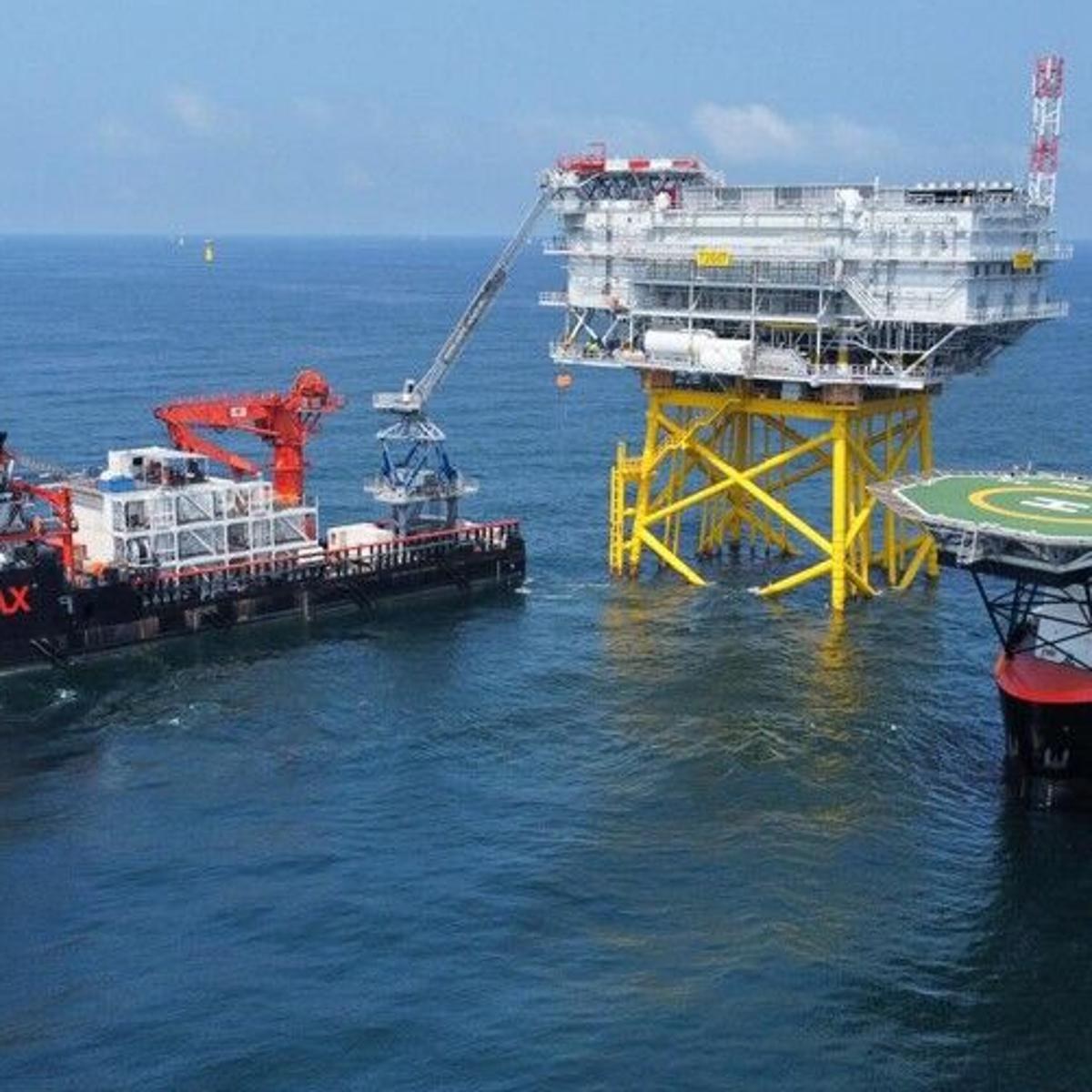
Today, following the recent completion of its merger with Houston-based Helix Energy Solutions Group, Hornbeck Offshore Services has about 3,000 employees, $1.9 billion in revenue and an active fleet of 83 vessels, with two more under construction. The combined company, whose ships and underwater robots effectively serve as the construction crews for offshore oil and gas infrastructure, has operations in six continents and a growing share of its revenue coming from non-oilfield sources like wind farms, underwater fiber-optic cables and military contracts.
Not that it has been three decades of smooth sailing for Hornbeck Offshore. Six years ago, following a prolonged slump in oil prices and oversupply of offshore supply vessels, its stock was delisted by the New York Stock Exchange, which was followed by a brief bankruptcy and a financial restructuring. At a time, it wasn't clear what course the company would chart.
But Hornbeck Offshore reorganized, got rid of some of its older equipment and diversified to go after new, more specialized lines of business. The merger with Helix further broadens its portfolio of surface ships, adding massive floating vessels for maintaining offshore wells and robots for digging underwater trenches and other subsea projects.
Todd Honbeck is the CEO of Hornbeck Offshore Services, which he founded in 1997 in Covington, Louisiana.
“Now we combine that into an all-in-one company," Hornbeck said in an interview following the merger. “We now have the only fleet in the world that can actually do cradle-to-grave services for our customers.”
The post-merger Hornbeck Offshore is essentially the third iteration of the company.
The first version, founded by Hornbeck’s father in 1980, grew to operate a fleet of more than 100 vessels before it was acquired by Tidewater, then the market leader, and relocated its headquarters from Galveston, Texas, to New Orleans in 1996.
But Hornbeck kept the company's rights to the name and ventured out on his own the following year to meet the demand for ships to support the drilling of increasingly deep wells, which have gone from depths of 3,000 feet to more than 10,000 feet.
By the time it went public in 2004, the revived Hornbeck Offshore had assembled a fleet of about 50 offshore supply vessels, tugboats and barges. The business grew to become one of the largest players in the ultra-deepwater oilfield services sector.
Hornbeck Offshore Services, which has headquarters in Covington, Louisiana, and Houston, Texas, following its merger with Helix Energy Solutions, operates the world's largest fleet of ships with 250-ton or heavier cranes, according to company officials.
But oil prices took a tumble after hitting a peak in 2012, spreading a ripple of red ink across the offshore services sector. From 2015 to 2021, there were more than 600 bankruptcies in North American oil and gas industry.
Hornbeck Offshore was not immune. In 2019, the New York Stock Exchange suspended trading of its stock. And shortly after the start of the COVID-19 pandemic, the company filed a prepackaged Chapter 11 bankruptcy, emerging in September 2020 as a private company.
Over the following years, the company reorganized its finances, sold about 20 vessels, bought about 25 more, grew its engineering capabilities and expanded its capacity for new markets outside of drilling, including defense contracts.
“It gave us the ability to right-size the fleet during a down market and retool for what we know the future market is going to be,” Hornbeck said.
Following the merger with Helix, Hornbeck now gets nearly 60% of revenue from nondrilling oilfield services, like plugging and decommissioning old underwater wells, and nearly 30% from non-oil and gas business, like offshore wind farms, rocket launches and fiber-optic cables on the seafloor. The remainder comes from traditional drilling activity.
Working on existing wells is a fertile area for future growth, with up to $70 billion worth of decommissioning work needed on more than 2,700 wells and 500 platforms in the Gulf alone, according to federal estimates.
Damaged oil platforms and rigs stand in the Gulf south of Venice, La., Thursday, June 5, 2025. (Photo by Sophia Germer, The Times-Picayune)
Tyler Gray, director of energy innovation at the LSU Energy Institute and a past president of the Louisiana Mid-Continent Oil and Gas Association, said the company’s increasingly diversified approach helps shield it from sharp shifts in commodity prices.
“The revenue becomes expected over a longer period of time," Gray said. "It's much more consistent.”
Defense contracts are another way Hornbeck has diversified its business. From 2024 to 2025, its revenue from military contracts increased by more than 22% to $142 million.
That work includes supporting Navy submarines, with ongoing contracts to service four vessels it sold to the Navy’s Military Sealift Command, a group of civilian-crewed vessels that survey and surveil the ocean, track missiles and serve a range of military and government agencies, including the Environmental Protection Agency and the U.S. Fleet Forces Command.
“Now we have a big, diversified portfolio of assets that can weather a storm through cycles,” Hornbeck said.
About a third of Hornbeck’s employees are based in Louisiana, split between its Covington headquarters and Port Fourchon, where it operates 66-acre port facility and a 7,700-metric-ton floating drydock.
While Hornbeck’s operations have historically been concentrated in the Gulf of Mexico and off the coast of South America, merging with Helix has expanded its footprint to the North Sea, west Africa, southeast Asia and the west coast of Australia.
The merger marks the third multibillion-dollar deal for a Covington-based company in a year, following the $3.2 billion purchase of LLOG by UK-based Harbour Energy and Amazon’s $11.6 billion acquisition of satellite firm Globalstar.
Russel Richardson, executive director of the St. Tammany Economic Development Corp., said St. Tammany Parish is a natural fit for companies involved in offshore production.
“We feel like we're part of that Gulf South energy ecosystem,” Richardson said. “We've got a product and community to offer. I think that’s why we see a concentration of these companies.”