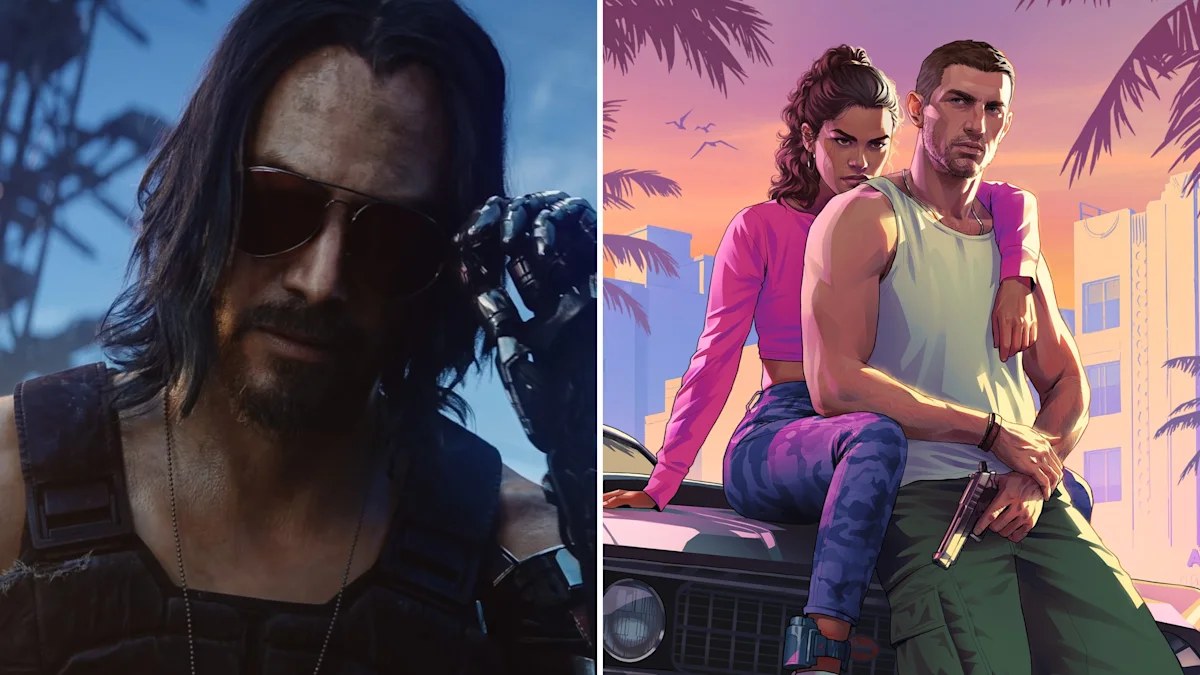
The immediate temptation for investors is obvious. This is the biggest upcoming entertainment launch of the decade — Grand Theft Auto as a franchise has sold north of 470 million copies (1). And Rockstar is already guiding to record revenue. Surely the move is to buy Take-Two Interactive (NASDAQ:TTWO) and ride the wave, right?
History shows it's not such a simple slam dunk.
Even Take-Two's CEO is uneasy. Strauss Zelnick has called the launch "terrifying" because the expectations are so high.
Take-Two stock rallied in the week leading up to pre-orders. Then it fell nearly 3% (2) the moment they actually opened. A standard edition priced at $79.99 came in below the $90-to-$100 some bulls had hoped for, and short-term traders did what they almost always do when there's a confirmed catalyst: they took profits and left. Unconfirmed reports put first-day pre-orders as high as 39 million and $3 billion in revenue — numbers neither Take-Two nor Rockstar has confirmed. The stock fell anyway.
Stocks move on the gap between expectation and reality, not on raw sales. By the time you've heard a game is going to be huge, the "huge" is already in the price.
Here are four cases that show how this plays out — including one from Take-Two's own history.
Cyberpunk 2077 launched in December 2020 after years of anticipation, 8 million pre-orders, and a development budget the company had already recouped before a single copy sold. People were taking the week off to play the game.
By most commercial measures, the launch was a success.
The stock fell roughly 27% (3) during launch week, with the steepest single-day drop occurring when Sony pulled the game (4) from the PlayStation Store.
The reason wasn't sales. The game shipped riddled with bugs on older consoles, drawing intense online criticism. CD Projekt Red's nearly bulletproof reputation as an industry darling cratered after they shipped a near-unplayable product on older consoles. Reality landed below the perfection investors had priced in, and the punishment was swift.
Over the following 18 months, shares of CD Projekt (OTC:OTGLY) fell more than 75% (5) from their peak — its valuation collapsing from around $11 billion to roughly $2 billion. It took years of patches and a hit expansion to win players — and investors — back.
When Nintendo released Pokémon Scarlet and Violet in November 2022, the games sold more than 10 million units (6) in their first three days — the biggest debut in the company's history. A blowout by any standard.
The stock barely flinched. A mainline Pokémon game selling enormously is the most predictable event in gaming. Everyone knew it was coming. Everyone knew it would sell 20 million-plus. There was no surprise left to trade on.
One practical note for North American investors: Nintendo trades primarily in Tokyo. The way to get US-dollar exposure is its American Depositary Receipt (OTC:NTDOY) — but because it trades over-the-counter rather than on a major exchange, expect thinner volume and a wider spread than a clean domestic name like Take-Two.
In March 2026, Nintendo shares jumped about 10% (7) on the back of Pokémon Pokopia, a spinoff that analysts had written off — a "dark horse" that was off everyone's radar. The viral success helped offset memory-cost pressures that had weighed on the stock in late 2025 and early 2026.
Same franchise, same company — opposite result. The predictable blockbuster barely moved the stock, while the spinoff nobody saw coming sent it up 10%.
The most relevant precedent of all comes from Take-Two itself.
When Grand Theft Auto V launched in September 2013, the same dynamic was in play: the online component, which became the franchise's long-term cash machine, arrived weeks after the main game, not on day one. (For a sense of the sheer scale of that launch, GTA V pulled in roughly $1 billion (8) within three days, a record at the time.) Shares fell modestly when GTA Online launched because consumers were unhappy with the buggy launch, but long-term holders were laughing all the way to the bank.
A $1,000 investment in Take-Two at GTA V's launch — shares opened at $17.70 — would have been worth roughly $13,400 13 years later, a return of around 1,245%. Over the same stretch, $1,000 in an S&P 500 index fund grew to about $4,200, a roughly 325% return.
The launch-day trade was a coin flip. The long-term hold paid off enormously.
The honest answer is that the "obvious" trade — buy before launch, sell into the excitement — is exactly the one history treats most harshly.
The anticipation gets priced in during the long run-up. (Morgan Stanley's analysis (9) of past launches found publisher stocks average 18% appreciation in the six months before a major release.) The launch itself is frequently where momentum buyers get burned.
The real questions for GTA VI aren't about whether it will sell. It will. They're the ones the market can't yet answer: how fast GTA VI Online launches and how durable that recurring revenue proves to be — and whether the $79.99 price point holds up or quietly caps the upside.
The biggest question on everyone's minds is whether Rockstar's execution can match the perfection already baked into a stock trading near record highs, with a Strong Buy consensus (2) from 15 analysts.
If there's a single rule blockbuster game launches teach investors, it's this: the edge isn't knowing a game will be a hit. Everyone knows that. The edge is knowing something the market doesn't — and on the most anticipated game in history, that's a very short list. Otherwise, pick a company you like and believe in with good fundamentals and hold it long term.
We rely only on vetted sources and credible third-party reporting. For details, see ourethics and guidelines.