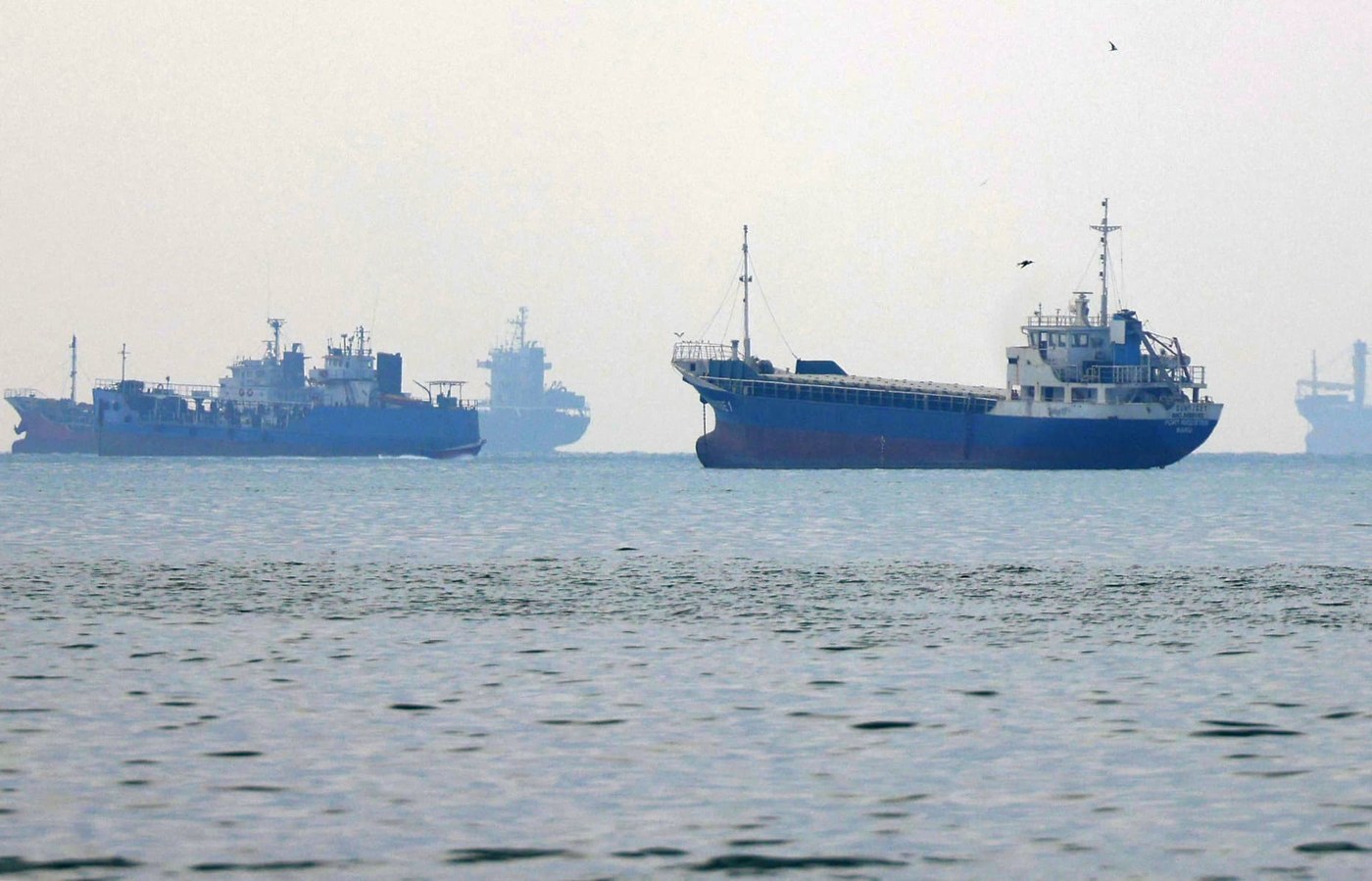
Commercial vessels are likely to continue navigating the perilous Strait of Hormuz despite the sinking of a Singapore-flagged container ship this week, as strong demand for Middle Eastern energy and lucrative shipping opportunities keep some operators willing to brave escalating attacks, maritime experts said.
The latest attacks on two Singapore-flagged container ships have heightened concerns over the safety of commercial shipping through one of the world's most important maritime chokepoints. But analysts say the incidents are unlikely to bring remaining shipping activity through the Strait to a halt, even as major container lines largely stay away.
Collin Koh, a senior fellow at Singapore's S. Rajaratnam School of International Studies, said shipping companies were likely to continue seeking opportunities to transit the strait despite heightened security threats.
"I don't see in the short term, that Singapore flagged ships or Singapore shipping companies would necessarily avoid taking the transit if there is an opportunity," Koh told CNBC.
His comments follow attacks on two Singapore-registered container ships, GFS Pride and GFS Giselle, this week. GFS Pride sank after being struck by a projectile and catching fire, while GFS Giselle was damaged. Crew members from both vessels were reported safe.
Crossings through the Strait of Hormuz fell to 131 in the week ended Oct. 14, from 176 the previous week, according to maritime analytics firm Kpler, although the decline cannot be attributed solely to the latest incidents.
Dimitris Ampatzidis, maritime risk and compliance manager at Kpler, said the attacks underscored Iran's continuing ability to threaten commercial vessels, with the risks extending beyond oil and gas transportation.
Commercial incentives persist
Koh said shipping companies around the world have continued looking for opportunities to navigate the Strait since the conflict erupted, with some operators prepared to accept higher risks and costs.
Strong demand for oil, particularly from Asia, continues to provide an incentive for tanker operators to transport energy supplies from the Persian Gulf, even as security threats complicate voyages.
Some operators may be willing to take their chances even if doing so involves paying a premium, Koh said.
Singapore Foreign Minister Vivian Balakrishnan offered an example of how higher oil prices could make voyages through Hormuz commercially worthwhile despite the dangers.
Speaking at the Milken Institute Asia Summit last week, Balakrishnan recounted a conversation with an unnamed Gulf counterpart who said his country was earning more from oil exports than before the war by operating a so-called "Hormuz shuttle" involving about 20 very large crude carriers.
The vessels were effectively self-insured against attacks, according to the official's account, with higher crude prices making the voyages financially worthwhile despite the risks.
"Sometimes you get hits, but it is still worthwhile to run the 'Hormuz shuttle,'" Balakrishnan quoted the official as saying.
Despite the risks, vessels continue to transit the Strait, reflecting its commercial importance, particularly for energy shipments to Asian markets, Ampatzidis said.
However, further attacks could deter more operators from making the passage, with the impact likely to differ depending on vessel type and individual companies' assessments of the risks, he added.
The Singapore Shipping Association also played down the prospect of a broad withdrawal of commercial shipping from the region, suggesting operators would instead adapt to changing trade conditions.
"Rather than signalling a broad withdrawal from the region, these developments are more likely to result in adjustments to trading patterns as markets respond to shifts in the supply and demand of goods and energy," said association president TS Teo.
Shipowners would continue weighing commercial considerations against security developments and crew safety when making operational decisions, he added.
Wider shipping disruptions
While some operators remain willing to transit Hormuz, much of the global container shipping industry has already adjusted its networks to avoid the strait.
Jayendu Krishna, a director at Drewry Maritime Advisors, said none of the major container shipping lines had resumed services through Hormuz since suspending operations following the outbreak of the war in February. Only some regional operators have continued sporadic services, generally using smaller feeder vessels.
That means the immediate impact of the latest attacks on container shipping could be limited, he said.
However, a further escalation into the Gulf of Oman could pose a more serious threat to regional supply chains, particularly if it disrupts alternative ports like Khorfakkan in the United Arab Emirates and Oman's Sohar that have become critical gateways for cargo entering Gulf countries.
"If the Gulf of Oman became a zone of kinetic activity, a significant part of supplies to the Gulf countries would be cut off, since Khorfakkan and Sohar have been a lifeline for them," Krishna said.