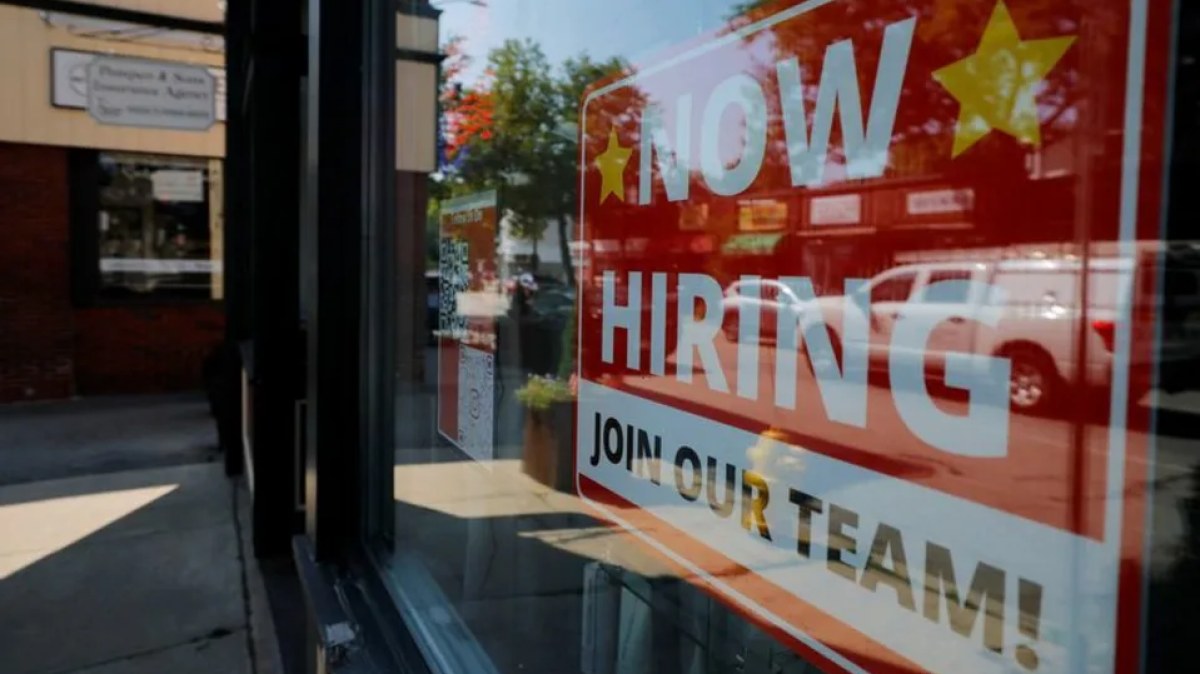
American unemployment claims have fallen to their lowest level in 57 years, highlighting continued resilience in the US labor market despite economic uncertainty linked to the prolonged Middle East conflict. Labor Department figures released Thursday, November 5, 2026, also showed stronger-than-expected worker productivity growth in the third quarter, reducing labor costs and easing concerns about employment-driven inflation.
Initial claims for state unemployment benefits declined by 6,000 to a seasonally adjusted 189,000 in the week ended October 31, according to the US Labor Department. The figure came below economists' expectations of 196,000 claims in a Reuters poll.
The latest reading matched the level recorded in mid-July, marking the lowest figure since 1969. Claims have remained mostly below 200,000 since mid-September, supported by domestic demand and corporate profit growth, which have helped employers retain workers.
However, economists offered different explanations for the unusually low number of claims. Some suggested that a smaller labor force resulting from immigration restrictions, rather than fewer layoffs, could partly explain the figures.
Other indicators pointed to a potentially tighter employment market. Government data released earlier in the week showed 1.06 job openings for every unemployed person in September, compared with 1.02 in August.
The Labor Department also reported that no state recorded an increase of more than 1,000 in unadjusted unemployment claims during the latest reporting week.
Separate figures from global outplacement firm Challenger, Gray and Christmas showed that US-based employers announced 43,994 job cuts in October. That represented a 2% increase from September but a 71% decline from October 2025.
Despite the monthly increase, October recorded the fewest announced layoffs for that month since 2023. Employers also announced plans to hire 444,692 workers, a 57% increase from October 2025 and the highest October hiring plan since 2009. Much of the planned recruitment was expected to involve seasonal positions.
Andy Challenger, chief revenue officer at Challenger, Gray and Christmas, said employers were prioritizing workforce retention while preparing for increased holiday demand.
"Employers are holding on to the workers they have heading into the holidays, and the hiring they are announcing is largely short-term, seasonal work," said Andy Challenger, chief revenue officer at Challenger, Gray and Christmas.
He said companies were seeking flexibility rather than making permanent staffing commitments as seasonal demand increased.
"Companies want the flexibility to meet holiday demand without adding permanent headcount."
Meanwhile, third-quarter productivity growth exceeded expectations and pushed labor costs lower for the first time in more than a year, according to the Labor Department. The development reinforced assessments by policymakers and economists that the labor market was not a significant source of inflationary pressure.
Moderate wage-related inflation gives the Federal Reserve greater flexibility to address rising prices associated with the US-Israeli war with Iran, which had entered its ninth month. Public anger over the conflict also contributed to political setbacks for President Donald Trump's Republican Party, which lost control of Congress following strong Democratic performances in the midterm elections.
What's Your Reaction?
- 0Like
- 0Dislike
- 0Funny
- 0Angry
- 0Sad
- 0Wow